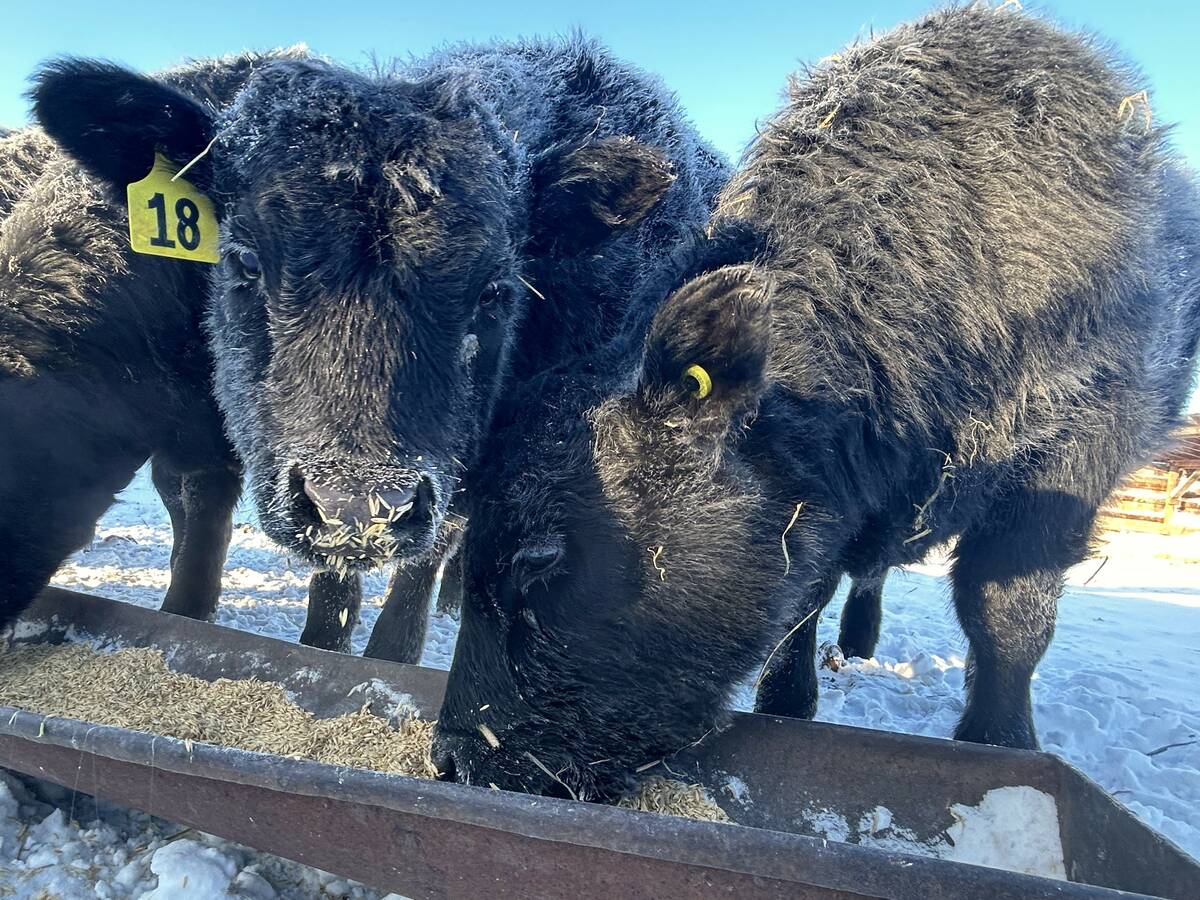
The Canadian Cattle Identification Agency may not be proposing regulatory changes for traceability, but it’s the one that delivers the program.
“Just a reminder, CCIA, we are the responsible administrator,” general manager Ashley Scott said during the Saskatchewan Beef Industry Conference.
“CFIA, they are the regulator and the enforcer.”
Read Also
Farm sustainability means farmer wellness too
University of Manitoba LEAP program wants to talk farm succession, self-efficacy and community supports as part of agriculture wellness and sustainability study.
A responsible administrator is defined as “someone responsible for delivering a traceability program defined by federal regulations.”
These federal regulations are set by the Canada Food Inspection Agency, responsible for safeguarding food safety. It also sets the objectives of the National Livestock Identification and Traceability program.
“The Livestock Identification Traceability program provides accurate and up-to-date livestock identity, movement and location information to mitigate the impact of disease outbreaks and food safety concerns and natural disasters,” Scott said.
The traceability regulatory changes introduced in Canada Gazette I were working toward Canada Gazette II, which includes the proposed changes that the cattle industry was against.
The changes, which face opposition by some in the cattle industry, include:
- Identification and registration of premises where livestock are kept or collected.
- Identification of livestock.
- Domestic movement reporting of livestock.
The changes align with the Cattle Implementation Plan developed by the Canadian beef industry in 2016.
The biggest adjustments for producers include:
- Obtain or keep current a premises identification number (PID) from a provincial government.
- Include a PID when purchasing CCIA approved tags.
- Report information related to identification of cattle and their movement.
- Report move-ins within seven days.
“The proposed regulations do contain a permission that if a producer does not have a PID (premises identification) … that they can report all the necessary PID associated information, such as the legal land description, contact info, etc., when movements of herd (occur) or tags are purchased,” Scott said.
In Saskatchewan, PIDs have been required by the provincial government since 2017, and origin and destination PIDs must be included on livestock manifests as of 2025.
The CCIA and the Saskatchewan Cattle Association developed a cheat sheet for understanding the incoming regulations that was shared during the SCA’s recent annual general meeting.
According to that document, reporting requirements vary for producers, transporters, feedlots and auction marts, but most of the onus is on producers.
They must report move-ins to their sites, community pastures, vet clinics, cattle shows and exhibitions, although the requirements of each move-in varies slightly.
For yard move-ins, producers would be required to report the PID of the departure and arrival sites, the date and time of cattle departure and arrival, individual tag numbers of arriving cattle and the license plate number, including province, territory or state of the truck that delivered the animals.
It’s the same for community pastures, except instead of individual tag numbers, producers must report the number of head being moved. Reports of both departure and return are required.
A few more steps are required for veterinary clinics and cattle shows, including the date and time when the cattle left the departure site and when they returned and time of arrival to the clinic or show, and when they leave.
Auction marts are required to report the move-in, but the transporter or producer is required to provide information such as departure PID, date and time the cattle departed and license plate information.
Auction marts will not need to report individual tag numbers, but feedlots will.
Scott didn’t answer any specific questions from the floor and advised producers to ask the SCA to forward their questions to the CFIA or contact the agency directly via email.
Preparation
To prepare for incoming regulations, Scott recommends producers be proactive to help ease the transition to compliance.
They can do this by:
- Obtaining a PID through the provincial government.
- Updating contact information for their PID.
- Familiarizing themselves with the Canadian Livestock Tracking System (CLTS) for online reporting and how it can be integrated with a private herd management program if one is already in use.
- Attending information sessions about the regulations hosted by tahe CCIA or producer organizations.
- Beginning to record movement events in the CLTS.
“In the CLTS Resource Centre, you will find those step-by-step guides and instructions that will make using the CLTS easier,” Scott said.
She said the CLTS is the easiest way to report movements to the CCIA by using the web portal or mobile app, uploading an Excel file or using web services, which is the best option for software providers and high-volume reporters.
The CLTS also works offline, allowing producers to enter information and save it to upload when they have access to Wi-Fi or cellular data.
A less preferred option, though still accepted, is sending tracking information via mail.
“It wouldn’t be our preference if everybody submitted a paper record,” Scott said.
“We still take them, and when we receive them, we will reach out to that client and we’ll confirm the information. We do enter it in the system on their behalf.”

She said the CCIA has updated the CLTS in an effort to ease reporting and ensure compliance. Certain fields were added, such as arrival date and time, as well as a movement reporting module, both of which are optional right now but will be mandatory when the CFIA regulations take effect.
“The movement record is an alternative reporting option, primarily when the departure site chooses to initiate the process,” Scott said.
“The preexisting movement event in the CLTS is a recommended method and allows the destination site to report movements.”
Producers at the conference voiced concerns that producers don’t know enough about the CLTS and aren’t using it.
Scott assured the audience that the system and its uses would be better explained in the coming year.
She said the focus in 2025 was on educating dealers, while in 2026 the CCIA will concentrate on producers and auction marts.
This will include explanatory videos and training sessions if producers and industry groups are interested in helping organize them.
However, changes to the regulations are still to come, and no one is quite sure what to expect.
“Based on everything being paused right now, we could see further changes,” Scott said.
“The information shared is just what was readily available from CFIA after industry consultation.”