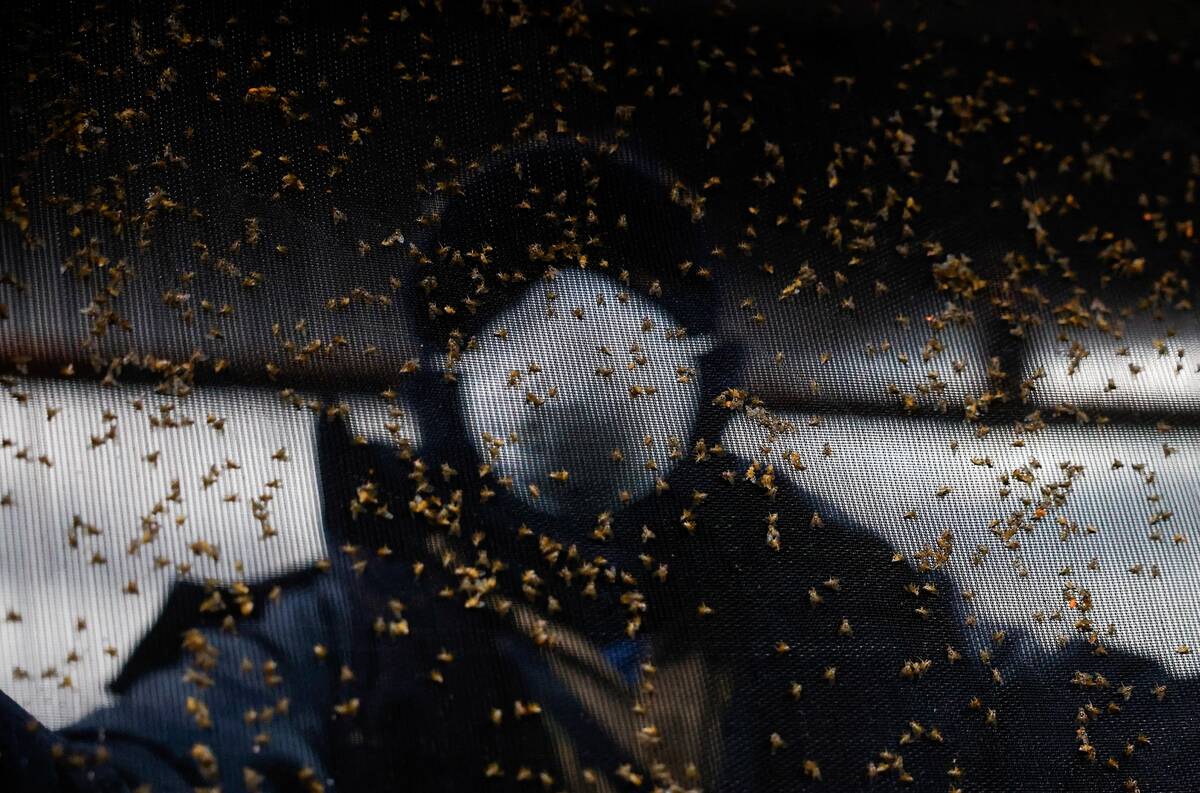
Although it hasn’t yet entered the country in any numbers, U.S. authorities are “all hands on deck” as New World screwworm (NWS) — a parasite that can infect all warm-blooded creatures, including humans and cattle — sits in Mexico slightly less than 600 kilometres from the Texas border.
However, with Canada’s climate a far cry from that of Mexico’s, where the tropical pathogen feels comfortable, should Canadian cattle and other livestock producers be concerned?
If you ask Leigh Rosengren, chief veterinary officer with the Canadian Cattle Association, she’d probably say, “Not too much but be on guard anyway.”
Read Also

From farm gate to Grade 4: CALM celebrates 15 years in Manitoba classrooms
Canadian Agriculture Literacy Month marks its 15th year with 159 volunteers visiting 436 Manitoba classrooms to connect students with agriculture.
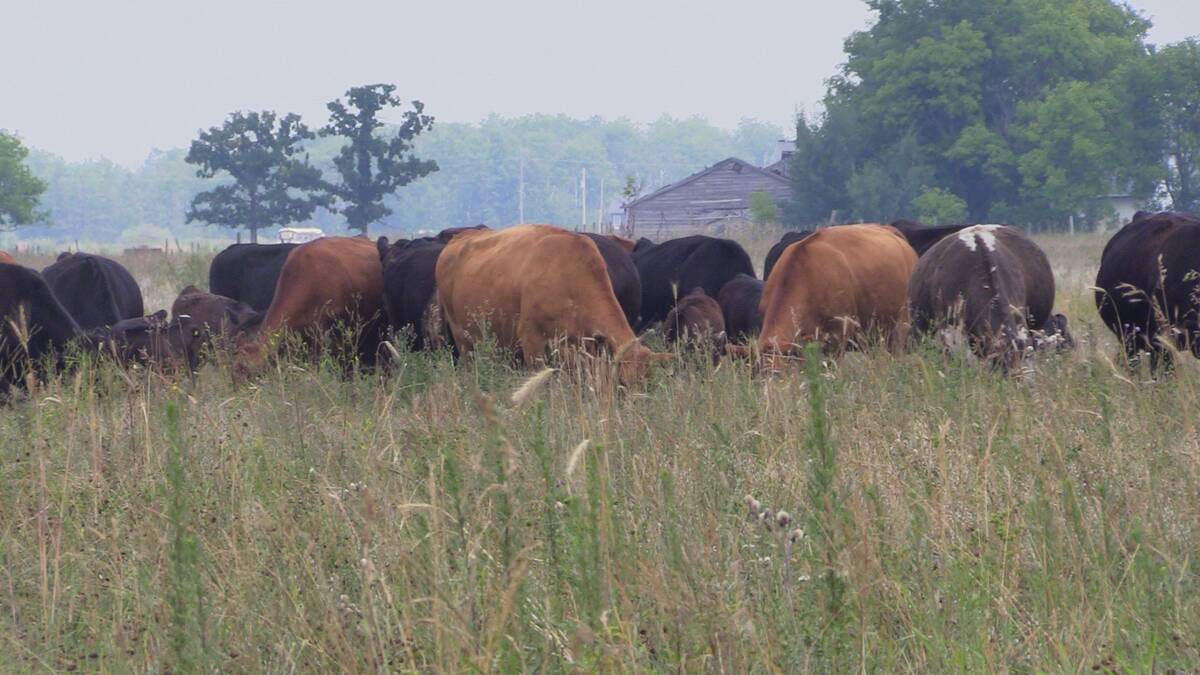
There have been zero reported cases of native New World screwworm infections in Canada, let alone outbreaks, according to the National Collaborating Centre for Infectious Diseases.
WHY IT MATTERS: The U.S. closed its border to Mexican cattle this year after a resurgence of the flesh-eating parasite New World screwworm.
That doesn’t mean the pest couldn’t stow away on a cattle trailer or be discovered at an international trade show held in Canada, Rosengren said. But even if they manage to survive the cold Canadian climate for a little while, the parasites won’t likely thrive enough to become a major threat.
And if they do, Canada’s multi-hazard control protocols should be able to contain them, said Rosengren.
“Because New World screwworm is not a reportable disease in Canada, it means that we don’t have a specific control or eradication program for the pathogen,” she said.
“But of course, we do have all of our animal health protocols, which really take an all-hazards approach.”
The Canadian Food Inspection Agency’s protocols for animal import, inspection, quarantine and surveillance offer a solid foundation for keeping the parasite out of the country, Rosengren said.
“And of course, we could undertake a specific program to control the disease should it ever be necessary.”
Dangerous screwworm history
Down in Texas, however, farmers have reason to worry.
According to the U.S. Animal and Plant Health Inspection Service (APHIS), a 1976 outbreak — the first since the U.S. Department of Agriculture eradicated the parasite in 1966 — cost Texas $1.8 billion in 2024 dollars.
And that was considered a small outbreak, Chris Needham of APHIS’s New World screwworm directorate, said at an online information session held by the Council for Agriculture Science and Technology (CAST) Dec. 9.
“It was really limited to a real localized region of the country, and the economic losses for those were really pretty substantial.”
APHIS says its barrier programs against NWS have saved the U.S. cattle industry $2.3 million annually.
Although it’s rarely made its way much past Texas, Rosengren said there were sightings further north during the 1976 outbreak.
“Back when it was endemic in the United States, there were occasional reports of infected animals through the northern states,” she said.
Causes and consequences
NWS’s effect on livestock is, in a word, harrowing.
“I’ve seen some really, really horrific pictures of some of the ways they’ve affected some of these animals that really just emphasize how important it is to keep these things out,” Needham said.
“If these are left untreated, animals can die within seven to 14 days. They very often do affect newborns, particularly the umbilical cords. And if that’s untreated, that’s nearly 100 per cent fatal.”
NWS has resurfaced across South America in recent years, breaching its decades-long containment site at Panama’s Darién Gap barrier in 2021.
Its numbers grew quickly.
According to CAST, cases in Panama swelled to around 25 in 2023 and ballooned to more than 6,500 as it spread through Costa Rica, Nicaragua, Honduras, Guatemala, Belize and El Salvador.
The parasite was found in Chiapas, Mexico, in November 2024, prompting the USDA to earmark $165 million in emergency funding the following month and dispersing 100 million sterile insects per week, mostly in Mexico.
Because female NWS only mate once in a lifetime, sterile male flies help control the female population by mating with them, resulting in unfertilized eggs. These flies are limited in number because they are all produced in a facility in Panama, Needham said.
New World screwworms are different from other flies in that they feed on living tissue. Female NWS deposit eggs around even very small wounds — tick bites, for instance.
“This is not a parasite you want in the country,” Needham said.
“(It) feeds in the livestock. It has this ability to have multiple infestations within one wound.
“What happens very often is, as the larvae go in and they feed, they … create pockets under the skin. So you can have them really destroying tissue. And it’s not just muscle: it’s bone and ligaments.”
Searching for control
NWS is not contagious, he said. Although this is fortunate, it also calls for unconventional control measures, such as the use of sterile insects.
“This is not necessarily a typical threat that we would deal with, whether it’s avian influenza or something along those lines.”
Even though the chance of NWS arriving in Canada is remote, Rosengren urges livestock producers to exercise the general security protocols recommended by the CFIA.
“Producers should be aware of the value of having an all-hazards approach to their biosecurity and to their herd health protocols.”
Much of this approach comes down to developing a paper trail.
“Producers should always be thinking about quarantining incoming animals, particularly incoming animals that have come internationally. They should be thinking about traceability and records and making sure that (they) have a paper trail on where animals have come from and where they’ve been.
“And of course, producers should always be investing efforts in maintaining a solid veterinary client-patient relationship, just so they’ve got somebody to pick up the phone if they’re ever concerned about this or anything in their cattle.”
Rosengren doubts an NWS outbreak would trigger a Canadian ban on U.S. cattle, although there have been some concerns.
“It is not like … foot-and-mouth disease, where we always hear if there’s a case, the border will immediately close. It is not that type of a disease.”