Every spring before calving season, there is always discussion about protocols for newborn calves.
New advancements and the imminent value of these calves make this discussion even more critical.
When calves are born and the pairs are mothered up, it is a wise investment to carry out certain procedures and, in some cases, lump them together for when the calves are older.
Read Also

Judge clears Manitoba horse exporter
Case dismissed in Manitoba horse export trial; verdict cites shared responsibility for animal welfare during air export and reasonable doubt.
Producers have become very receptive to anything that will promote health, disease prevention and/or growth in these newborn calves.
Vaccines and vitamins
One of the biggest additions has been the implementation of intranasal vaccines as an aid to pneumonia prevention.
They are easy to give and provide quick immunity that lasts the first couple of months or so until parental shots are given.
Most calves are given vitamins and selenium at birth.
The biggest change here has been a very unreliable supply of injectable vitamins A and D.
They are being replaced by an oral product that contains vitamins A, D and E and selenium.
Their advantage is that they replace two needles and the supply seems consistent in Canada. It has become a great improvement.
We once saw some calves get nerve damage when injections were administered too close to the sciatic nerve.
Castration pain control
For those who castrate their bull calves using the little cheerios, they can now come impregnated with lidocaine, which means essentially a painless castration.
They are more costly than the old bands, but you need to be the one to decide whether to try them on your calves at birth.
It definitely reduces stress, and the lidocaine (freezing) works until the bands fall off.
Best possible colostrum
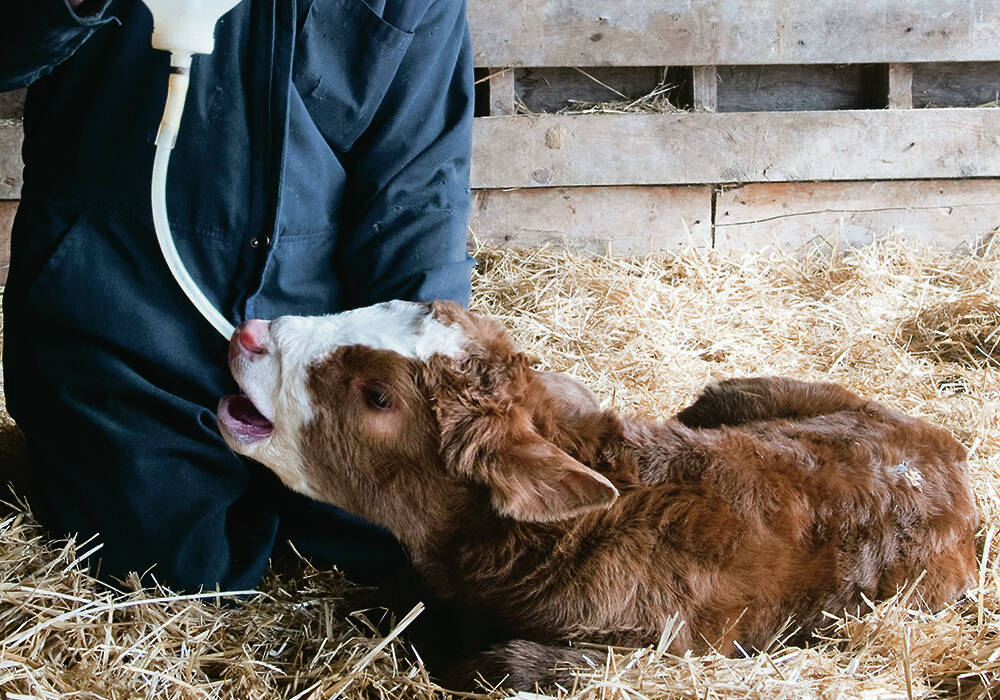
With all these procedures, it is still really important to let the pairs mother up and get a good sucking reflex from a vigorous calf.
Make sure to have a good supply of the colostrum substitutes, such as Headstart, and don’t hesitate to supplement early if there is any indication of a slow calf or difficult birth with twins or if the milk production of the cow is in question.
Producers can ensure the best possible colostrum from their cows by focusing on good nutrition and vaccinating for scours at the best time possible before calving.
If the calf doesn’t suck in time or does not take the required volume, then extra supplementation is imperative. Use an esophageal feeder dedicated to just colostrum so that it is kept clean.
Lock out disease
Most producers in Western Canada are using the toltrazuril pills or liquid, which is prescribed by their veterinarians. It also has become commonplace over the last decade or so.
This product prevents the protozoal diseases cryptosporidiosis and coccidiosis most times.
There is even an oral liquid toltrazuril that comes straight or with meloxicam. You get the pain killer anti-inflammatory effect along with the treatment.
Spending more time on colostrum management and taking these preventive measures can hopefully keep scour cases and antibiotic reliance to a minimum.
There are other products such as intranasal corona vaccines, and an oral vaccine given during the same time frame as colostrum to prevent rota and corona virus.
Other products are given orally as a paste, such as First Defense, within the first 12 hours of birth.
They are great in a scours outbreak situation or if you are wanting to boost the calf’s protection.
The First Defense product is upward of $30 a dose. Only you and your veterinarian know if these products will increase calf survivability, depending on past years’ experience and what may have been diagnosed on your farm.
Another key ingredient is biosecurity practices that reduce exposure to infectious organisms.
Overwhelming exposure to clinical cases can overwhelm any protective protection that a farm may have put in place.
When looking at producers with more scours problems than average, veterinarians can often easily identify breaks in biosecurity.
It may take a visit to your farm or ranch to visualize first hand and provide a list of best practices to make things better.
Prevention is the key to all diseases and always has been. There is very often no magic bullet.
It is always good to review biosecurity practices at calving time, such as cleaning the cow well during calving, good bedding, creep areas for calves and keeping your clothing clean and dry. These can go a long way to preventing bad organisms from building up on the farm.
I like a boot dip or disinfection mat as a reminder to minimize visitors, especially during calving season. Don’t be the one spreading disease.
Newborn calf health
Navel treatment requires cleanliness, plenty of dry bedding and adequate colostrum consumption.
If any of these areas are neglected, navel infection may start. The calves born in unsanitary surroundings are the susceptible ones.
Wincing in pain while the navel area is palpated is a telltale sign that infection is present.
Some producers use alcohol or diluted iodine to dry up the navel, although I don’t know many who actively do this.
Infection may require several treatments of antimicrobials and NSAIDs, but ways to prevent the next case should be paramount in your mind.
Navel infection may indicate failure of passive transfer, so again, colostrum quality and quantity need to be examined.
Calves born backward have their navels broken off short, making them more susceptible.
One twin is often born backward, which increases the need to take extra care with colostrum.
If both twins survive, one is often grafted to another cow, creating an additional stress in their lives.
Pay extra care and attention to twins for all these reasons.
Ear tags
Calves also get their ear tags early in life, and the newer taggers have better leverage and are made for smaller hands. They have breakaway pins, so ears are not split.
For any of those still needing to dehorn, remember that it is a painful procedure, so NSAIDs are in order.
As well, follow the beef code of practice, which is to dehorn before horn bud attachment occurs, so preferably before two months of age.
The new beef code of practice is almost ready to be released.
The last one came out in 2016, so everyone should give it an informative read, especially for the changes that have happened in this new version.
The code is what sets us apart from other cattle-producing nations, along with the national identification system.
Here’s to a great calving season and healthy calves.
The market is expected to remain high, so let’s give each and every calf that is born the care they deserve it.