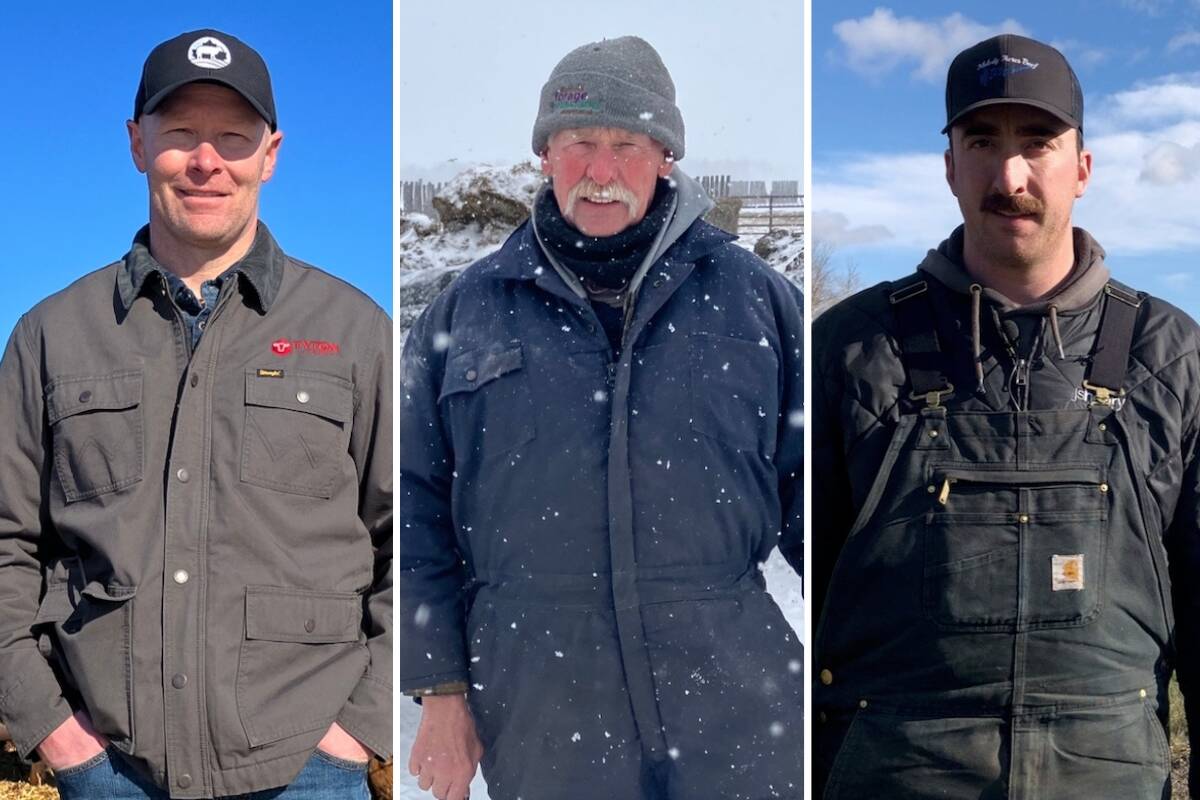
Mike Duguid began his lifelong career in cattle farming as a teenager with 23 cows.
Duguid, now 72, who raised purebred Angus with his father, sold off the last of his herd — about 130 head of cattle — last March. After more than five decades of raising cattle, it was a significant moment in his life, but also part of the next step in his succession plan.
“Succession planning is kind of like planting trees,” says Duguid. “It should have been done years ago.”
Read Also
Manitoba cattle prices, April 8
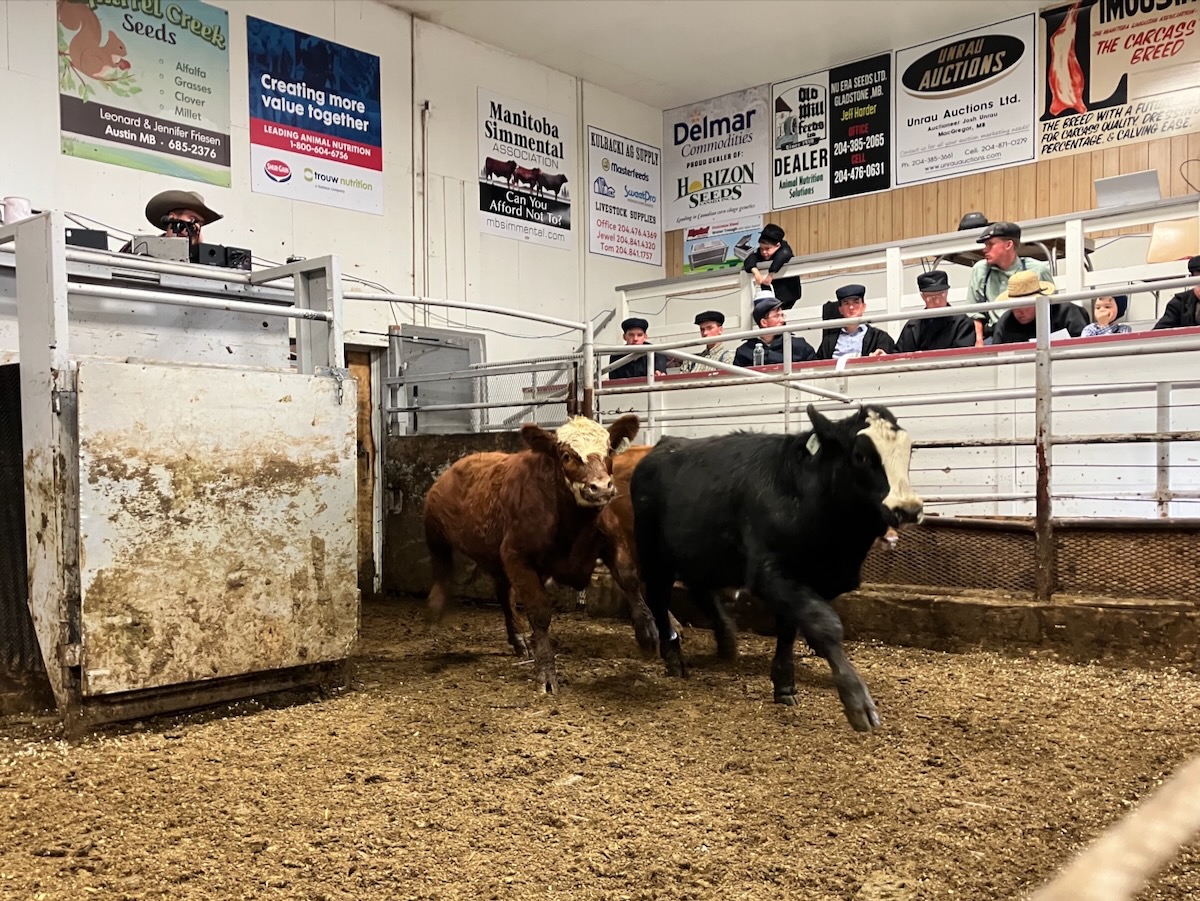
Price ranges from the lone Manitoba auction market to hold cattle sales during the week ending April 7, 2026.
Duguid admits that one aspect of kick-starting his succession plan is his age. He decided it was time to slow down a little bit and let a younger generation take over.
Duguid has raised cattle alongside his son, Scott, near Arnes, Man., for almost 20 years. A second son had raised cattle with him in the early 2000s, but exited the industry over time after the BSE crisis in 2003.
“I have my son, but he’s also got three kids all very active in cattle” says Duguid. “Time to let them all do their thing, and I’m going to go do mine.”
The key to keeping his succession plan on track was hiring a consultant to navigate the process. While a number of financial institutions and organizations can guide people in a succession, Duguid ultimately chose to go the private route on a recommendation from a farmer friend.
“The first thing we had to do is find an accountant who would understand not just farm families, but money,” said Duguid.

With the price of cattle and land values at historic highs, asset values have skyrocketed since the early days of his career. The last thing Duguid wanted was for a large chunk of his hard-earned work to go toward taxes.
“Accountants are very valuable in this step,” added Duguid. “They know the ins and outs of what you’re trying to accomplish.”
Duguid highly recommends hiring a consultant for anyone in the cattle sector who may be nearing a point of succession. He admits a consultant won’t always make for smooth sailing, especially when it comes time to talk with family members.
“Between us and the consultant, then it got to the next stage … which was the hard part for me,” said Duguid. “The hardest part is accepting what you’re doing.”
Losing control of his farm, something he’d worked his whole life for, made Duguid question his direction at times. But he admits that taking over the farm is ultimately what the next generation wants, and maintaining the integrity of his operartion without having to sell land was valuable in itself.
It’s a legacy that led to one of his favourite memories of raising cattle. He was at a cattle show several years ago with his granddaughter, who won grand champion steer with an animal they had raised together. It was an emotional moment for Duguid. He had won the same award 50 years earlier.
“I showed her that and she had pretty big eyes,” said Duguid. “I was pretty proud that day.”
Changing demographic
Tyler Fulton, 50, cattle rancher and president of the Canadian Cattle Association, says it would be optimistic to think that a third of the country’s cattle producers have an active succession plan in place.
After finishing high school, he left the farm to earn a degree in agribusiness at the University of Manitoba and had an off-farm job for 25 years. It was the cattle business that brought him back to the family farm near Birtle, Man., in 2006.
“I always had a passion for cattle … much more so than for the grain sector,” said Fulton.
His operation, Tyton Farms, raises mother cows and backgrounds steers and heifer calves. Fulton estimates the farm operates about 1,000 head of cattle at any given time.

Succession planning is something he’s been exposed to his whole life.
“It’s been three generations now that we’ve moved through a fairly structured succession plan,” said Fulton.
The family farm was started by his grandfather. It was converted to a corporation when the farm was passed down to his father.
“That structure actually made it easier for my wife and I to acquire the farm from my parents,” said Fulton, adding that the transition took place about four years ago.
With the cattle sector currently as profitable as it is, Fulton admits there is a major challenge among the sector’s demographics.
“The average age of a cattle operator is older than really any other sector in ag,” said Fulton.
He feels this is partly due to the BSE crisis that hit Canada’s cattle sector in 2003. A large segment of his peers simply did not come back to raise cattle because the economics did not support it.
“That’s a challenge … but arguably it’s an opportunity for the youth today,” said Fulton.
He admits that it’s an interesting dynamic for an up-and-coming rancher just starting out.
“When you’re at the top of the cycle, you’re also incurring the highest cost for, really one of your largest line items in your balance sheet, and that is your breeding cattle,” said Fulton.
However, with limited growth in the cattle supply on both sides of the border, he expects high cattle prices will be around for a while.
“I think the high prices are are not always going to be around with us … but I think for for at least two or three years we’ve got a little bit of a buffer before we can see some downside.”
Even in a time of record cattle prices, successions are never easy. They require skills from financial, accounting and strategic planning to people management. If conversations are not handled with care, successions can quickly derail.
“There’s so many aspects to it that make it complex … and then you throw family dynamics into it and it can be extremely challenging.”
Preparing the next generation
Connor English, 27, raises cattle at English Ranching near Rivers, Man.
He grew up on a mixed farm, and his love for agriculture, particularly on the cattle side of things, was instilled in him as a boy.
“I just had a love for it ever since I was young,” said English. “I loved coming out to work with animals, especially, and just felt really good about it.

He’s the fifth generation on the family operation, and with two young boys of his own, he’s excited that the potential for a sixth generation is on deck.
English’s path back to the farm began with a two-year diploma program at Lakeland College, on opportunity that provided him with hands-on farm management experience. He met new, like-minded people along the way before he returned to the family farm in 2022 to work on a neighbouring operation.
Similar to Fulton’s observations, English added that a lot of producers left the cattle industry over time due to BSE, likely upsetting many transition plans in the process.
“It was always, to be honest, kitchen table conversations with Mom and Dad growing up to find a job off farm because it is tough going,” said English.
However, in those moments, English says that he always put up a fight for life on the farm. He didn’t know how that would look, but he knew that was what he wanted.
English feels that succession conversations are a critical point for family farms.
“It needs to be brought up a lot earlier than most operations do have it,” said English. “It’s something that we need to continue to develop a process to go through.”
To help in that effort, English has been learning from other producers in the industry about how they go about succession planning.
“I think it needs to start right when you’re a teenage kid,” he added. “It needs to be in a position where you know that the farm is there, but seeing opportunities to be away from it if you want to be.”
Having a plan in place for family members who want to gain skills away from the farm should also be considered.
“I think that it’s very important to go elsewhere and find work, if that’s an option to do … just to kind of pave your own path and and then return to the farm when the time is right,” he said.
English admits that succession planning gets pushed aside among his family as well.
“It shouldn’t just be a once a year, have a half-an-hour meeting about succession or what the next year might look like,” said English. “It needs to be talked about a little bit more often.”
This leads to what he says is the biggest jump when it comes to succession planning: the family conversations.
“At the end of the day, until a meeting’s had or you sit down and have a good chat with the exiting generation on the operation … you have no idea what things could look like. Communication is going to be key.”
Connor English
fifth-generation rancher
As for his two young boys, English says he wants a process set for when his kids are of age and if they have an interest in the farm. If they don’t wish to farm, that’s fine too.
“There’s no force in it … but if they have a love like I do for a business like this, I want to be in a position where we have processes set up for them to be able to succeed entering the industry.”