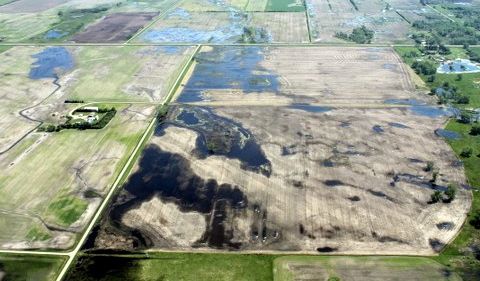
CNS Canada — Wet soil conditions continued to cause problems for farmers in southwestern Manitoba during the week ended Monday, with some areas reporting only 10 to 20 per cent of planting was complete.
Edward, a rural municipality in the province’s southwestern corner, declared a state of emergency Thursday with about 65 km of roads unfit to travel and up to 95 per cent of cropland remaining unseeded.
CLICK HERE to read Lorraine Stevenson’s report on the RM of Edward from the June 12 issue of the Manitoba Co-operator and view a slideshow of aerial photos from southwestern Manitoba by Co-operator contributor Sylvia MacBean.
Read Also
Feed grains weekly: Prices bump up
To Darcy Haley, vice-president of Ag Value Brokers in Lethbridge, there are two main reasons for recent increases for feed barley and wheat. Haley said on March 12 that there’s an ongoing lack of farmer selling, plus stiff competition from the grain companies looking to export barley.
Overall, in the provincial ag department’s latest crop report on Monday, seeding progress in the southwest was estimated 65 to 70 per cent complete, with only soybeans and field peas 100 per cent finished.
The northwest region was slightly further along at 75 per cent of seeding complete, with the eastern part of the province nearing completion at 90 per cent. The central and Interlake regions were 95 to 99 per cent complete, the report said.
Provincially, average seeding progress was estimated at 85 per cent complete, up from 65 per cent a week ago.
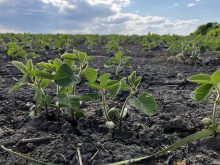
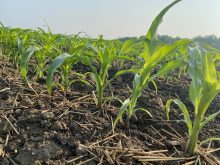
Crops that have been planted continue to emerge rapidly, and stand establishment was rated as good to excellent, according to the report.
There were some reports of hail activity in the eastern, central and northwest regions but crop damage was still being assessed. Temperatures also dipped below freezing in some parts of the province, including the northwest and central regions, but there were no reports of frost damage.
Farmers are focusing on finishing the last bits of seeding, controlling weeds and monitoring flea beetle activity in canola. — CNS Canada, with files from AGCanada.com Network staff