Chicago | Reuters — U.S. lean hog futures extended a decline on Thursday under pressure from large supplies and rebounding pork production, analysts said.
Traders expect meat packers to have ample hogs to slaughter after livestock backed up on farms when processing plants temporarily closed in April and May because of COVID-19 outbreaks among meatpacking workers.
Plants have since resumed operations, many at reduced capacities.
“We have a lot of hogs to work through,” said Brian Hoops, president of U.S. broker Midwest Market Solutions.
Read Also
Australian farmers shift to less fertilizer-intensive crops as Iran war costs surge
Australian farmers are expected to favour less nitrogen-intensive crops such as barley over wheat and canola in the upcoming season due to rising fertilizer and fuel costs.
Meat prices surged 40.4 per cent in May, according to the U.S. Department of Labor, as plant shutdowns and slowdowns due to the pandemic limited production.
The U.S. Department of Agriculture, in a monthly report, raised its forecast for 2020 red meat and poultry production from May. The agency cited “a faster-than-anticipated recovery in the pace of slaughter” of hogs and cattle.
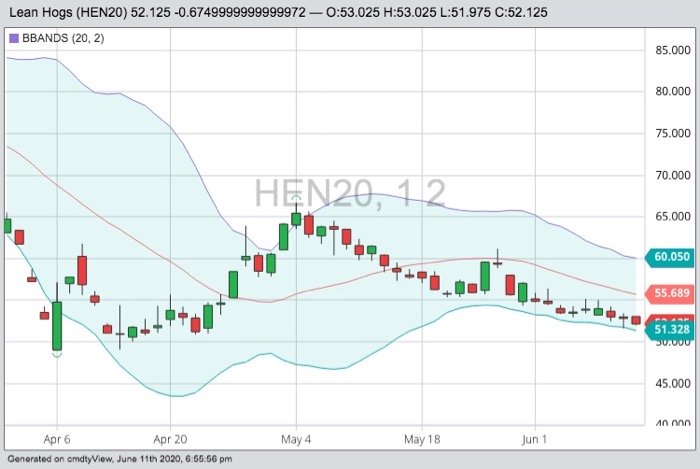
Chicago Mercantile Exchange July lean hog futures, the most actively traded contract, slid 0.675 cent, to 52.125 cents/lb. (all figures US$). August futures dropped 0.95 cent, to 54.875 cents.
“We’re not going to get into a situation where we have smaller supply that would force the market higher,” Hoops said. “We think rallies should be sold.”
CME August live cattle dipped 0.05 cents to 96.45 cents. August feeder cattle futures closed 0.5 cents lower at 132.175 cents/lb.
— Tom Polansek reports on agriculture and ag commodities for Reuters from Chicago.