Chicago | Reuters –– U.S. winter wheat futures rose on Monday on global demand and concerns about poor crop weather in America’s Plains region, while concerns about unfavourable dryness in parts of South America helped lift U.S. soy futures, analysts said.
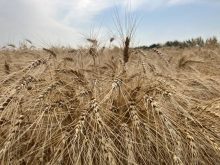
Traders focused on weather conditions after crop observers in Kansas said hurricane-force winds that raked the Plains belt last week appeared to cause varying degrees of damage to winter wheat. The crop was already struggling with dry conditions.
Kansas is the largest producer of hard red winter wheat, which is milled into flour for bread. Globally, demand for high-protein wheat has been strong after poor weather limited production.
Read Also
CBOT weekly outlook: Soybeans/corn awaiting acreage data
Soybean and corn futures at the Chicago Board of Trade posted some large price swings during the week ended March 25, as market participants reacted to the shifting news out of the Middle East and adjusted positions ahead of upcoming acreage data from the United States Department of Agriculture.
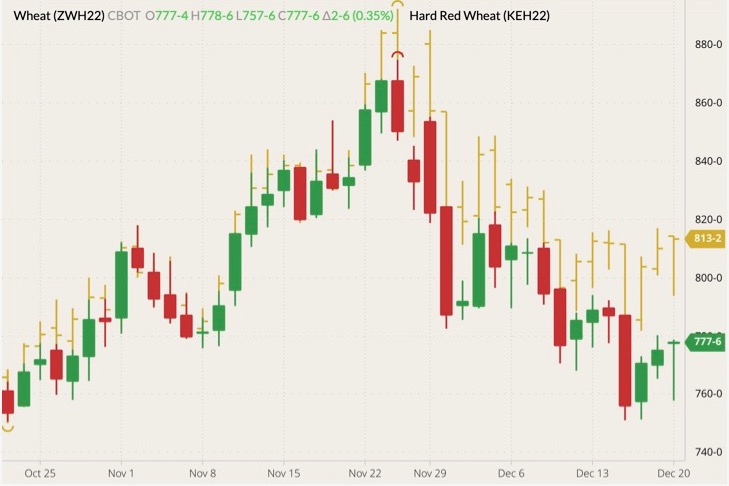
The most-active wheat contract on the Chicago Board of Trade (CBOT) settled up 2-3/4 cents at $7.77-3/4 per bushel (all figures US$). K.C. March hard red winter wheat ended up 3-1/4 cents at $8.13-1/4 a bushel.
CBOT January soybeans jumped seven cents to $12.92-1/4 per bushel. CBOT corn slipped 2-1/4 cents to $5.91 per bushel, after the most-active contract set a five-month high on Friday.
In South America, analysts said there are concerns the weather is too dry in southern parts of Brazil. Warm, dry conditions are adversely affecting roughly one-third of Brazil’s grain belt, broker StoneX said.
“Dry conditions are lingering in South America and there are thoughts this will trim production same as it did a year ago,” said Karl Setzer, commodity risk analyst for AgriVisor.
Despite the concerns, conditions in Brazilian regions with favourable weather could compensate for crop losses in others, Setzer said. He added that weather conditions in Brazil were more stressful a year ago and soybean production was still a record.
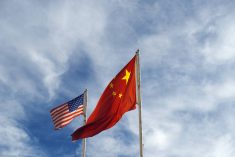
Brazil and the U.S. compete for exports to countries like China, the world’s top soybean importer.
China’s November soybean imports from the U.S. surged, after a decline in October, Chinese customs data showed.
— Reporting for Reuters by Tom Polansek in Chicago, Gus Trompiz in Paris and Emily Chow in Beijing.