Chicago | Reuters — Chicago soybean futures reached four-year highs on Thursday as continued dryness in South America’s crop areas raised supply concerns at a time of brisk Chinese demand.
Corn and wheat hit their highest in more than one week on strong demand and supply concerns.
The most-active soybean contract on the Chicago Board of Trade ended 17-1/2 cents higher at $11.03-3/4 per bushel, after climbing to $11.12-3/4, its highest since July 14, 2016 (all figures US$).
Corn added four cents to $4.09-1/4 a bushel and wheat rose 3-1/4 cents to $6.09-1/4 a bushel. Both peaked at their highest since Oct. 27.
Read Also

U.S. finalizes biofuel blending quotas for 2026-27, cuts RINS for foreign feedstocks
The Trump administration on Friday finalized new biofuel blending volumes mandates for the U.S. oil refiners, requiring more of the fuels made from corn and other agricultural products than initially proposed,in an apparent win for U.S. farmers.
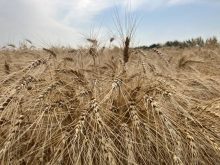
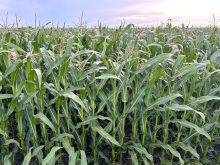
Dry weather affecting corn and soybean planting in South America, as well as winter wheat seeding in the United States and Russia, threatens to trim ample global supplies as China drives global demand.
“If things don’t improve weather-wise in South America,” said Dan Hussey, senior market strategist at Zaner Group, “We really are in a situation of one of the tightest carryouts we’ve seen in a long time.”
Weekly U.S. export sales data showed net sales of 2.6 million tonnes of corn for the 2020-21 marketing year, up 16 per cent from the previous week and 75 per cent from the prior four-week average, while soybean sales dropped to 1.5 million tonnes, down six per cent from last week and 32 per cent from the prior four-week average, according to the U.S. Department of Agriculture.
A weaker dollar and firmer share prices also lent support to grain markets as investors saw a possible conclusion to a tight U.S. election, with Joe Biden edging toward victory over President Donald Trump in result projections. An unchanged Congressional makeup eased worries of drastic Democratic policy shake-ups.
“They (farmers) were really concerned about losing the Senate, doing the Green (New) Deal and all these taxes,” said Mike Seery, president of Seery Futures. “Get rid of that, there’s a big relief rally.”
— Reporting for Reuters by Christopher Walljasper in Chicago; additional reporting by Gus Trompiz in Paris and Naveen Thukral in Singapore.