Research led by the University of Alberta has come up with mathematical formulae that will allow ranchers to predict how much methane their cattle emit based on diet.
“Methane is a greenhouse gas, and in Canada, cattle account for 72 per cent of the total emissions,” Stephen Moore, a professor in the U of A’s department of agricultural, food and nutritional science, said in a release Thursday.
“By identifying factors such as diet or genetics that can reduce emissions, we hope to give beef farmers a way to lessen the environmental footprint of their cattle production and methane reductions in the order of 25 per cent are certainly achievable.”
Read Also
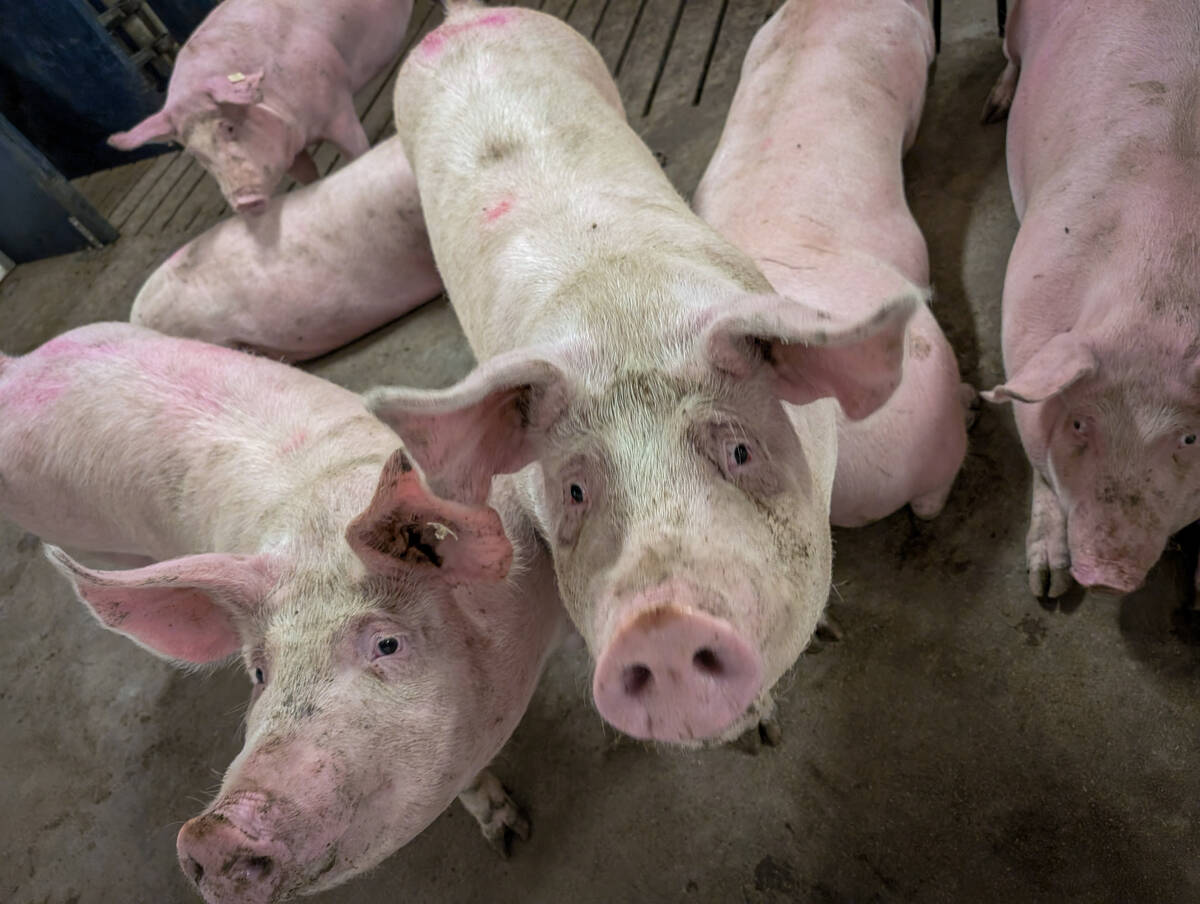
No way to segregate gene edited pigs Canadian Pork Council says as groups call for labeling
Canadian Pork Council says it supports bids to get public acceptance for pigs gene edited for resistance to PRRS as some consumer and agriculture groups call for mandatory labelling.
The equations in question could allow ranchers to balance starch, sugar, cellulose, ash, fat and other elements of feed to lessen the methane gas their cattle produce.
The study, recently published in the Journal of Animal Science, was jointly conducted with the University of Guelph, University of Manitoba, Agriculture and Agri-Food Canada and the International Atomic Energy Agency in Austria.
Using information from previous studies, the researchers came up with a database of methane production values measured on cattle. From that, they could formulate equations to predict how much methane a cow would produce based on diet.
The findings build on previous work by Moore and his team on genetically selecting for cattle that produce less methane.
Further studies are needed before the research can be put to general use, but Moore said it “promises significant improvements in environmental stewardship on the farm.”