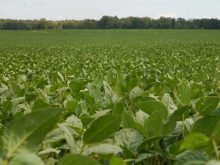
Western Canada’s mustard crops are producing their best yields in a decade, according to Walter Dyck, mustard buyer with Wisconsin-based Olds Products, noting warm weather in July and August really helped the development of crops across the Prairies.
“We are just receiving samples from our contract growers, but based on the initial samples that have been received, we’re looking at definitely above-average yields for Canada,” he said. “We probably are going to have the best yields in 10 years by quite a margin.”
According to Statistics Canada, yields are expected to be 1,045 pounds per acre for 2013-14, which would be the highest yields seen since the 1999-2000 crop, which produced 1,001 pounds per acre.
Read Also

U.S. finalizes biofuel blending quotas for 2026-27, cuts RINS for foreign feedstocks
The Trump administration on Friday finalized new biofuel blending volumes mandates for the U.S. oil refiners, requiring more of the fuels made from corn and other agricultural products than initially proposed,in an apparent win for U.S. farmers.
Despite the high yields, prices have remained fairly good for Canadian growers. As of Friday (Oct. 4), Prairie Ag Hotwire had FOB farm yellow mustard at 38 to 38.5 cents per pound, 36 to 37 cents per pound for brown mustard, and 27 cents per pound for the oriental variety (all figures $C).
“I think they are good prices,” Dyck said. “There’s no doubt, even looking at the big yields and the 37- to 38-cent a pound price that it still pencils out very well for growers.”
Looking ahead to new-crop pricing in January, he said prices shouldn’t drop too much.
“The one thing that Canada and the U.S. did not receive was a big number of acres this year, so even with the higher yields, our carryout in 2014 is not going to be that much higher,” he said.
“We’re going to have to have some very honest prices going into new-crop pricing, so I think prices aren’t going to drop that much.”
Steady export demand, despite some competition from the Black Sea region, has also kept prices from declining further due to the seasonal harvest pressure, Dyck said.
“On brown mustard, Canada continues to be the main supplier, regardless of where it’s grown in Europe,” he said. “Our big yellow market is still the U.S., and that market is very stable. Canada continues to be the leader as far as quality goes, so demand isn’t going to go away.”
— Brandon Logan writes for Commodity News Service Canada, a Winnipeg company specializing in grain and commodity market reporting.