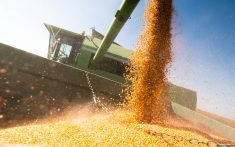
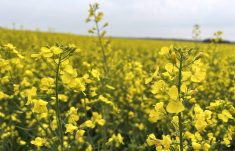
(Resource News International) –– Producers in Alberta were able to make some minor progress in harvesting canola still left out in the fields, according to a provincial crop specialist.
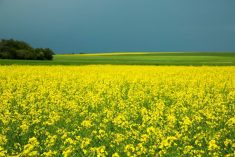
“I would estimate that maybe five per cent more of the canola crop has been combined in the central region of the province, meaning that there is still about 15 per cent of the crop left to be harvested in that area,” said Neil Whatley, a crop specialist with the province’s Ag-Info Centre at Stettler.
Read Also
Pulse Weekly: SaskPulse optimistic despite input, crop price concerns
SaskPulse executive director Carl Potts is optimistic ahead of the planting season despite lower crop prices and the war in Iran.
The harvest in the Peace River region of the province was stalled by precipitation in the form of both rain and snow, he said. It was felt that less than 10 per cent of the canola in the Peace River region still needed to be combined.
“Most of the canola has been swathed and really only needs to be combined,” Whatley said. However, he indicated there were a few fields of canola still standing in isolated areas.
Whatley also noted that depending on the region, some wheat still needed to be combined, as did a few oats.
Most of the crops still left to be combined have suffered some degree of quality and yield damage, he said.
The lack of harvest progress was linked to the high moisture content of the crops still left to be combined and to the steady rain seen across the province for the last seven to 10 days, Whatley said.
A 10-day stretch of warm and dry weather would help to finish up harvest operations in Alberta, he said.
The high moisture content of the crops being harvested, meanwhile, has meant a run on grain dryers across the province, he said.
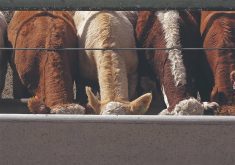
Livestock producers in the province, also continued to graze animals on pastureland where possible, Whatley said, but added that forages for livestock will be in short supply during the winter due to the adverse growing conditions seen this summer.
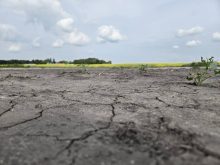
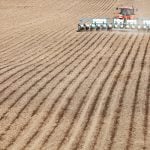
Once producers have finished their harvest operations and any fall fieldwork, a good soaking rain event would be welcomed ahead of the ground freezing, as topsoil and subsoil moisture levels across much of Alberta need to be replenished.