Equipment originally built to deal with insect pests is showing potential as a tool to manage weeds in potatoes, Agriculture and Agri-Food Canada (AAFC) researchers say.
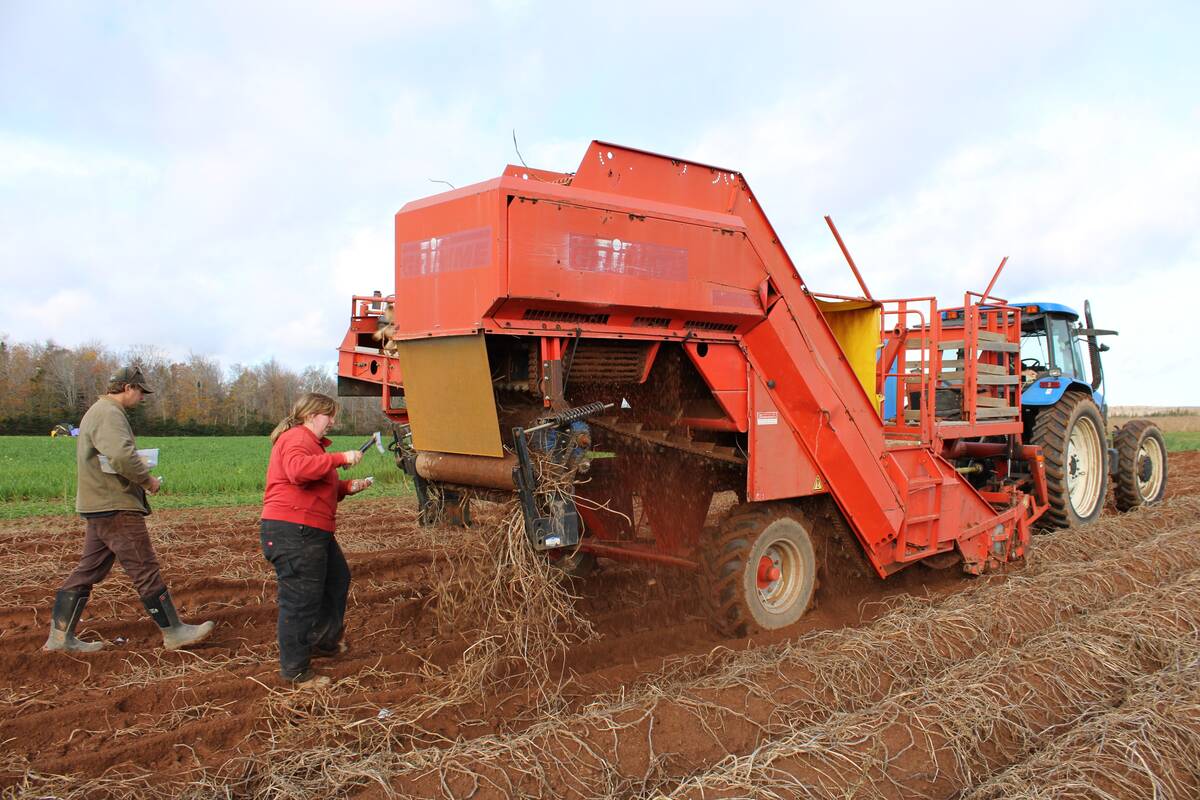
The potato vine crusher was designed more than a decade ago to crush potato vines and kill European corn borer larvae. However, research scientist Andrew McKenzie-Gopsill wondered whether the same crushing action could also damage weed seeds before they are returned to the soil during harvest.
Read Also
Research shows plant growth regulators can cut barley lodging and boost yields — in the right conditions
Plant growth regulators may let farmers avoid barley lodging while getting a nitrogen fertilizer yield bump, but mind marketing cautions.
WHY IT MATTERS: A simple piece of potato harvest equipment, originally built for insect control, is showing how farmers could reduce weed pressure while harvesting without slowing their operation.
Early testing in Prince Edward Island focused on simulated harvest conditions. Potato plants mixed with common weed seeds were run through the crusher, and the remaining seeds were tested to see whether they could still germinate.
Seed size played a role in how consistently the crusher worked, McKenzie-Gopsill said. The crusher was originally designed to prevent damage from rocks and debris.
“It’s actually on springs, so that if a large piece of debris moves through it… it allows the rollers to move out of the way to accommodate that.”
This may allow some smaller seeds to escape during harvest.
Putting it to the test in the field
After lab testing, the research moved into real field conditions.
In 2023, biologist Nicolle MacDonald with AAFC’s Pest Management Centre worked with McKenzie-Gopsill to test the vine crusher during a working potato harvest.
They dropped mesh bags containing known quantities of weed seeds into the crusher as potatoes were harvested. They then recovered the seeds and monitored them for germination.

The field results showed reduced seed viability in several weed species, particularly those with larger seeds.
The crusher was also evaluated for how it fit into normal farm operations. It was found to not interfere with harvest speed, MacDonald said.
“It doesn’t really slow down operation at all with modern tractors.”
One tool in a bigger toolbox
Both researchers emphasized the crusher is not meant to replace herbicides, but rather to support longer-term weed management by reducing the number of seeds added back into the soil.
“It’s really just to try to reduce your overall weed pressure,” McKenzie-Gopsill said.
MacDonald agreed, saying that relying on a single tactic can create new problems over time.
“An integrated approach is the best way to try and get the best control,” she said.
Built to be adapted
One advantage of the vine crusher is that’s relatively simple and adaptable compared with some large, high-cost harvest weed seed control systems used in grain crops. Farmers could further modify the design to improve performance, McKenzie-Gopsill said.
For MacDonald, the project reflects how innovation often comes from practical thinking.
“I always think farmers are the greatest innovators,” she said. “They can create solutions to problems, and can definitely modify and make what we designed better for their systems.”