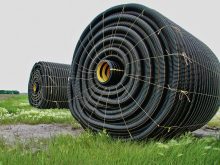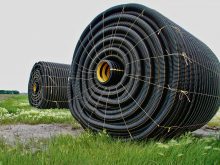
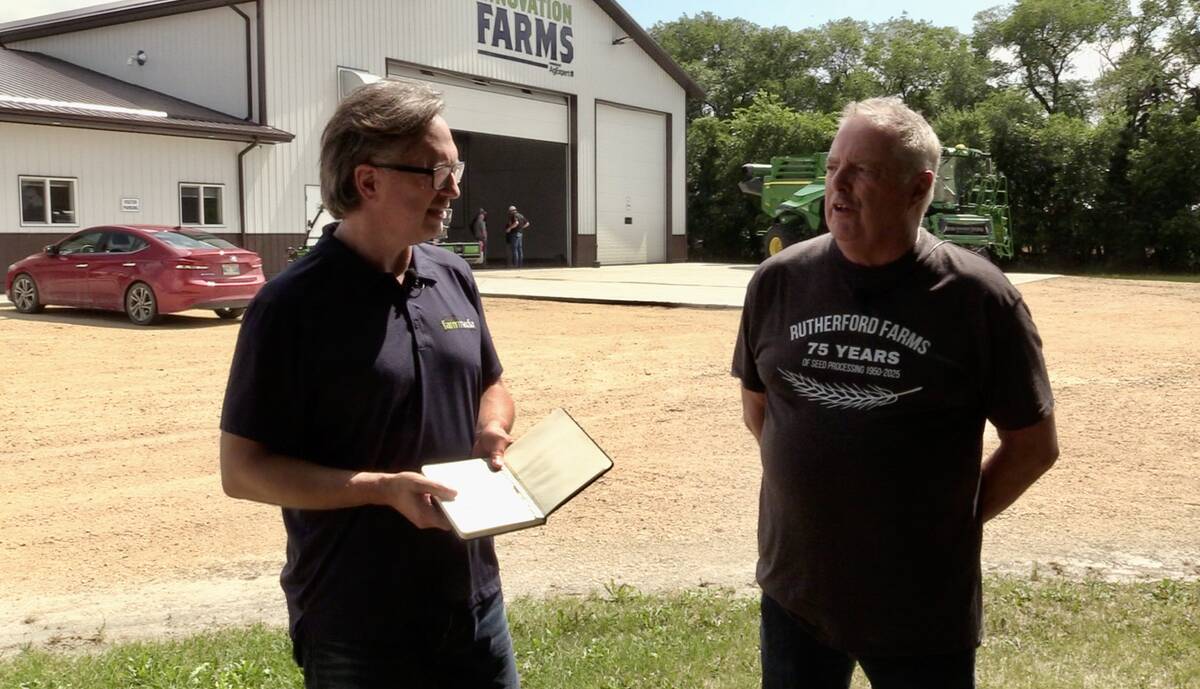
In 2013, Rick Rutherford installed tile drainage in part of a field prone to soil salinity.
Today, many more producers in Manitoba have turned to tile drainage in an effort to maximize productivity or, like Rutherford, address chronic water management issues on their land. The practice has also attracted significant research dollars into best management practices and impacts to local hydrology, nutrient and sediment runoff.
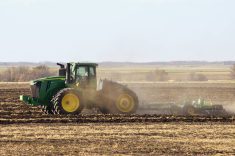
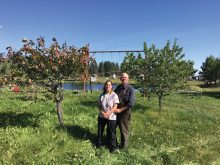
At that time though, tile drainage was relatively new in the Red River Valley. Rutherford — no stranger to testing new approaches on his farm near Grosse Isle, Man., which hosts EMILI’s Innovation Farms — was willing to give it a try.
Read Also
THROWBACK: Optimizing crop selection for Prairie organic producers
Stop settling for conventional data. Discover the essential plant traits organic farmers need — from seed size to height — for better yields.
“It’s got great surface drainage, but because of the discharge area … the problem we were running into is we had an area in the field that salt content keeps increasing on us and lowering productivity,” Rutherford said at a Manitoba 4R Day earlier this summer.
When weighing the financial pros and cons of tile drainage, it was suggested to the farmer that installing tile would come with a two or three year timeline before productivity returned to that part in his field. In reality, it took about four times longer than that.
“It was probably anywhere from eight to 10 years till we got to the level that we were anticipating at the start,” said Rutherford. “So, you know, in a project like this, it’s all about return on investment.”
“We probably invested about $1,500 an acre at the time. So to go through that many years without any return on investment, the whole project has been interesting for us.”
Alternative approaches
At the time he installed it, tile was one of the few methods presented to deal with Rutherford’s soil salinity issues, but there’s one low-tech technology discussed at the 4R Day caught his attention.
“This mole plow that was talked about this morning, it’s just making a cavern, basically in the same place that you would put the drain tile,” said Rutherford.
This type of plow would essentially cut a channel into the ground where water could flow away from the parts of his field prone to excess moisture.
Investing in such a tool would eliminate long-term infrastructure costs, other than the initial cost of the plow itself.
“We don’t own one yet, but we look at that as an option, maybe because of the investment cost per acre,” said Rutherford.
“If we could take the $30(000) or $40,000 that a mole plow is worth and put it over a vast amount of acres, we think that it probably would have a better ROI (return on investment) than starting to put more drain tile in the ground today.”