

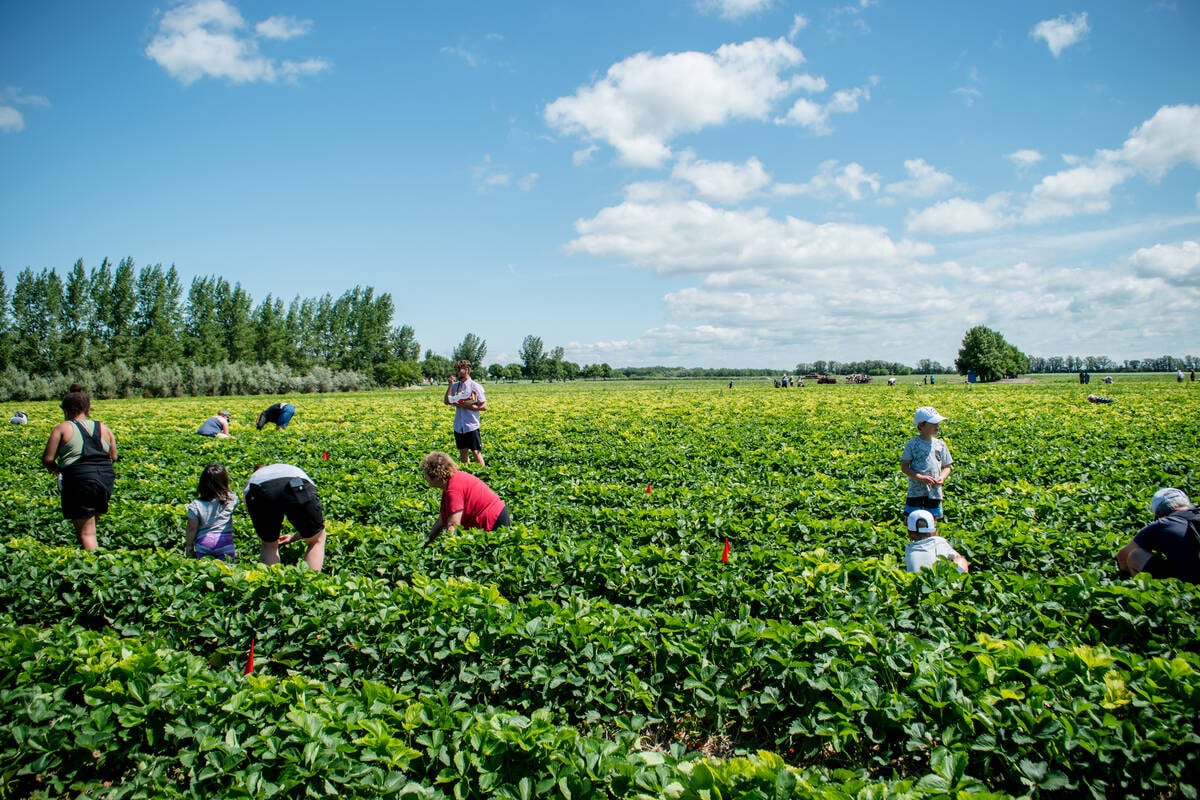
Long, cold Prairie winters make growing strawberries as an outdoor crop risky. If someone is eyeing strawberry farming, or looking to expand an existing operation, fall is the time to start sourcing what you need, said a producer from one Alberta-based strawberry U-pick.
WHY IT MATTERS: While a small player nationally, Manitoba’s strawberry production hit 1.5 million pounds in 2024, according to Manitoba Agriculture statistics.
Richard Staples of The Jungle Farm near Red Deer, was speaking at a webinar hosted by the Alberta Farm Fresh Producers Association (AFFPA) Oct. 9, but his procurement advice had lessons for producers across the Prairie provinces, Manitoba included.
Read Also
Manitoba John Deere dealers plan merger
Two retail dealership chains handling John Deere farm equipment in Manitoba say they plan to merge, bringing 13 locations under one organizational umbrella.
Fall is the time to call up nurseries and order next year’s strawberries, he said.
“Some of the nurseries even like it earlier so they can know a year out what they need to produce. But in the fall is definitely when I think the majority of farms start to get their orders in for next year,” he said.
The Jungle Farm procures plants from nurseries for both their customers and their own cropping. The earlier the order, Staples said, the greater the likelihood of getting deals on bulk orders.
“There’s some great nurseries out in Nova Scotia and down on the west coast of the (United) States, as well as a few in Ontario and Quebec,” he noted.
The drop-deadline for farmers to make orders to nurseries is no later than the end of November, he said.
“That will allow us … to let the nurseries know to make sure we can get those plants that have been ordered.”

Determine your mulch
Mulch is a fundamental tool for overwintering strawberry plants. The period right before freeze-up is the time to apply it, Staples advised.
The kind of mulch depends on the needs of the operation. Straw is by far the least expensive and one of the easiest to apply. Staples singled out the, in his view, superior insulation qualities of soft white wheat straw.
There are a host of different potential wheat or barley straw mixes strawberry operations can use, he said, but Manitoba Agriculture declares wheat or oat straw the best mulch materials for the Prairies.
The Jungle Farm has a large round bale shredder it uses to produce straw mulch. Staples generally aims for 10 to 15 six-foot round bales. “You would have to calculate how much straw you would need per acre,” he said.
But straw isn’t the only option for mulch, and some farms use alternative straws, or no straw at all.
“There are some people who use pine straw or just use row cover, which is a fabric or ground covering,” Staples said. “So there’s a few different options.”
Early birds win on fertilizer and pesticide purchase
Autumn is a good time for strawberry growers to buy fertilizer, pesticides and irrigation equipment, said Staples.
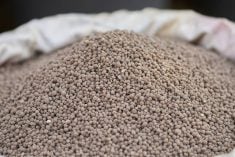
His own organic fertilizer is purchased at his local Central Alberta Co-op. Liquid fertilizers are also applied in-season on the Alberta farm. Those are sourced from three businesses in Calgary: TerraLink, Professional Gardener and the local branch of Nutrien.
“We’ve had good luck dealing with them to get different liquid fertilizers or some of the specialty granular (fertilizers) for going through drip irrigation,” Staples said.

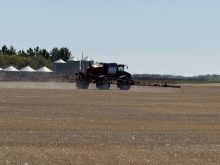
The good news about pesticides for strawberries is that many of the chemistries are the same as what’s applied on canola fields, said Staples, meaning they are easy to source despite the comparatively small land base accounted for by strawberries. Earlier this year, strawberry production experts told the Co-operator that strawberry growers have between 15 to 20 herbicides to choose from, depending on budget and the problem the farmer wants to address.
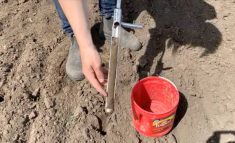
In Manitoba, fertilizer recommendations for strawberries are available on the Manitoba Agriculture site, which also offers soil testing instructions for strawberry producers considering the crop.
Going U-pick? Get packaging
The ideal for most U-pick operations would be to have customers bring their own baskets or other means of conveyance. That doesn’t always happen, said Staples. That calls for farmers to have a ready supply of packaging materials on hand such as pails, baskets or clamshell containers, which should be relatively easy for a strawberry farm to source with a little forethought, he said.
Follow BMPs
The mulch, fertilizers and weed control for strawberries may still not set the farmer up for success if other agronomic factors are ignored. Manitoba Agriculture, for example, urges producers to avoid planting the berries following sod “as wireworms and white grubs may be a problem”.
Appropriate crop rotations are highly encouraged for a number of reasons, with the prevention of verticillium wilt figuring highly among them. One Manitoba Agriculture article says, “Do not plant strawberries following strawberries, raspberries, potatoes, tomatoes, peppers, eggplant, sunflowers and alfalfa. Summerfallow for at least two years between crops, if possible.”
Even wind direction requires consideration, The government department recommends planting strawberries parallel to prevailing winds to encourage speedy drying of foliage and fruit. This helps prevent fruit rots such as botrytis and leaf diseases such as leaf spot, leaf blight and leaf scorch, the department notes.