Bayer is touting a new seed brand it describes as a throughline for crop producers interested in the growing sustainable aviation fuel market.
The company recently announced the launch of Newgold, a multi-crop seed brand designed specifically for low-carbon intensity biofuel feedstock crops earmarked for renewable diesel and SAFs.
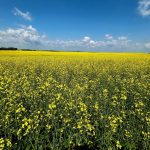
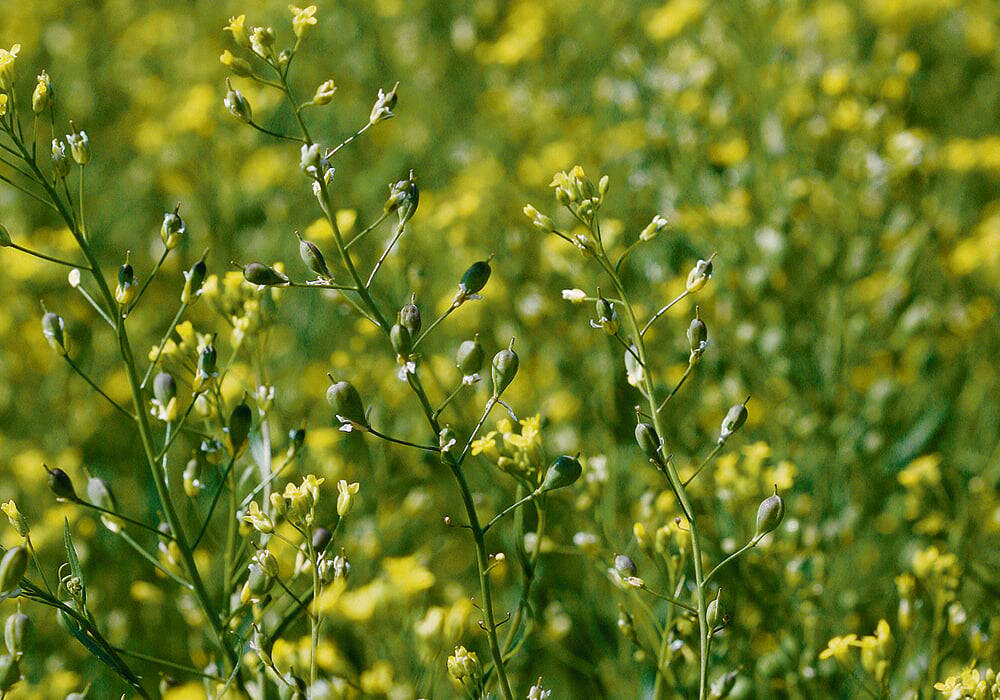
The lineup includes both spring and winter camelina and is making its Canadian pilot debut in southwestern Saskatchewan and southeastern Alberta, concurrent with its U.S. launch.
Read Also
White mould control requires flexible timing under Prairie conditions
Fungicide timing for white mould depends on canopy development, disease risk and number of planned applications, North Dakota pathologist Michael Wunsch told growers at CropConnect 2026.
It’s also being launched as a winter canola product in Kansas, Oklahoma and northern Texas.
WHY IT MATTERS: The U.S. is driving a potentially lucrative market for sustainable aviation fuel (SAF), aiming for a projected 132.5 billion litres by 2050.
Seed sold under the Newgold label is designed to act as a “profit multiplier” that can be leveraged three ways, depending on grower need:
- As a double crop that adds value between seasons. Double cropping – not to be confused with intercropping — means growing two or more crops in the same field during a single growing season, generally after the harvest of one crop and the seeding of another.
- Use within rotations for good agronomic management and diversifying income. Newgold products are designed to be compatible with rotations common to its pilot regions, says Shaun Corneillie, the canola, cereals and biofuels business lead with Bayer.
- Turning marginal or underused acres into more productive assets.
“Newgold seed is built for farmers focused on ROI (return on investment), performance backed by science and clear market demand,” wrote Corneillie in an email.
So why is the company focusing initially on camelina and winter canola?
“Both of these crops are considered low-carbon intense based upon their crop product placement, yield potential and overall inputs, making them great candidates for the growing renewable diesel and sustainable aviation fuel markets,” Corneillie says.
Camelina is also a drought‑tolerant oilseed crop that fits easily into dryland rotations, he says.
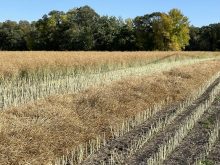
“Winter camelina can be double‑cropped with soybeans or other summer crops, letting farmers grow two crops in one season.
“It may require less inputs than other core crops in rotations and performs well in low-rainfall areas, making southwest Saskatchewan and southeastern Alberta a nice fit agronomically.”
If double-cropping sounds a lot like using cover crops, you’re not far off, but there’s a difference. Although the practice performs the same kinds of agronomic functions as cover crops, the difference is it’s also harvested for profit.
“So as opposed to just having the purpose of covering ground over winter, taking it out of production and then sowing in the spring, in this case — prior to sowing in the spring if it was a winter crop — we want to see that grain harvested and be used for biofuel streams.”
Complements both food and fuel production
There’s a noted need for solutions to meet the current high demand for SAFs.
Maddhu Khanna, an environmental economics professor with the University of Illinois, outlined to Glacier FarmMedia last year the challenges of meeting the United States’ SAF goals.
The U.S. hopes to increase production of SAFs, gradually reducing dependence on petroleum until 2050, when it expects the entire aviation industry to go 100 per cent SAF — a projected 35 billion gallons (132.5 billion litres) by that year.
That’s ignited a debate as to how crop producers are going to meet that goal while sacrificing food-producing land as little as possible.
Corneillie believes Newgold can act as a middle ground solution, allowing fuel crops to complement food production by building the soil and performing other integrated land management functions.
“It’s not seeking to displace crop at scale, but as a complement to existing rotations,” he says.
Several herbicide options are available for Newgold, but Corneillie recommends growers reach out to a Bayer representative to find the best program for their operations.
The brand name “Newgold” was among the assets that came to Bayer last year when it bought the camelina germplasm and intellectual property assets of Saskatoon-based Smart Earth Camelina Corp.