It’s time for producers to mix things up.
Speaking at the annual Crop Connect conference in Winnipeg last week, Don Flaten said that mixed farming can help balance phosphorus levels in the province.
“But I’m not saying everyone should have some cows, some pigs, a few chickens, forage and crops,” he said. “What I mean is that we have complementary systems in our communities… there is no reason we can’t have a healthy balance.”
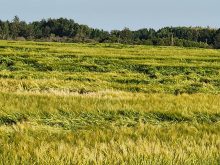
He pointed to initiatives in the community of Rosser, where livestock and crop producers actually swap some fields every few years to build up phosphorus in deficient soil and deplete it where there is an overabundance.
Read Also
White mould control requires flexible timing under Prairie conditions
Fungicide timing for white mould depends on canopy development, disease risk and number of planned applications, North Dakota pathologist Michael Wunsch told growers at CropConnect 2026.
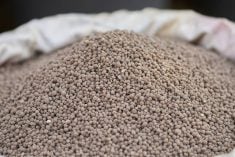
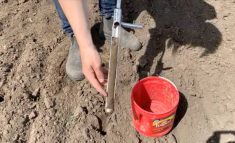
“We’ve got this interesting dilemma — throughout the whole world actually — where there is excess phosphorus accumulating in soil, leading to losses with surface water,” said the soil scientist. “But then you’ve got these other areas, where phosphorus is declining. And ideally we’d like to see a balance, where farmers are balancing out the phosphorus they lose through harvest.”
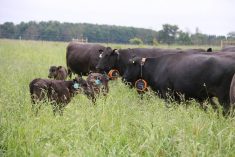
Livestock operations that import feed can contribute to an imbalance in phosphorus levels, if proper consideration isn’t given to where those nutrients ultimately end up. Flaten said that at one time excess nitrogen was the biggest concern with livestock operations, but today’s understanding of nutrient management is more complex and nuanced, taking many factors into account.
“What we’d like to see in terms of livestock and crop operations in the future is trying to encourage, sort of community-based complementary operations where livestock operators work with crop producers to avoid overapplication of manure phosphorus onto a small land base,” Flaten said. “Sort of land sharing, or manure sharing, whatever works, to take advantage of those manure nutrients and make them a positive thing.”
The direct marketing of manure to crop producers is another way to balance out phosphorus levels in Manitoba, he said.