
Manitoba’s strawberries are off to a strong start.
Mulch removal started in the first week of May, according to crop reports from Manitoba Agriculture
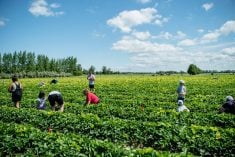
WHY IT MATTERS: Strawberries draw a crowd, making them a popular fruit crop for Manitoba U-Pick operations.
Read Also
White mould control requires flexible timing under Prairie conditions
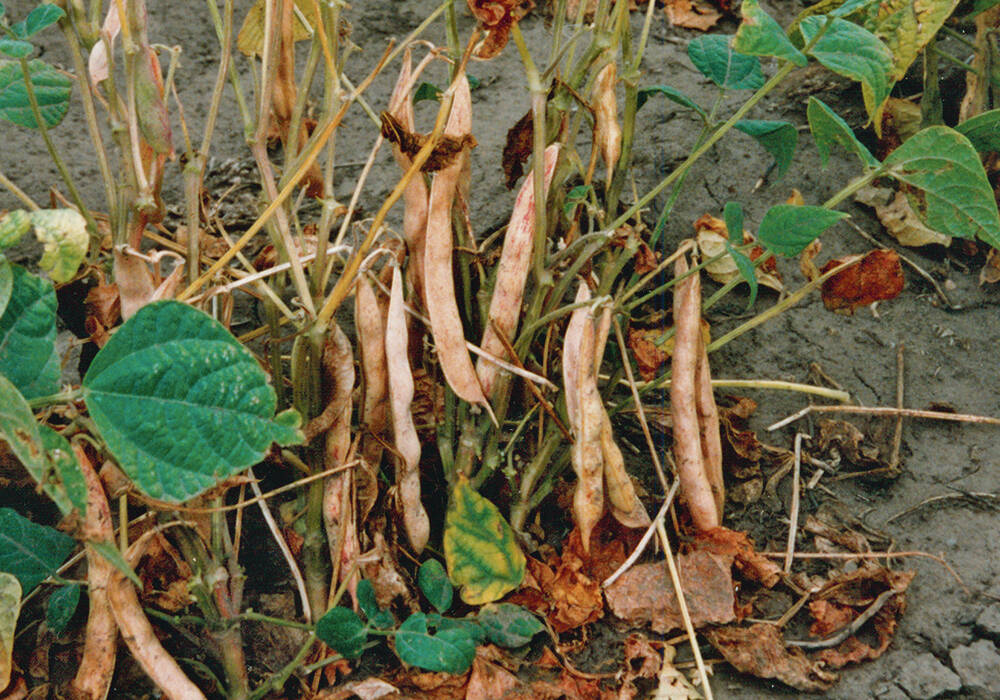
Fungicide timing for white mould depends on canopy development, disease risk and number of planned applications, North Dakota pathologist Michael Wunsch told growers at CropConnect 2026.
“For strawberries, all the straw mulch has been taken off,” said Anthony Mintenko, Manitoba Agriculture fruit crops specialist in mid-May. “Especially with this warmer weather we’ve had the last little while. And planting of new strawberries is ongoing.”
Manitoba grows only two per cent of Canada’s strawberries overall, but it’s the largest strawberry producer on the Prairies. In 2024, the province boasted 500 strawberry acres, with 250 of those yielding fruit.
The Prairies had good wintering conditions and Manitoba enjoyed some of the best weather of the three, according to Mintenko.
Stretches of blistering cold may stand out in residents’ memory, but overall, the fruit specialist noted, the winter was mild. The late fall allowed plants time to go dormant and, although Manitoba didn’t see a lot of snow cover, “we had enough snow on top of the straw that provided pretty good protection,” Mintenko said.
Farther west
Saskatchewan and Alberta also fared well.
Saskatchewan’s provincial fruit crops specialist, Forrest Scharf, said the past winter didn’t “test” producers and plants as it sometimes does.
Most patches in Saskatchewan still had mulch on in early May. The spring hasn’t been as warm as other province, he said, and Saskatchewan often runs a late frost risk. He estimated producers are a week to a 10 days behind Manitoba.
Alberta, meanwhile, has had a warm spring, but dry in some areas. Leona and Blaine Staples, owners and operators of the Jungle Farm outside Innisfail, Alta., said their fall was also dry, although their winter was mild. They’ve seen little runoff, and most dugouts and nearby ponds were already dried up last fall fall. They and others in their area removed their mulch in the last week of April, and Blaine Staples estimates they’re about a week to 10 days ahead of schedule.
Spring strawberry agronomy
With the mulch off, Manitoba producers will now turn their attention to weed control. Dandelions, quack grass and volunteer cereals from the straw mulch are among those weed concerns.
Strawberry growers have 15 to 20 herbicides to choose from, depending on what a producer would like to address and what their budget is. Resources also point to more integrated weed control methods such as watering techniques and fertilizer rates to keep crops competitive while discouraging weed growth.
If starting a fresh patch, Mintenko said its best to use a clean field that has had a broad spectrum herbicide burnoff. For organic producers, he suggested treatment with an approved organic acid.
If a producer missed out on the chance to put down a pre-emergent in fall, Scharf, Staples and Mintenko say the best options are spot spraying and hand weeding in an already established crop.
Mintenko added that if a pre-emergent was missed, herbicide application in the spring won’t do much to help already established roots. Hand weeding is likely to be quicker and more effective than spot spraying.
Staples, though, finds that a herbicide that targets grasses can be helpful.
“I will do an herbicide application for the volunteer grain that starts to sprout out of the mulch,” he said. “But otherwise, it’s all, you know, spot spraying and hand weeding for our spring weed control.”
For the Alberta producer, dandelions are the most common and worst weed he deals with.
“Those fluffy little seeds, they float in and they get caught right at the stem of the strawberry plant,” he said. “And then they’ll germinate, and that dandelion grows right intermingled with the roots of the strawberry plant. So, they tend to be really bad.”

Scharf, meanwhile, pointed to round-leaved mallow. The sprawling perennial weed has similar growth patterns to strawberries. The only way to deal with it is by hand weeding, or starting a new patch.
“You want to keep the crop but, in this case, where the weed is very similar to the crop, then it’s harder to manage it,” he said.
Good quality water is another key factor, experts note. Poor water can reduce how well herbicides work, and spraying in fruit crops is no exception.
Scharf recommends changing field locations every few years and to begin weed control at least two years ahead of using the field. It’s important to consider building organic matter content and reduce the weed seed bank, as well as spraying and tilling to get the field as clean as possible, he said.
He pointed to cover cropping to build that organic matter.
Strawberries can be a tough crop on soil, Staples noted. He tries to give the land a break as much as possible.
After a strawberry patch, they’ll plant vegetables for two years, then a cover crop for two, before planting it back into strawberries. His cover crops are typically oats. They’re good at freeing up phosphorous and potassium in the soil and rhizosphere, he said. He follows by a high-glucosinolate mustard, something that’s also been used in potatos as a biofumigant.
Strawberry summer
Weather is expected to stay generally warm. Crop specialists urged producers to make sure they’re watering enough, preferably with drip line irrigation rather than sprinklers to limit possible disease spread and keep roots cool.
“Most of the roots are within the first, like, top six inches of soil,” said Mintenko. “So if that top layer of soil heats up a lot … then you can really start getting plant stress quickly just because of the heat.”
He recommends frequent, short watering periods with drip line, even during the heat of the afternoon to help lower root temperature.
Drip line also allows for applying water soluble fertilizer via “fertigation” to better target nutrition to plant roots.
Granular fertilizer can be split with a half rate in spring, and the other half rate after harvest, Mintenko noted.
Insects will be another battle. For many strawberry growers, lygus bugs are the biggest problem.
Staples sprays his first round of insecticide with the first bloom of his strawberry crop, then again seven to 10 days later. With this plan, most pests are “pretty well cleaned up.”
Any other herbicides or insecticides are sprayed a minimum of three weeks before fruit is ripe to avoid residue.
Last year, Manitoba strawberry producers, along with other fruit growers, had a bad year for spotted wing drosophilia, thanks to high levels of early season precipitation.
That’s not in the outlook for this year, Mintenko said. So far, the weather isn’t favourable for the pest and it may stay that way.
“Even though everything is irrigated, it’s not the same as a good rain,” he said.
Mintenko recommends that, after harvest, producers re-apply their pre-emergent herbicide and fertilizer, as well as hill between rows to narrow the rows and mow top leaves off. A key piece is to keep watering after application and mowing, otherwise next year’s fruit development could be impacted, he noted.
Note: Forrest Scharf can be reached via email, [email protected] and Anthony Mintenko can be reached via email, [email protected] for strawberry agronomy advice.