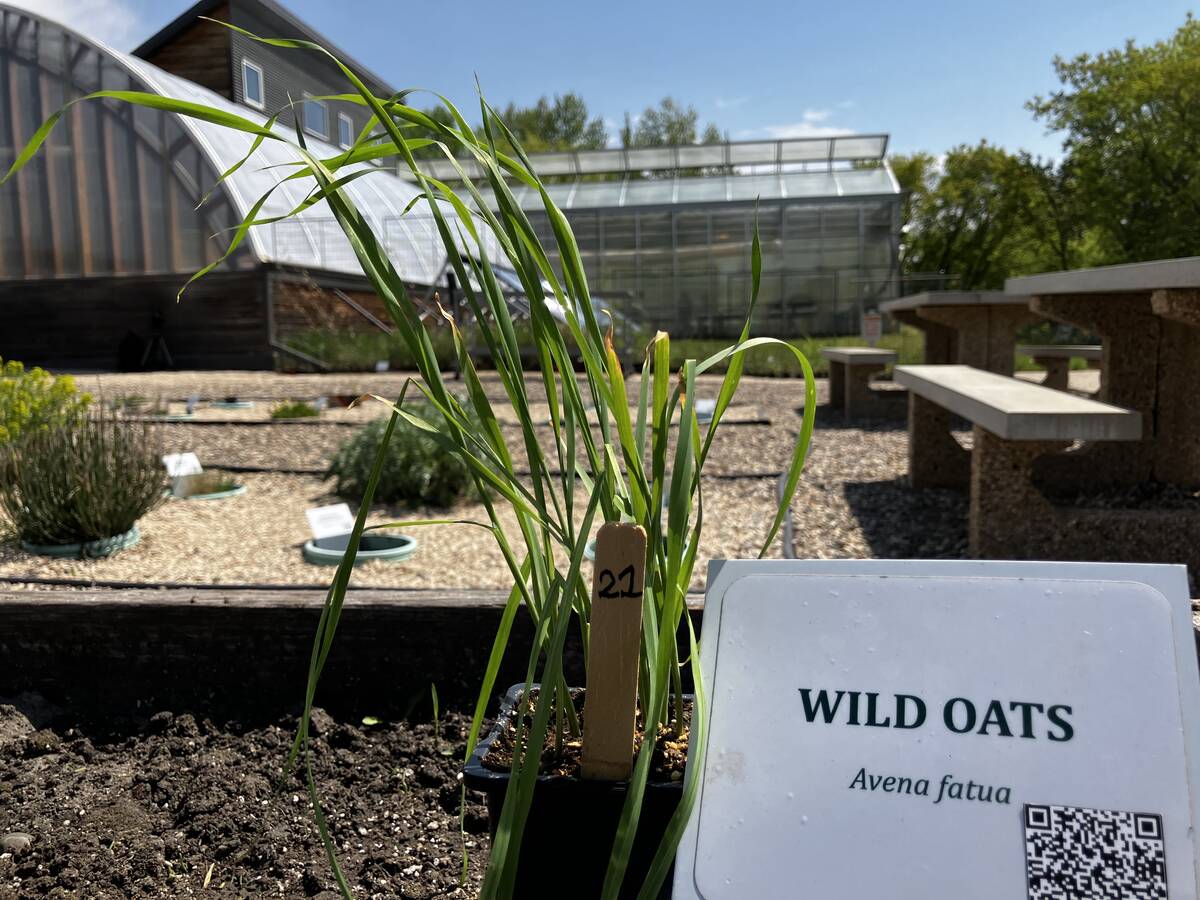
The idea that more wild oats are becoming resistant against go-to herbicides isn’t new, but weed experts warn that farmer’s shouldn’t let that problem become background noise.
These are the facts, Manitoba Ag Days attendees heard during the 2026 show:
Wild oat pressure is increasing across Manitoba. Herbicide resistance widespread.
Read Also
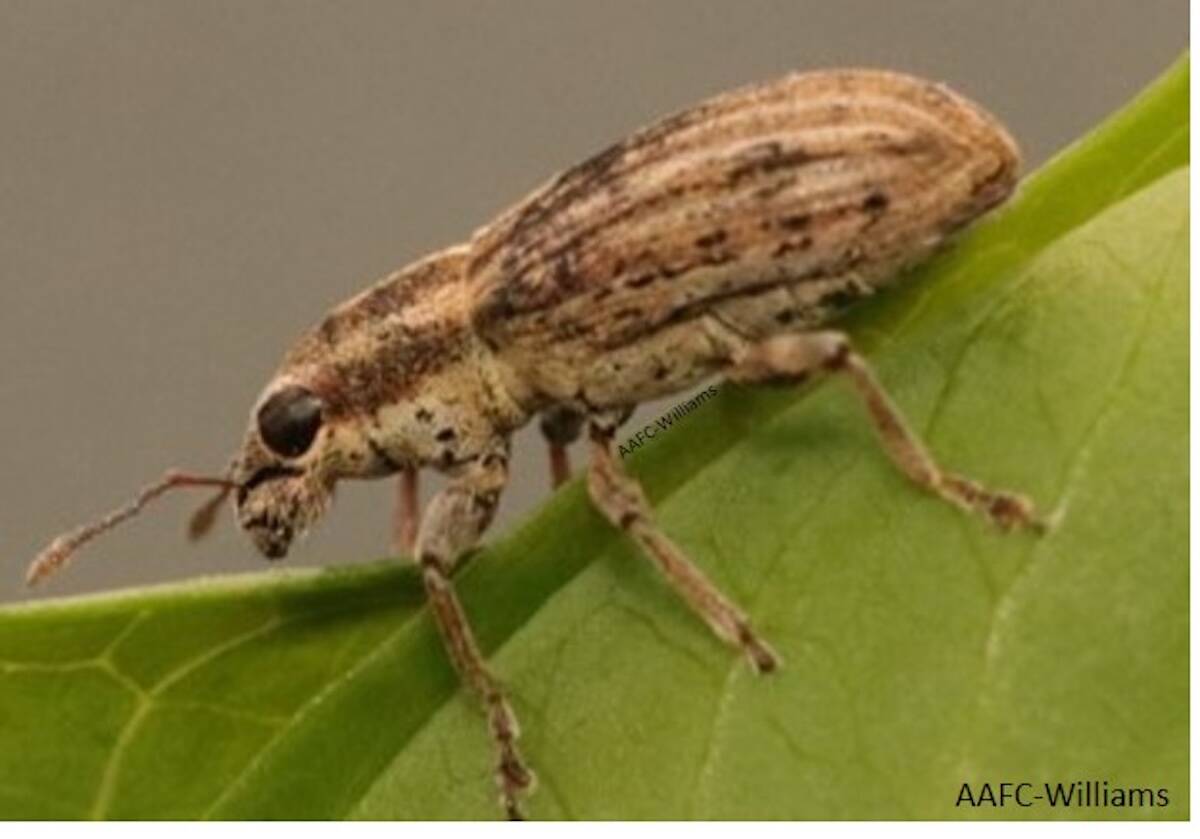
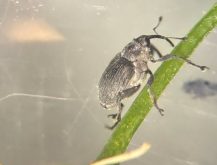
Pea leaf weevil chows down on Western Manitoba
Pea leaf weevil has spread as far east as Manitoba’s Ontario border, while the west has become a Prairie-wide hotspot for the pest insect.
WHY IT MATTERS: They don’t have as much hype as kochia or waterhemp, but herbicide resistant wild oats are a quieter threat that continues to gain ground in Manitoba farm fields.
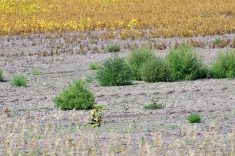
Weather patterns in recent growing seasons have favoured the weed, particularly outside of the Red River Valley, according to Jeanette Gaultier, technical specialist with BASF Agricultural Solutions Canada.
“In the last two years, there has been an uptick in wild oat, which is always problematic, but it just seems to be really loving the springs that we’ve had and really taking advantage,” she told the Ag Days crowd.
Resistance levels reaching breaking point
Resistance levels are already stacked against farmers, Gaultier noted, pointing to recent survey data that showed only 20 per cent of the wild oat population tested was not resistant to some chemistry.
Even more worrying is the number of wild oats coming back as doubly resistant —neither Group 1 or Group 2 products are doing the trick anymore. The last province-wide weed survey, with data collected in 2022, found that every one of the 155 fields sampled had wild oats resistant to Group 1, and Group 2 resistance wasn’t far behind. A whopping 82 per cent of samples were resistant to both Group 1 and Group 2.
“So, the numbers are against you,” Gaultier said.

She cautioned, however, against assuming all products in those larger groups are useless. Resistance expression can vary.
“There is some variable, with lots of different mutations for these resistances, and you do get variable cross resistances,” she said.
Why wild oats are so difficult to control
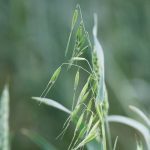
Wild oats remain difficult to manage even in competitive crops, in part because of their early emergence and seed production. The weed’s patchy distribution and relatively short seed bank can still be leveraged, Gaultier said, if farmers focus on preventing seed return.
Reducing seed set remains critical, particularly given the cost and limited availability of effective herbicides. Soil-applied products are increasingly important, since post-emergent options are limited.
Crop choice and rotation can also play a role, especially in crops that mature earlier.
“Growing something like peas or fall rye and winter wheat is actually a really great strategy, because you are actually capturing a lot of those seeds,” Gaultier said.
Integrated management essential
Experts are increasingly urging farmers to take an integrated approach to wild oat management. Kim Brown, a weeds specialist with Manitoba Agriculture, said resistance surveys continue to show significant challenges with wild oats across the Prairies.
“There are no other post emergent options for wild oats, other than Group 1 and Group 2, but basically… the Group 1s and Group 2s are there, and they’re not working so good,” she said.
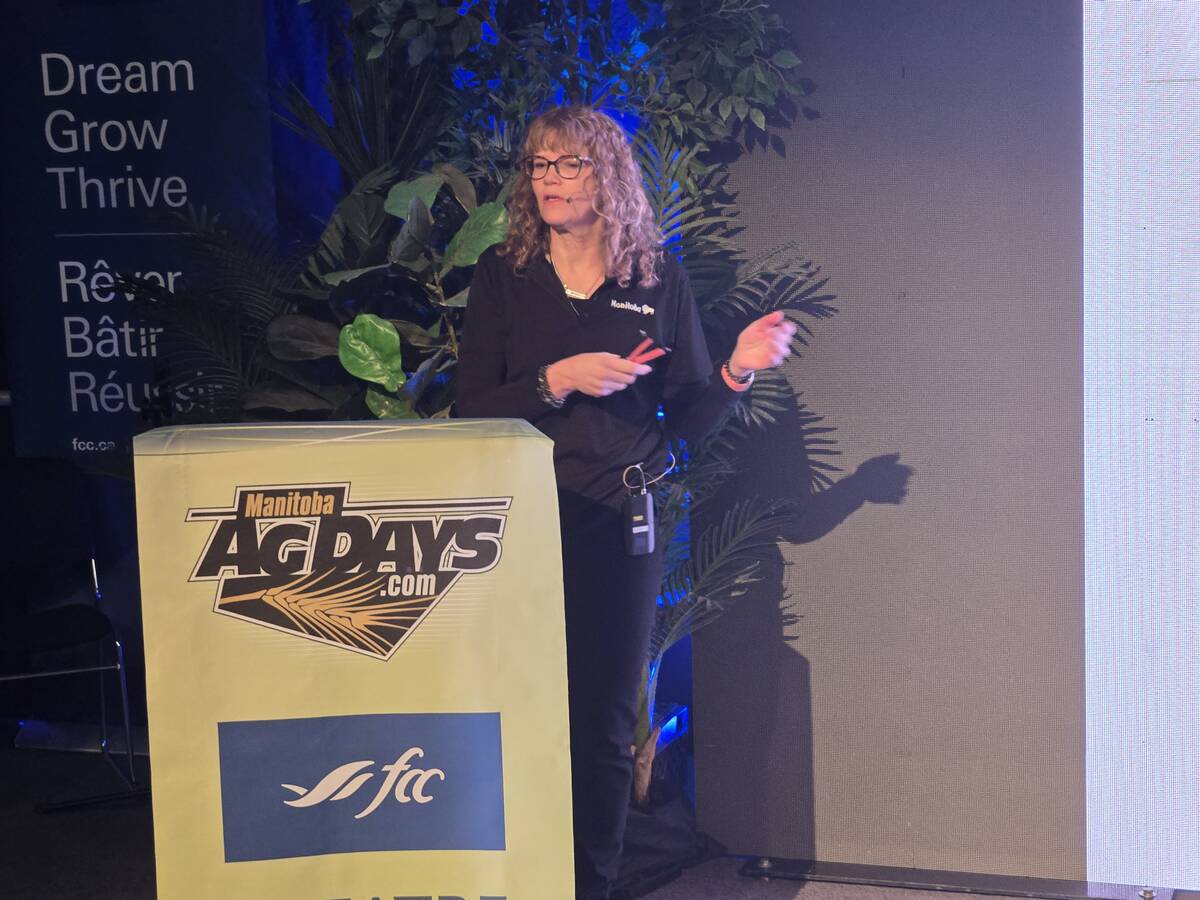
Brown also pointed to older cultural practices that farmers might associate more with their parents or grandparents, before modern herbicides were widely available.
Those forebears “used to delay seeding, used to do a bunch of tillage,” she said. “They didn’t have herbicides back then. And then, you seed later. The crop comes up fast and gets ahead of the wild oats.”
However, Brown and Gaultier agreed that no single tactic will solve the problem, and wild oats must be managed as part of a broader, integrated approach.
For more Manitoba Ag Days coverage, watch the Co-operator’s Ag Days landing page.