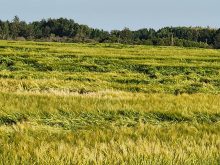

Identifying poor performance areas in a field is the first step to properly managing those unproductive patches and padding the bottom line.
That’s what producers heard during Manitoba Agriculture’s last Crop Talk webinar of May.
WHY IT MATTERS: Not every acre will turn the farmer a profit if planted to high-value crops. Sometimes, farmers might fare better if they manage less productive acres differently, with an eye to soil health management.
Read Also
Weed resistance closes in on glufosinate
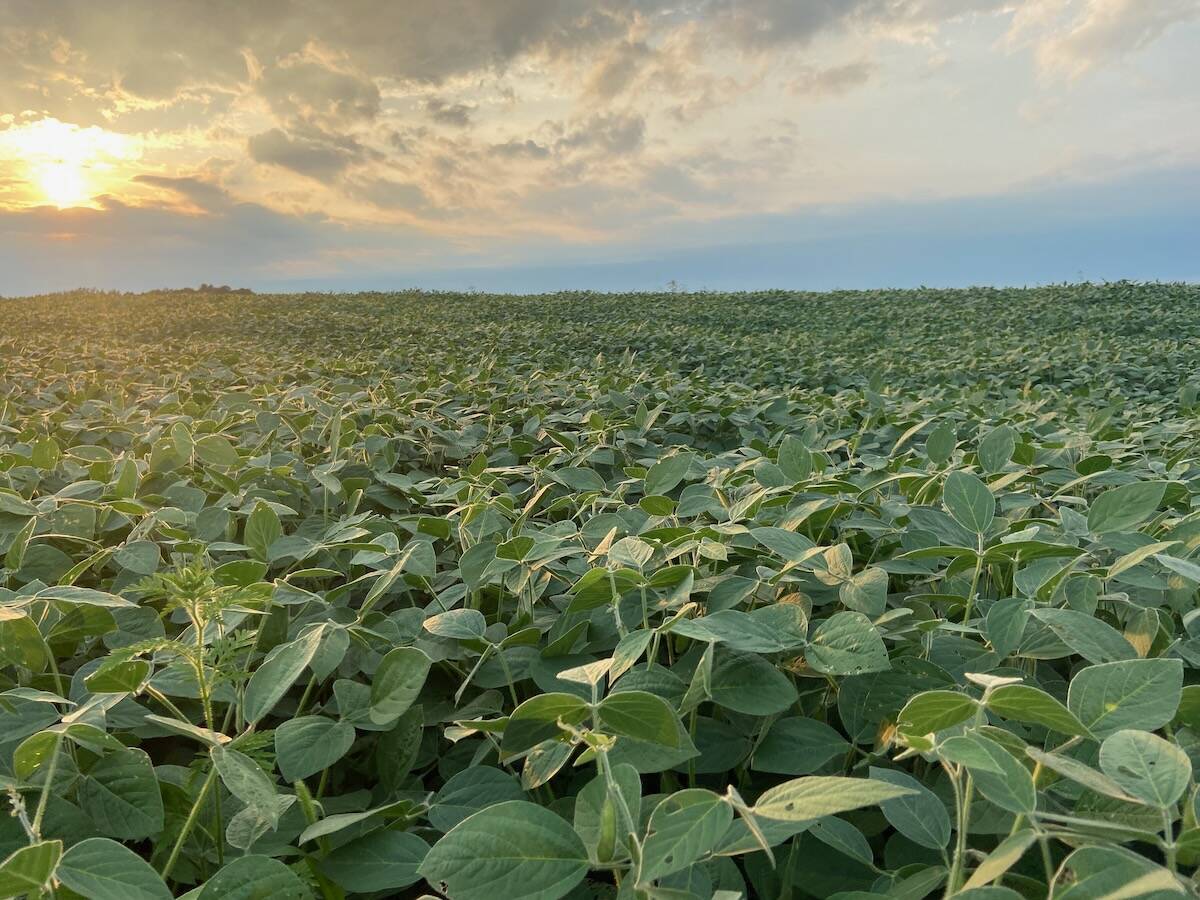
Expanded soybean acres and tighter application windows have eroded buffers that have so far protected Liberty herbicide on Prairie farms
It’s important to understand the underlying causes of poor crop performance in order to treat it, said Marla Riekman, a land management specialist with Manitoba Agriculture.
“If you are seeing a problem, we want to locate it. We want to know what’s going on, and then we’re going to figure out what we want to do about it,” Riekman said.
Key causes of field variability
She noted that every field has less productive areas and the causes can often be traced to specific management practices or natural influences, like weather, that are more out of the farmer’s control.
There are several factors that contribute to field variability and that farmers have some say over, including tillage erosion, soil fertility issues, compaction and crop residue management, listeners heard.
Soil-based production issues
Soil crusting has been one concern this spring that may yet come due when measuring Manitoba field performance.
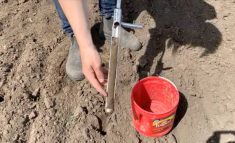
“When we see something like these emergence issues, and you go digging and you actually find the seedlings that are leafing out under the surface… that can be an indication that that crop has just not got enough power to push through that crust,” Riekman said.
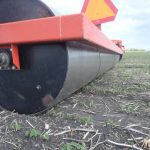
Wind erosion has also become more prevalent in recent years, she said, particularly with increased use of high-speed discing equipment.
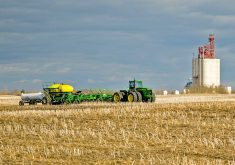
While Riekman acknowledged that machinery as an effective tool for seedbed preparation, she cautioned about their timing and frequency of use.
“The problem with a disc type unit is that it does break down or pulverize (soil), and the rolling baskets and things that kind of even things out at the back end of those types of units can also break up that soil structure a fair bit. And it makes a very smooth surface, and the smoother the surface, the easier it is for the wind to pick up along that surface,” she said.
Salinity also continues to be a challenge, particularly during dry springs when upward water movement brings salts to the surface. This year’s dry conditions have made salinity more prevalent across the province, Riekman said.
Manure to build soil
For producers considering management strategies, strategic manure application can help address some productivity issues, particularly on eroded hilltops or saline areas.
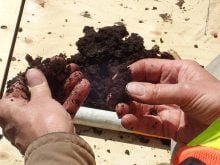
“Placing the manure up there could be helpful because you’re essentially bringing back productivity by adding … organic matter back to those systems,” Riekman said.
Farmers shouldn’t expect immediate solutions, she noted. Quick fix products may not give the results farmers want.
She instead urged farmers to look at good, old fashioned build up of soil structure through soil-focused management.