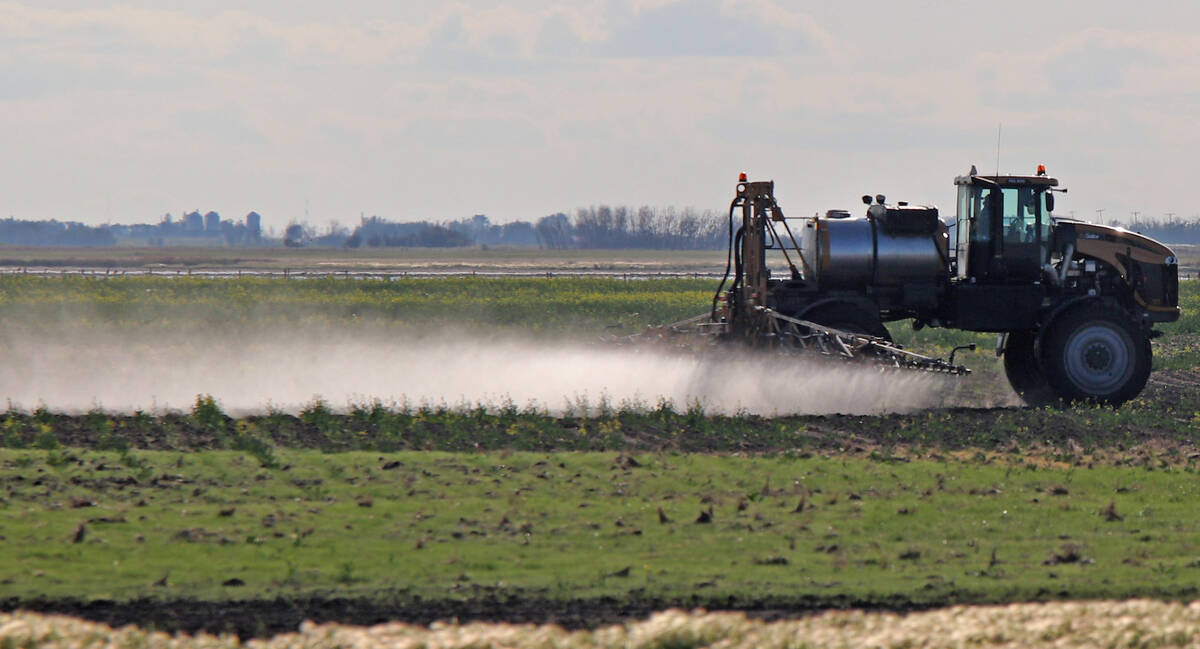
New survey results show herbicide resistance in Manitoba is not only growing — albeit slowly — but costing producers large sums of money in the process.
Seventy-two per cent of fields surveyed in the federal-provincial project — one of three surveys measuring herbicide resistance in Manitoba, Saskatchewan and Alberta — were found to have at least one type of resistance. Those fields comprised 3.7 million acres of cropland throughout Manitoba.
The percentage grew slightly compared to a similar survey in 2016, when 68 per cent of fields were discovered with herbicide-resistant species. Previous surveys in 2008 and 2002 saw herbicide resistance in 48 and 32 per cent of fields, respectively.
Read Also
Manitoba lamb price high on tight supply
Manitoba lamb prices in 2026 rise sharply from last summer’s dip, not only from the Easter upswing, but decent demand and tight supply.
The survey reported that the final bill to the province’s farmers — when factoring reduced crop yields, quality and higher weed management expenditures — was $77 million per year.
WHY IT MATTERS: Crop growers across the Prairies may have to increase the use of integrated weed management practices in the face of growing herbicide resistance.
Resistance marches on
Unsurprisingly, Group 1 and Group 2 herbicide resistance marched on since the last survey in 2016, says participant Charles Geddes with the Agriculture Canada Lethbridge Research and Development Centre in Alberta.
The survey report called the further adoption of integrated weed management practices among growers “critical” to reducing resistance.
Geddes has mixed feelings on this point because he recognizes the extent Prairie farmers are already using practices such as crop rotations and increased seeding.

“What these surveys suggest is that herbicide resistant weeds continue to increase in their impact, regardless of the practices that are being currently used to manage them.”
Charles Geddes
Agriculture Canada Lethbridge Research and Development Centre
Geddes is finding pockets of producers fighting herbicide resistance with herbicide diversity practices such as mixing modes of action.
A 2017 paper by now-retired Agriculture Canada researchers Hugh Beckie and Neil Harker warned farmers about relying too much on herbicide diversity at the expense of integrated weed management. The paper argued that crop diversity — including a mix of dicots and monocots, winter and spring planted, and annual and perennial crops — exerts different selection pressures on weed communities that herbicide diversity alone cannot replicate.
Some resistance up, some down
The pre-harvest survey occurred in 2022 and included 155 annual cropped fields. Five hundred and eighty-four mature weed seed samples were collected from all visible uncontrolled weed patches and tested for resistance to Group 1 ACCase, Group 2 ALS and Group 9 glyphosate. The samples represented 44 weed species.
“Compared to the previous 2016 survey, a trend toward increasing ALS inhibitor resistant broadleaf weeds and decreasing herbicide-resistant grasses was observed, with some exceptions,” read the report.
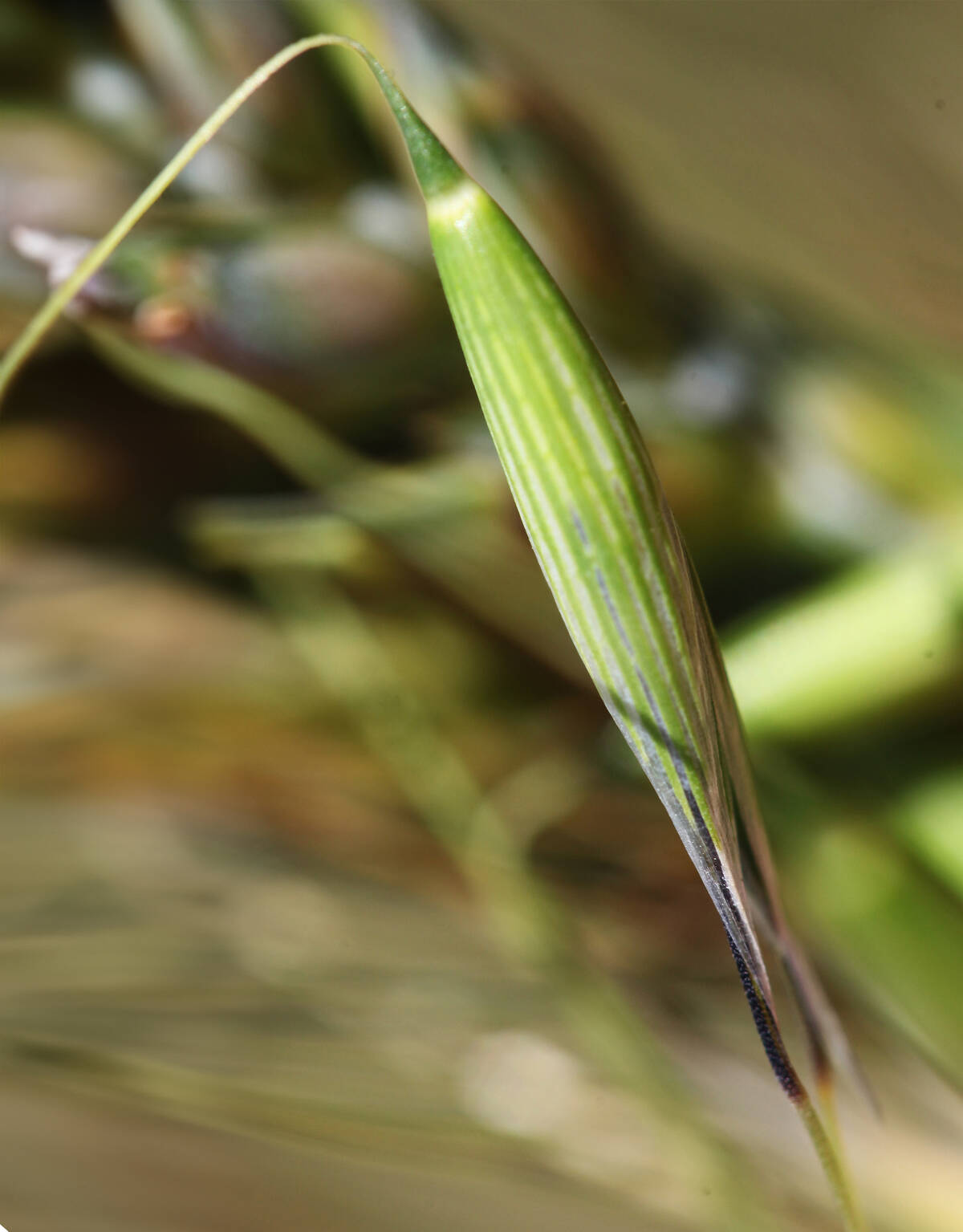
Thirty per cent of all fields surveyed featured wild oats with resistance to the Group 1 and Group 2 herbicides. Among other grassy weeds, 27 per cent of all fields surveyed had Group 1-resistant green foxtail, while 12 per cent included Group 1-resistant yellow foxtail.
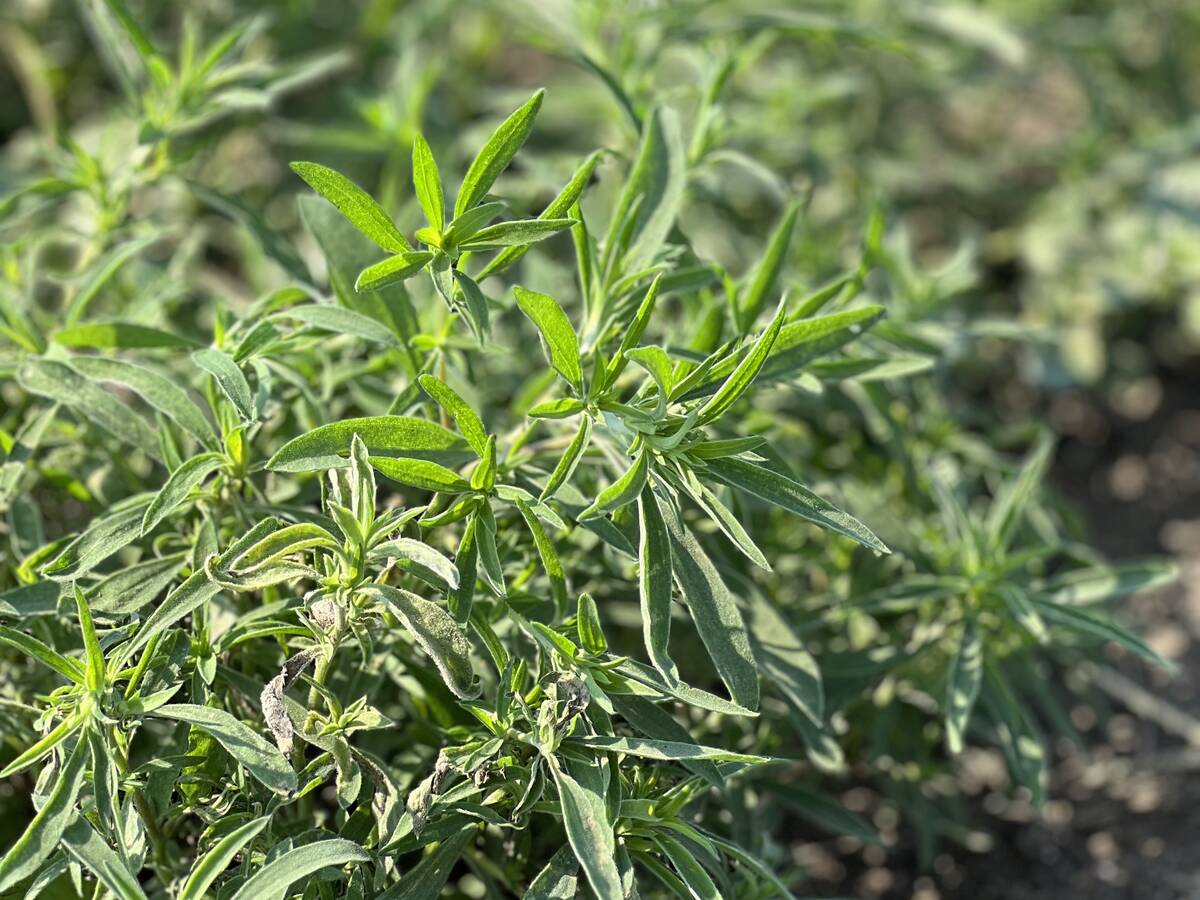
Notable among broadleaf weed resistance were kochia (19 per cent Group 2 resistance in all fields surveyed), pale smartweed (10 per cent Group 2 resistance) and redwood pigweed (nine per cent under the same metrics).
Eleven herbicide-resistance weed species were logged, including four not found in the 2016 survey: ALS inhibitor-resistant common chickweed, pale smartweed, Powell amaranth and spiny sowthistle.
Fewer patches, more fields
An interesting factor in the survey, says Geddes, was a decrease in uncontrolled herbicide resistant weed patches compared to the 2016 Manitoba study — even as the number of fields with resistance increased slightly.
“Patch area is representative of site-specific weed management scenarios, whereas the field area is more representative of a broadcast style weed management program where they would be applying a herbicide across, say, an entire field to manage this issue,” Geddes says.
In short: patches and the area they occupied were lower in 2022 than in 2016, but more fields had herbicide-resistant weeds in them overall.
Geddes thinks this is a call to farmers to manage weeds more at the patch level rather than the entire field.
“One big thing that kochia has taught us is that it’s highly patchy and it tends to infest those low lying and saline patch areas first and then move out into the rest of the field,” he said.
“So there’s a lot of opportunity for things like patch management and maybe reducing the cost of integrated weed management by targeting the areas where it makes sense.”
Alberta next
This series of resistance surveys occurs every few years in all three Prairie provinces. They were pioneered by Beckie, who worked at the Agriculture Canada Saskatoon Research and Development Centre in Saskatchewan.
The Alberta survey report is tentatively scheduled for publication later this year, says Geddes.
“The manuscript is almost ready to be submitted. We’re just kind of doing some of the final touches on it, and then it’s up to the review process, which can take several months, but it should be sometime this year.”
Three other Agriculture Canada Lethbridge researchers also participated in the Manitoba survey: Mattea M. Pittman, Kim Brown and Julia Y. Leeson. Other contributors included Manitoba Agriculture in Carman and Agriculture Canada Saskatoon.