
Premier Greg Selinger last week announced $150,000 in funding for a pilot project at Netley- Libau Marsh to explore ways of preventing pollutants from getting into Lake Winnipeg while at the same time reducing greenhouse gas emissions.
“In partnership with the International Institute for Sustainable Development (IISD) and the University of Manitoba, we are announcing funding to support the further development of a green, bioenergy project which builds on actions we have already taken,” Selinger said in a release. “This is a made-in-Manitoba solution to help Lake Winnipeg by keeping pollutants out, while at the same time providing a green solution to offset coal use.”
Read Also
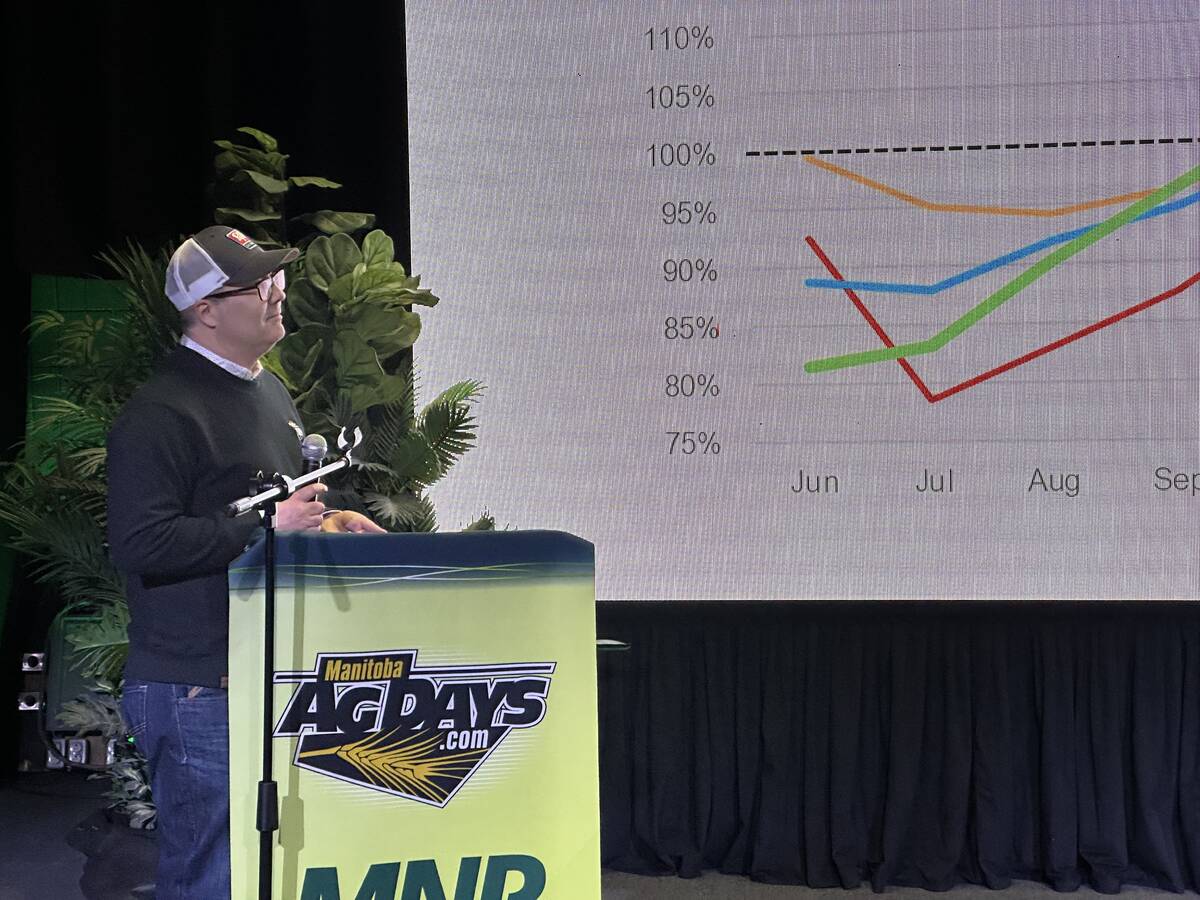
MANITOBA AG DAYS: Don’t wait to buy fertilizer, farmers warned
Higher fertilizer prices likely ahead, says Ag Days speaker. Farmers waiting until spring to buy fertilizer might end up eating the cost.
The project will see the harvest of about 200 hectares of marsh grasses. Research has shown that pollutants, such as phosphorus, are stored in the marsh grass and, as part of the project, the grass will be turned into a clean, bioenergy product. This product can be used to burn green biomass and reduce the burning of coal. At the same time, the pollutants would not get into the water of the marsh or Lake Winnipeg.
“The results from this pilot project could become a critical part of efforts to reduce nutrients flowing into Lake Winnipeg,” Henry David Venema of the IISD said in a release.
Once fully developed the project could produce approximately 3,000 tonnes of biomass, offset approximately 3,000 tonnes of carbon dioxide, and capture and recover approximately eight tonnes of phosphorus and remove 30 to 40 tonnes of nitrogen, the equivalent produced from the waste water of a town of 20,000 people.