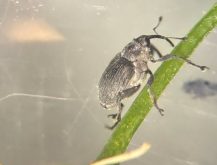
The Canola Council of Canada’s latest Canola Watch says the insect watch has entered a critical phase. There has been spraying for lygus, bertha army worm and diamondback moth larvae in some regions.
The report said blackleg is widespread in southern Manitoba. Disease severity on infected plants is still low right now, but severity can increase dramatically with hot weather. This level of infection is unusual to see at this stage. Growers with infected fields should be prepared for some yield losses. Staging is too late for protective spray, but scout fields for damage and plan to rotate those fields out of canola for a few years.
Read Also
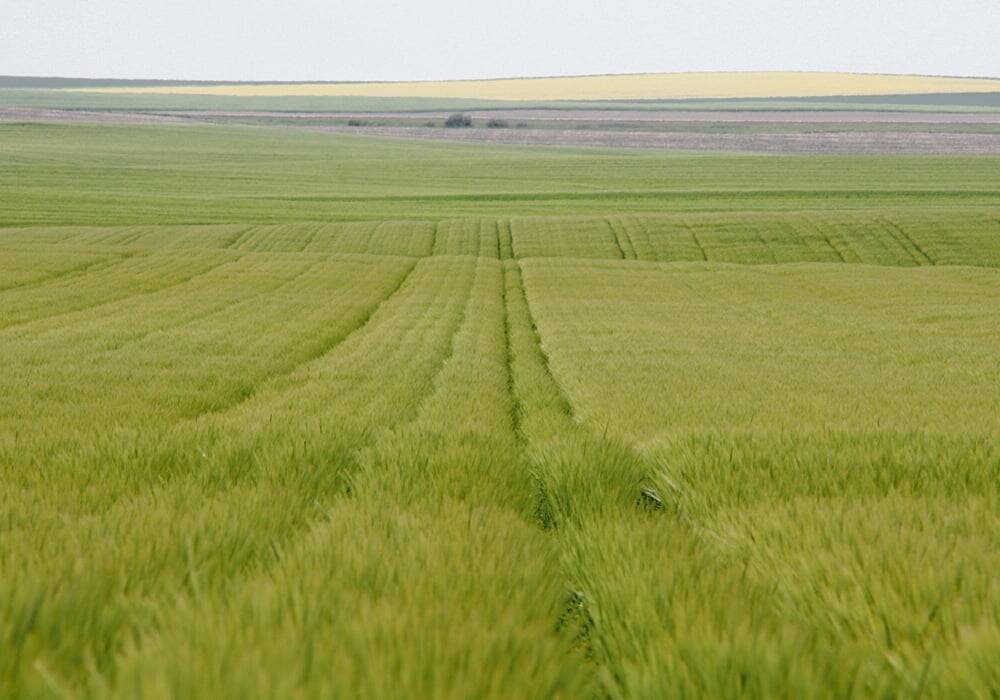
VIDEO: Manitoba farmer tests controlled traffic farming to fight soil compaction and flooding
Manitoba farmer Alex Boersch wants to improve the stability of his crop yields. He’s been experimenting with controlled equipment traffic on his fields
Alternaria is showing up in B. juncea canola. This is early and could cause some serious yield losses. Start scouting now.
Light stands encourage some growers to consider straight combining. To swath these stands would mean a higher risk for swath blowing, and some crops just don’t have the stalk counts to hold up a windrow. But straight combining has its own risks when plants whip against each other in the wind. The CCC has a fact sheet available on straight combining.
The report advised growers to consider adding a broadleaf control component to the glyphosate application when spraying out a poor canola field – even if the field is not an RR variety. This will control all canola, regardless of the system.
Diamondback moth larvae scouting and spraying continues this week. Action threshold at the podding stage is 20 to 30 larvae per one-tenth of a square metre – or roughly one square foot.
Lygus bug numbers are at thresholds in parts of the Peace and rising in Manitoba’s northwest.