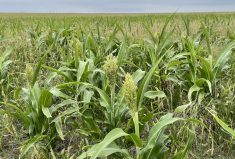
Tillering is one of three components that ultimately determines yield but it’s a complex process involving many different factors. It isn’t easy to predict, which is why producers can’t simply look up tillering capacity in their provincial seed guide.
“There is no actual genetic predictor of tillering capacity that we know of,” Grant Mehring of North Dakota State University told the Manitoba Agronomists Conference in December. “The only way I know to predict tillering capacity is to do plant counts. If you take pictures at different growth stages you can get a sense of the tillering capacity of different varieties based on which one is filling the canopy faster.”
Read Also
THROWBACK: Optimizing crop selection for Prairie organic producers
Stop settling for conventional data. Discover the essential plant traits organic farmers need — from seed size to height — for better yields.
Mehring suggests producers may want to do some on-farm strip trials to get a sense of which varieties tiller well under their conditions. There is also a free app available from the Oklahoma State University called Canopeo — available for iPhone or Android — which measures the percentage canopy of green live vegetation based on photos taken with a smartphone.