
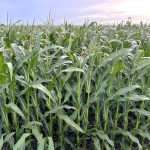
A study has found the grain is an ideal and safe contrast agent for diagnosing swallowing disorders.   PHOTO: UNIVERSITY AT BUFFALO

Barley not barium

The familiar cereal crop can also be an imaging agent for medical tests

Toasted barley could aid the medical field in diagnosing certain medical conditions. That’s because the toasted grain, when struck by a common laser beam, illuminates the throat and gastrointestinal tract. The discovery could improve the ability to diagnose swallowing disorders, which affect millions, as well as gut disorders. What’s more, because many human diets already

Higher carbon dioxide levels could negatively impact the nutritional value of rice, an important crop to many lower-income countries.

Rice’s nutritional value decreases in higher CO2 concentrations

Researchers examine how climate change can impact dietary quality of crops

Rice grown at higher carbon dioxide (CO2) concentrations, like those possible later this century, has lower nutritional value, according to a recent study. Notably, some varieties of rice seemed to react differently to increased levels of CO2, say the study’s authors, showing relatively smaller decreases in nutritional value. The finding that rice’s nutritional quality can


Take-all infection causing shiny black discolouration of lower stem area of wheat plant and poor root development. Note black colour and almost absence of feeder roots.

How wheat can root out the take-all fungus

A team of young researchers has now pinpointed a way of easing cereals’ risks from a deadly root pathogen

British researchers say the key to preventing the buildup of the take-all fungus is to foster beneficial fungus, which can help the plants to help themselves. Working out the right conditions to support those beneficial fungi and identifying the cereal varieties that are best suited to make the most of that help is the challenge

A research project in China has confirmed adding enzymes to the pig genomes allows them to digest nitrogen and phosphorus much more efficiently.

Just passing through

Pigs that better digest their nutrients could reduce 
pork industry’s carbon footprint

Pigs will eat what’s put in front of them — but digesting it is another question. In particular, according to one research scientist from the South China Agricultural University, nitrogen and phosphorus can pass through the pig undigested, causing downstream environmental challenges. Lead author of the study Xianwei Zhang, published recently in the online journal


Chinese geneticists have mapped the subgenome in wheat that was contributed by einkorn wheat, seen here.

Genetic road map

Chinese researchers have just added significantly to what 
we know about the wheat genome

Few crops are more important and more genetically complex than bread wheat. It feeds more than a third of the human population and is adaptable to a wide range of climates. It’s also a complex ‘hexaploid’ that contains three subgenomes (dubbed A, B and D) from parent plants, making its genetic package larger, more complex

The Jerusalem artichoke has revealed the genetic advantage of invasive species.

Invasive weeds have genetic advantage

A single trait, which developed independently in multiple situations, drives invasive success

They say a weed can grow almost anywhere, and researchers at the University of British Columbia have found the reason is genetic. They looked at one successful weedy plant, the Jerusalem artichoke, to see why it survives, thrives and spreads. Understanding how invasive plants evolve and the genetic underpinnings that enable them to thrive in


The Belle, West Virginia DuPont plant on April 1, 1926, as the first high-pressure ammonia ever produced in North America began to flow.

No pressure

A new process promises to produce ammonia without the 
high energy requirements of the Haber-Bosch process

A new lower-energy catalytic reaction could change the way ammonia-based fertilizer is made in the future. Researchers at the U.S. Department of Energy’s Oak Ridge National Laboratory say the approach uses small carbon spikes, aided by lithium salt and the application of an electrical field. “It’s a catalyst that operates completely based on the electric

Modern behaviour rooted in farming legacy

Modern behaviour rooted in farming legacy

Researchers in China say even non-farmers reflect 
their agriculture heritage

There could be a lot of behaviour that’s rooted in historic agriculture, at least in modern China. Researchers there say they’ve been observing the social interactions of Starbucks customers in six cities. What they’ve found is that they can tell if a person comes from a rice- or wheat-growing area, regardless if that individual is


A farmer checks his soybean crop in the Brazilian state of Mato Grosso.

The ‘breadbasket’ of the tropics?

Brazil’s tropical grain growers are upending the conventional wisdom on grain production

One of your major grain-growing competitors has been turning the world on its ear by producing grain in a tropical locale. Historically the tropics have been among the poorest regions, with the lowest agriculture productivity and highest incidents of malnutrition. It wasn’t until the late-1990s the tropics began to emerge as a possible region for

The 100th meridian west (solid line) has long been considered the divide between the relatively moist eastern United States, and the more arid West. Climate change may already have started shifting the divide eastward 
(dotted line).

Where the Great Plains began?

The 100th meridian may not mark the start of the Prairies much longer

It’s always been a point of pride in Manitoba that the Prairies begin here, at the 100th meridian. That north-south line cleaves North America in two from Mexico to Manitoba, as first noted in 1978 by explorer John Wesley Powell, who called it the boundary between the humid East and the arid West. Now scientists