
Keep your data backed up in a separate location to protect theft from hackers, says the FBI.

Farmers vulnerable to ‘ransomware’

Precision agriculture makes farmers and the industry vulnerable 
to cyberattacks

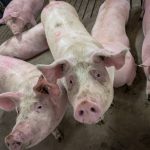
You’re all ready to start the planting season, using all your new precision agriculture tools for optimum seed, fertilizer and chemical placement. But all of a sudden all the data scrambles or disappears, and you receive an email demanding payment to get it back. Far fetched? Maybe not, says the U.S. Federal Bureau of Investigation.
Biology professor, Christy Morrissey says a new facility to research bird health could pay human dividends.

Bird’s eye view of human health

A University of Saskatchewan facility will let researchers study bird health and the environment with possible human benefits

Just like the canary in the coal mine, wild birds can tell us a lot about our environment and how it could affect human health. University of Saskatchewan biology professor, Christy Morrissey says watching birds for problems could help locate issues that may affect human health, one of the driving forces behind a new research


Prof. Suresh Neethirajan

Soy is a promising antimicrobial agent

New testing shows plant isolates could replace failing chemical agents


Forget chemicals. The best antimicrobial available may be natural soy isolates like isoflavones and peptides. That’s according to a new study from University of Guelph researchers who looked at using these materials to inhibit the growth of microbial pathogens that cause foodborne illnesses. Engineering professor, Suresh Neethirajan, director of the university’s BioNano Laboratory, says the

A horse lift designed at the University of Saskatchewan is giving injured horses a second chance.

Uplifting events for horses

A new collaborative invention from a multidisciplinary research team at the University of Saskatchewan promises new hope for injured horses

A research team from the University of Saskatchewan is hoping to improve the outcome for horses suffering from fractures or other musculoskeletal problems. Hundreds of horses are fatally injured and euthanized every year in North America due to racetrack injuries. But even horses that are used for pleasure riding can break a leg. After a


Replacing butter with vegetable oils might not be as healthy as originally thought.

Did butter get a bad rap?

It’s not health food, but butter may be healthier than other options 
like high-linoleic acid oils

Butter might be better. Since the 1960s, consumers have been told to swap butter and other saturated fats with “heart healthy” options like vegetable oils high in linoleic acid. Now a re-examination of previously unpublished data from the study that first made that claim is casting doubt. Researchers at the Univer­sity of North Carolina School

Researchers are seeding Purple Straw farther apart than usual to encourage the growth of multiple tillers.

Reviving an almost-extinct wheat

Early-maturing heirloom winter variety may avoid disease

Scientists at South Carolina’s Clemson University have begun the process of restoring a nearly extinct variety of wheat that traces its American roots to the 1700s. A Clemson release says that Purple Straw is the only heirloom wheat to have been cultivated continually in the U.S. South from the Colonial Period into the last quarter


One of the projects selected is organic baobab tree-based products from Zimbabwe.

British charities hoping ‘Dragons’ Den’ model will tempt investors

Plan will allow the companies to access business support and 'patient capital,' says expert adviser

Businesses in developing countries could soon be headed into the “Dragons’ Den.” British charities have created a syndicate through which investors can back hand-picked businesses in developing nations using a model similar to the TV series, in which entrepreneurs pitch ideas to prospective funders. Around 70 per cent of small and medium-size businesses in developing

A ruby-throated hummingbird is handled by a researcher prior to being released.

Older hummingbirds better prepared

Lengthy annual migration reveals profound differences between young birds and the more experienced ones

The small, but mighty ruby-throated hummingbird flies 2,000 km on its migratory journeys without a break, researchers report in the journal The Auk: Ornithological Advances. New research provides some of the first details of the hummingbird’s annual fall journey from the eastern United States to Central America. It shows that their fall migration peaks in


Veterinarians are getting a better picture of what goes on in a horse’s gut by using high-tech tools from the world of human medicine.

Camera pill to unveil secrets of horse’s gut

A University of Saskatchewan team is using an endoscopy capsule 
to research the workings of the equine GI tract

Researchers at the University of Saskatchewan are using a tiny camera to learn more about the long, winding and mysterious gut of a horse. “Whenever I talk to students about the horse abdomen, I put up a picture of a horse and put a big question mark in the middle,” said veterinary researcher Julia Montgomery,

Solitary nesting bees, like this native leafcutter bee, will get better houses that will augment their numbers through a University of Manitoba open competition.

Building a better beehive

The University of Manitoba has opened an international competition aimed at giving bees better housing

Wild bees need homes too. That’s the simple idea behind an international design competition opened by the University of Manitoba on Mar. 1. The competition hopes better housing for the beleaguered insects will help address a pressing biological issue — their declining numbers. Bee houses were chosen as the focus of the competition because they