
Late-season forages, supplemented with dried distillers grains, provide vital protein and energy that would otherwise be unavailable in late season.

DDG can help forage digestibility

The ethanol industry byproduct can help cattle 
get more from late-season grasses

One of the challenges for cattle producers around the world is getting the most out of late-season forage. In many cases forages become harder to digest later in the growing season, making them less beneficial for animals. Now a group of Texas researchers say supplementing these forages with dried distillers grain from the ethanol industry

Over 1.3 billion tonnes of food waste are created globally each year. A new process promises to make converting it to fertilizer and fuel more efficient in cold climates.

Cold-loving bacteria turns food waste into energy and fertilizer

Canada’s frigid winters have always limited 
using natural processes to convert waste

Researchers from Montreal’s Concordia University say they’ve found a way to process waste into resources in colder climes. They’re using cold-tolerant bacteria to fuel the process. In a study published in the journal Process Safety and Environmental Protection, authors Rajinikanth Rajagopal, David Bellavance and Mohammad Saifur Rahaman demonstrate the viability of using anaerobic digestion in


A happier hen lays better-tasting eggs, say consumers.

Consumers view free-range eggs as better tasting

Egg buyers appear to have linked taste with the ‘happiness’ of the hens

It seems most people buying free-range or cage-free eggs are doing so because they think the eggs are better, according to a recent study. While they understand animal welfare issues, consumers appear to have linked welfare and product quality, feeling that “happier” chickens produce a better-tasting egg. In a study, conducted by researchers at the

Researchers at the University of Delaware found that when a plant has its leaf nicked, it sends out an alert to neighbouring plants, which begin beefing up their defences.

Injured plants can warn their neighbours

That smell of fresh-cut hay may be organic compounds 
from the damaged leaves

A high school student working on a research project at the University of Delaware has discovered that damaged plants can send a warning to their neighbours, which grow larger to compensate. Working in the lab on weekends and during summer breaks, Connor Sweeney cultured an estimated 1,000 arabidopsis plants — also known as mustard weed


Full-fat cheese and other dairy products won’t contribute to heart attack and stroke, according to a recent study.

Dairy fat not heart and stroke culprit

A major analysis of past studies says the risk from 
dairy fat has been overstated

A review of 29 health studies involving more than a million patients says dairy fat doesn’t increase the risk of heart attack or stroke. These findings challenge the widely held belief that dairy products can damage health. In fact the analysis found that even full-fat versions of dairy favourites like cheese, yogurt and sour cream

It appears religious edicts that spurred greater demand for chicken caused a spurt in genetic development.

Holy edicts may have created modern chicken

Religious rules may have fuelled greater demand for chicken meat and spurred development

Chickens were domesticated from Asian jungle fowl around 6,000 years ago, but these early birds didn’t look much like the chickens of today. They didn’t look the same, they were more aggressive and they laid fewer eggs less often. At some point this all began to change, but until recently researchers have never really understood


A new and more complete barley genome may set the stage for new and better varieties.

Barley genome fully mapped

German researchers, leading an international consortium, 
say they’ve given us the best picture yet of the barley genome

Scientists at Helmholtz Zentrum München, a German research centre, have published the closest look yet at the barley genome. They recently published their findings in the journal Nature and lead author Heidrum Gundlach says they hope the new and more detailed barley genome will help develop varieties resistant to pathogens and tolerant of climate fluctuations.

Soldier fly larvae like these can convert waste food into high-protein feed.

Insect entrees

Insects are going to play a more important role in the human food chain, but that might not mean direct consumption

A professor emeritus at the University of Guelph says insects might be a more sustainable source of nutrition, but just how they’ll be used is up in the air. David Waltner-Toews, an epidemiologist who taught in the U of G’s Ontario Veterinary College, studied the topic for his new book, Eat the Beetles! which will


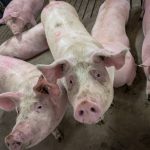
Weanling pigs can thrive on plant-based protein diets, 
a recent study shows.

Soy protein concentrate a replacement in piglet diets

It’s a functional — and less expensive — alternative to 
animal protein sources

Animal nutritionists have long known that plant-based protein sources are less expensive for swine feed rations. But until recently they’ve worried over some anti-nutritional factors that can negatively affect gut health and growth performance in weanling pigs. Recent research from the University of Illinois has shown that soy protein concentrate (SPC) may be partly or

Herbicide-resistant Palmer amaranth can devastate crop yields.

Palmer amaranth resistance more complex

Two new mechanisms for herbicide resistance 
have been found in Palmer amaranth

Scientists are continuing to discover just what a difficult foe the weed Palmer amaranth can be. It can cause yield losses as high as 80 per cent for soybean growers and has already developed resistance to six classes of herbicide since its discovery in North America 100 years ago. It’s recently been found in North