Every year a familiar scenario plays out in school divisions throughout Manitoba.
The local teachers’ association informs the school board it would like to enter negotiations for a new one-year collective agreement. The two sides meet to exchange bargaining positions. Then they meet again to negotiate.
No progress is made. Months go by.
Conciliation officers come in to help. Finally, the two sides reach an agreement just in time to do the whole thing all over again for the next year.
CONTRACT TALKS
Read Also
Manitoba Hydro urges farmers to watch for power lines as spring seeding begins
Manitoba Hydro is reminding producers to apply for clearance permits and maintain safe distances from overhead lines before spring seeding.
That’s the case right now in most Manitoba school divisions. Only a handful so far have settled contracts beyond June 2010. Some are headed for binding arbitration, which could take up to another year to resolve.
It seems so inefficient that occasionally the question gets raised: why don’t teachers in Manitoba’s 38 school divisions bargain collectively with the province instead of separately with local school boards?
The 15,000-member Manitoba Teachers Society would certainly like to do so.
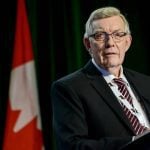
“It stands to reason that, as teachers, we would bargain with the primary decision maker in education. And that’s the province,” said Pat Isaak, MTS president.
Trustees hold a different view.
“In theory it might look nice and neat and tidy. But in actual practice we see some real challenges and problems with it,” said Carolyn Duhamel, executive director of the Manitoba School Boards Association.
It’s a Mexican standoff. Meet the two solitudes in Manitoba’s public education system.
Isaak admitted that “clearly our two organizations are at a different place on this.” But she said province-wide bargaining makes sense because the federal constitution gives provinces sole jurisdiction over education.
In Manitoba, the government funds 75 per cent of total education costs. It also decides how many schools there will be, where to locate them and what curriculum they will teach.
NEGOTIATE WITH PROVINCE
Logically, since education policy and funding stem from the province, teachers should negotiate contracts with the government, said Isaak.
Provincial bargaining would help eliminate disparities in salaries and working conditions in different regions of the province, she added. For example, a teacher in Winnipeg might average one period of preparation time a day, whereas a teacher in a rural area may have no prep time at all.
“We think that bargaining once and bargaining at one table would help us achieve some of that parity that we don’t have on every issue.”
But Duhamel said moving to single-tier bargaining would produce “immediate pressure to harmonize upwards” and saddle rural divisions with extra costs by equalizing at a higher level.
“It would certainly have budgetary impact,” she said. “What might be affordable in Winnipeg may not be affordable somewhere else.”
Currently, Manitoba and Prince Edward Island are the only provinces where teachers and school boards negotiate locally. Some, such as Nova Scotia and Quebec, bargain at the provincial table. Others such as Alberta are moving in that direction. Still others, including Saskatchewan, use a two-tier model in which salaries are negotiated provincially and benefits are bargained locally.
Duhamel has problems with a centralized model.
“What we have seen in looking at what goes on in other provinces is that it hasn’t necessarily made the situation better and, in fact, in some cases the perspective is that it’s made it worse,” she said.
VOTED DOWN
The Manitoba School Boards Association at its recent annual meeting voted down a proposal for province-wide bargaining. It was the fifth time in recent years the MSBA has done so.
Duhamel argued provincial bargaining would limit the local voice in public education or even remove it completely. Manitoba has over 600 elementary and secondary schools and an official in Winnipeg can’t troubleshoot them all, she said.
She pointed to New Brunswick where “all hell broke loose” in the mid-1990s when the government eliminated school boards and ratepayers had to deal with officials in Fredericton instead of local trustees.
Isaak said she recognized the importance of local autonomy and insisted provincial bargaining wouldn’t mean a one-size- fits-all outcome.
“Just because you have province-wide bargaining doesn’t mean that everything will look the same in every school.”
Officially, the Manitoba government’s position on province-wide bargaining is a neutral one. Both sides must agree before the province will even consider it, said Naline Rampersad, press secretary to Education Minister Nancy Allan.
“If teachers and trustees would both like to move in this direction, we would be open to discussing it with them. But that does not appear to be the case at this time,” Rampersad said. [email protected]