HPPD herbicide resistance is no longer a distant problem for Prairie farmers. It’s showing up in Manitoba’s neighbouring regions to the east and south, spreading quietly, and forcing growers to rethink weed control programs that once felt reliable.
Local agronomists are on watch for if those Group 27 chemistries start to slip. That’s on top of Group 14 resistance bubbling in key problem weeds and mounting resistance against several other herbicide groups, noted Kim Brown, weed specialist with Manitoba Agriculture.
While not yet at crisis levels seen in parts of the U.S., experts say the warning signs of increased pressure on locally used herbicides are clear.
Read Also
When rolling soybeans works, and when it doesn’t
University of Manitoba research explores how weather conditions and plant brittleness impact yield and crop damage.
WHY IT MATTERS: Growing herbicide resistance, and new weed threats infamous for developing resistance, continue to take key weed control tools off the table for farmers.
While HPPD resistance is more commonly discussed in the context of U.S. corn and soybeans, Brown said Canadian growers cannot assume they are insulated.
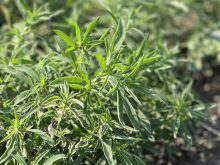
Some of the worst weed offenders for developing HPPD herbicide resistance are already here. Palmer amaranth (known in the U.S. for resistance to Groups 2, 3, 5, 9, 14 and 27) was first found in the province in 2021.
It hasn’t taken root as much as waterhemp has though. Waterhemp, which was showing Group 27 resistance in Quebec already in 2020, was downgraded to a Tier 2 noxious weed last year in 28 Manitoba municipalities where the province considers it too established to eradicate.
“We certainly don’t have the waterhemp problem that the U.S. does,” Brown said, although local spread has been enough to launch waterhemp to the top of many a weed meeting agenda.
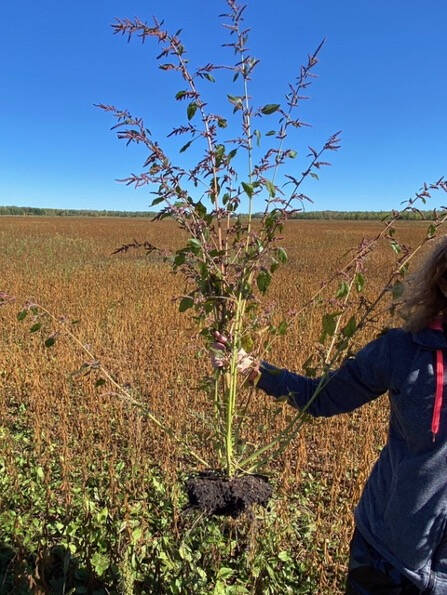
According to the Manitoba Crop Alliance, local waterhemp has shown resistance to several herbicide groups, “including combinations of Group 2, Group 9 and Group 14.”
The weed is also known for Group 5 resistance in parts of North America and, most recently, Group 10 resistance was reported in the U.S. Midwest.
Complicating matters, resistance testing only shows whether resistance is present at the group level, not whether every product in that group will fail.
Manitoba’s big bad weed wolf
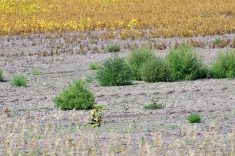
Then there’s the matter of kochia, which Brown describes as the province’s most pressing weed challenge. With a biology primed for quick mutation and prolific seed spread, it’s a well-known risk for herbicide resistance, with a list of conquered chemistries spanning Groups 2, 4, 5, 9 and 14 in various parts of North America. Early in January, North Dakota weed specialist Joe Ikley told listeners at St. Jean Farm Days that he’s heard of more kochia escapes after being sprayed with Group 10.
“We know we definitely have glyphosate resistance,” Brown said of Manitoba’s locally observed kochia resistance problems.
“Group 2s haven’t worked in years. We’ve got increasing Group 4 resistance, and of course, we have this growing Group 14 resistance.”
There have been a handful of herbicides released in recent years looking to slip through some of the few remaining cracks in its armour. Several products, approved for select cereal crops, have leaned on Groups 6 and 27 to get the job done.
Waterhemp biology raises stakes
Like kochia, waterhemp’s biology makes it a formidable foe.
“This is not a weed that can go away just simply because of the sheer number of seeds that it returns to the soil,” Brown said. “So even if you let a few plants get away, that weed can grow. It can get across the whole field really, really quickly.”
So far, Manitoba has avoided the widespread yield losses seen farther south.
“We’re not seeing the train wrecks that other people in other places have seen,” she said. “But unfortunately, with a weed like that, it can get there fast.”
Don’t forget about wild oats
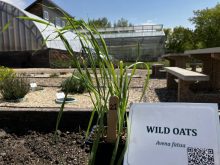
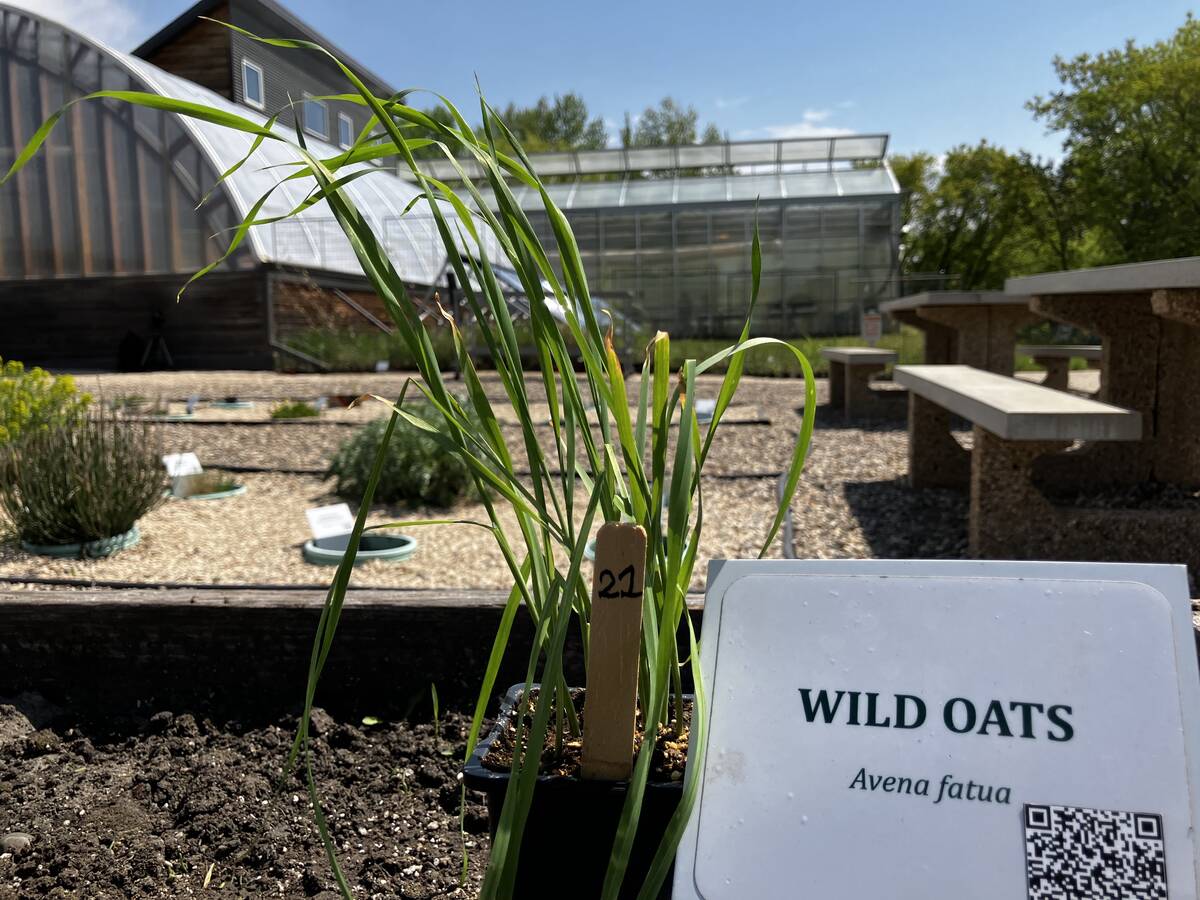
Beyond kochia and waterhemp, Brown pointed to wild oats as a sleeper issue that worries her even more.
“We really have very, very few products, if any, once we start seeing full blown Group 1 and Group 2 resistance,” she said. “There’s no other groups that we can use post-emergent to control wild oats.”
From 2019 to 2023, Agriculture and Agri-Food Canada and provincial agriculture departments surveyed herbicide resistance across the Prairies. Manitoba joined the effort in 2022 as part of a provincewide weed survey.
Researchers collected grass weed seed from 155 Manitoba fields and tested them against Group 1 and Group 2 herbicides. All wild oat samples were resistant to Group 1, and 82 per cent were resistant to both Groups 1 and 2.
And the weeds were widespread. Across more than 700 fields surveyed, 37 per cent had wild oats resistant to Group 1 herbicides. Thirty per cent had resistance to Group 2, and 30 per cent had wild oats resistant to both.
This pattern is consistent across the region, according to a 2025 interview with Charles Geddes, a national research scientist in weed ecology and cropping systems based in Lethbridge, Alta.
Herbicide resistance increasing
The weed surveys have been conducted regularly since the late ’70s. The next one is planned for 2026.
Researchers have seen herbicide-resistant weeds become more common over time. In 2022, 75 per cent of surveyed fields had at least one herbicide-resistant weed, up from 68 per cent in the previous survey, which covered fewer fields.
Long-term planning, not quick fixes
Industry experts continue to stress that herbicide resistance is a long-term management challenge, not a single-season fix.
“It’s not something we’re going to get done this year,” said Matt Inman, technical marketing manager with BASF. “We have to look three or five years down the road.”
Resistance in highly prolific weeds like waterhemp and Palmer amaranth has reshaped weed control programs across much of the U.S.
“A million seed on one female plant,” Inman noted, citing one of the major challenges with those pigweed species. “You’re dealing with that for years.”
Both Brown and Inman emphasized that herbicides alone will not solve the problem.
“We have to look beyond that,” Inman said. “We have to look at cultural practices, mechanical practices, physical practices, some cover crops, maybe seeding rates. We want that canopy to close as quickly as possible.”
Application practices also matter, including using the right rate, volume of water, spray tips and timing, Inman said.
Limited Canadian research capacity
While Manitoba farmers are becoming more aware and more proactive, particularly in areas where resistant weeds are already established, Brown also raised concerns about Canada’s research capacity, particularly in Manitoba.
“We have fabulous researchers at Ag Canada (Agriculture and Agri-Food Canada),” Brown said. “But again, there’s only four of them for all of Western Canada, and there’s absolutely nobody in Manitoba.”
With resistance becoming more complex, including both target-site and metabolic resistance, Brown said farmers increasingly rely on information from nearby U.S.