
Assiniboine College has landed on Canada’s Top 50 Research Colleges list for the first time. The Brandon-based school placed 47th on the annual ranking produced by Research Infosource Inc.
The list is based on a school’s research income and activity. Those measures put Assiniboine College as racing ahead of targets set in its 2024–2030 strategic plan and reflects years of applied research tied to agriculture and food production.
WHY IT MATTERS: Assiniboine College is now years into a big push to expand agricultural facilities and programs at the school.
Read Also
Farm sustainability means farmer wellness too
University of Manitoba LEAP program wants to talk farm succession, self-efficacy and community supports as part of agriculture wellness and sustainability study.
More and better applied research was one of its goals back when the school announced plans to almost triple its agriculture-related student spaces. That also came with plans for a new hub to house that programming, the incoming Prairie Innovation Centre for Sustainable Agriculture.
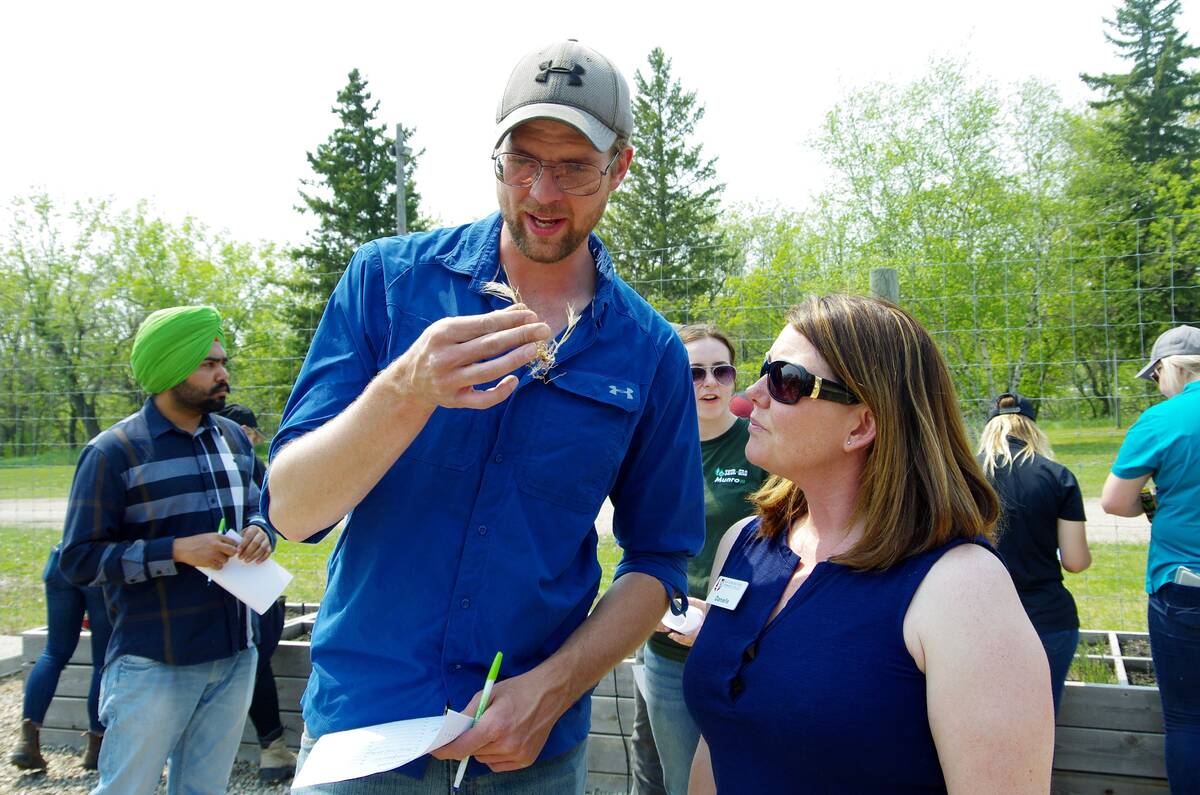
The college’s research portfolio focuses on solving problems for farmers and ag businesses, said college president Mark Frison in a Dec. 4 press release.
“Applied research helps industry partners solve problems and improve practices. We’re proud of the talented faculty who have grown our research portfolio,” Frison said.
This has led to an increase in high-quality, hands-on learning for students, he added.
Agriculture-centred research
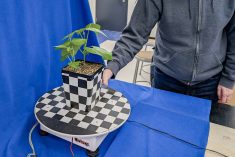
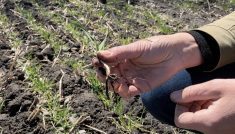
Much of the college’s research growth has been tied to agriculture, horticulture, and environmental work. Projects have focused on crop sustainability, soil health, pest management and greenhouse production, with researchers working directly with producers and ag companies to test ideas in field conditions.
Recent work ranges from reducing peat use in growing media by replacing it with agricultural and forestry byproducts, to testing biochar and compost blends for plant health, to improving water and nutrient efficiency in greenhouse crops. Other projects include soil erosion control, cover cropping, biostimulants, crop disease diagnostics and early-warning tools for weather stress in strawberries.
The college has also worked on testing strawberry varieties for Manitoba conditions, evaluating purple carrots and sweet potatoes as sources of nutritional additives, studying soil health under different cropping systems, evaluating new ways to track wild pigs through environmental DNA in water samples and assessing biochar for erosion control.
Industry partnerships drive demand
The college’s applied research model combines faculty expertise, student involvement and industry partnerships, allowing producers to test new ideas while training the next generation of ag workers, the college said.
Demand from industry partners has grown steadily as farms and agribusinesses look for ways to improve efficiency, manage costs and meet environmental expectations, according to the college.
The college has expanded into digital and precision agriculture, including work on real-time soil and crop diagnostics, greenhouse climate optimization and early-stage use of artificial intelligence to support production decisions.
Provincial investment
The province has backed the research work with significant funding. Last year, Manitoba provided $1 million through Research Manitoba, matching a $1-million Canada Foundation for Innovation grant toward a new $5-million teaching and research greenhouse.
Advanced Education and Training Minister Renée Cable said Assiniboine’s ranking shows Manitoba colleges are playing a growing role in applied research.
“We are proud of the leadership our colleges in Manitoba are showing on the national stage when it comes to applied research. They contribute to both strong student learning outcomes and industry competitiveness,” Cable said.