The future of ecosystem services payments will depend on proving real-world outcomes, not just checking boxes on grazing or cropping practices.
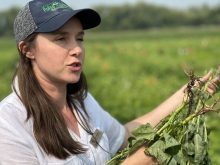
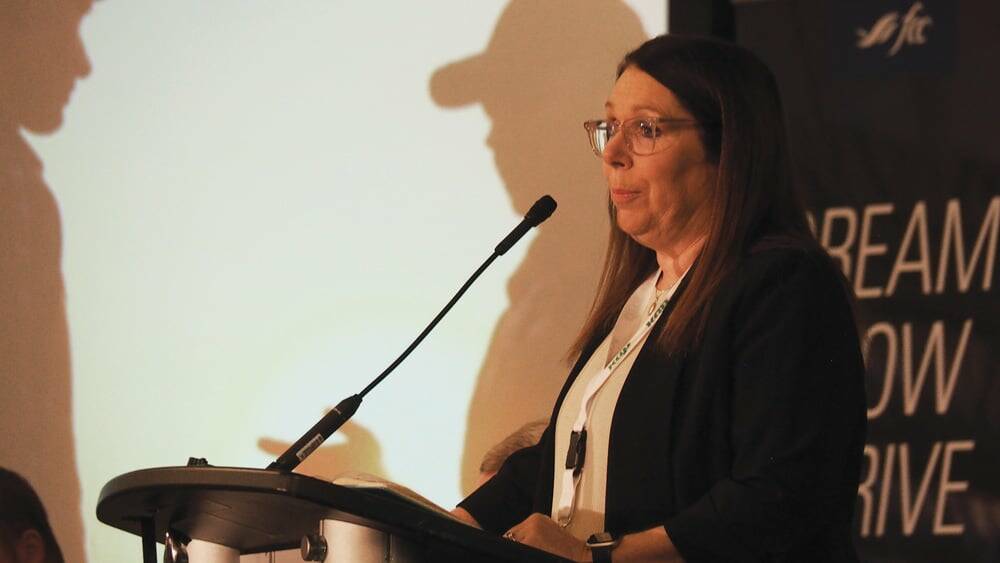
That’s according to Alberta-based soil health advocate Kim Cornish, who spoke at the Manitoba Forage and Grassland Association’s regenerative agriculture conference in Brandon in November.
WHY IT MATTERS: On paper, ecosystem or carbon credits should offer a path for farmers to get paid for good management, but the reality of taking on-farm practices to the bank has been filled with questions and road bumps.
Read Also
Rising input costs, rural concerns dominate KAP’s spring meeting
Nitrogen prices have jumped 40 per cent since conflict disrupted Strait of Hormuz shipping routes, squeezing Manitoba producers heading into the 2026 growing season.
Cornish said she first became interested in soil health long before she knew anything about carbon protocols.
“It felt like there was a buzz or a hum,” she said, recounting the feeling of a biodiverse landscape.
“There seemed to be a lot of pollinators around.”
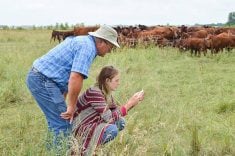
She noticed that same “alive” feeling on farms using adaptive grazing, holistic management and other regenerative practices.
Figuring out how to measure that kind of soil function in a way that could eventually translate into payments for farmers, though, has proven complicated.
Messy reality of carbon markets
Every industry and policy maker in North America seems to have carbon, greenhouse gases and climate change top of mind.
At first glance, that focus should be slam-dunk good news for regenerative farmers. Their management style, after all, also prioritizes getting more carbon (in the form of organic matter) out of the atmosphere and into the soil, where it can bolster productivity and their farm’s bottom line.
The concept of a carbon offset market, therefore, should make those farms hot commodities.
Early attempts to build a carbon-credit system around grazing, however, hit a wall when it came to codifying practices in a way that could be commodified. No two operations looked alike, and rigid protocols failed almost immediately.
“The only consistent answer I got was, ‘it depends,’” Cornish said.
“There was absolutely no consistency. Everybody had a different way.”
Producers told her the solution was simple: just measure the carbon. But scientists warned it was too expensive, too complicated and too variable to trust.
Overpromising on offsets
Existing efforts to capitalize on carbon credits have also run into caution-inducing obstacles.
Prairie farmers have occasionally been pitched on carbon-offset programs and contracts in recent years, with uneven results. Issues included struggles to verify credits or find buyers for farmer credits.
In one case in 2023, a number of farmers registered with one Manitoba program — which promised to use gathered farm data to backstop sellable carbon credits — reported they had not seen payments and were on the hook for subscription costs they had been led to believe would be covered by sale of their credits. The company later cited issues with selling those credits at the expected price.
Trust in offsets was also shaken globally in 2023 when an investigation found that many rainforest-based credits approved by a leading standard were largely worthless, prompting a sharp drop in demand.
Other companies, including big names like Nutrien and Corteva have also played with offset programs or pilots in recent years.
Policy challenges on carbon credits
Kathryn Harrison, a professor at the University of British Columbia whose field of expertise includes climate policy, said many agricultural offset programs face structural credibility problems.
One of the biggest is additionality, or the requirement that credited actions go beyond what would have happened anyway.
Fifteen years ago, Alberta allowed large emitters to purchase agricultural offsets to comply with emissions rules, while neighbouring Saskatchewan did not, said Harrison.
“What was striking is the rate of uptake of low and no-till agriculture was the same in both provinces,” she said.
“What that suggests is that those changes in agricultural practices were going to happen anyway.”
When something like that happens, those offsets aren’t considered “real,” Harrison added.
The other major challenge is permanence, especially as climate effects intensify.
Both buyers and sellers have strong financial incentives to be optimistic about potential carbon gains, Harrison said.
“The seller wants to say, ‘Of course I wouldn’t have done this,’ otherwise, ‘I’ll only do this if you pay me,’ and the buyer wants to say, ‘Of course this is additional,’ because they want to get credit for reducing their emissions at a lower cost,” she said.
“That is a worry for me.”
Digital soil mapping
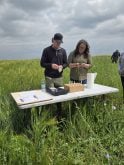
Back in Alberta, Cornish connected with global experts in digital soil mapping, hoping it would offer some answers. It was, after all, the system used in Australia to quantify soil carbon at scale.
That partnership led to Alberta’s carbon map, built by combining satellite imagery, soil surveys and targeted sampling. The Regenerative Alberta Living Lab then expanded that work dramatically.
Today, the project includes 111 producers and more than 340,000 sampled acres, with cores taken a full metre deep and analyzed for everything from total carbon to microbial DNA.
But that approach has its own issues. The findings, for example, surprised many adaptive grazers who expected to show clear advantages over neighbouring cropland. Some didn’t, at least not on paper.
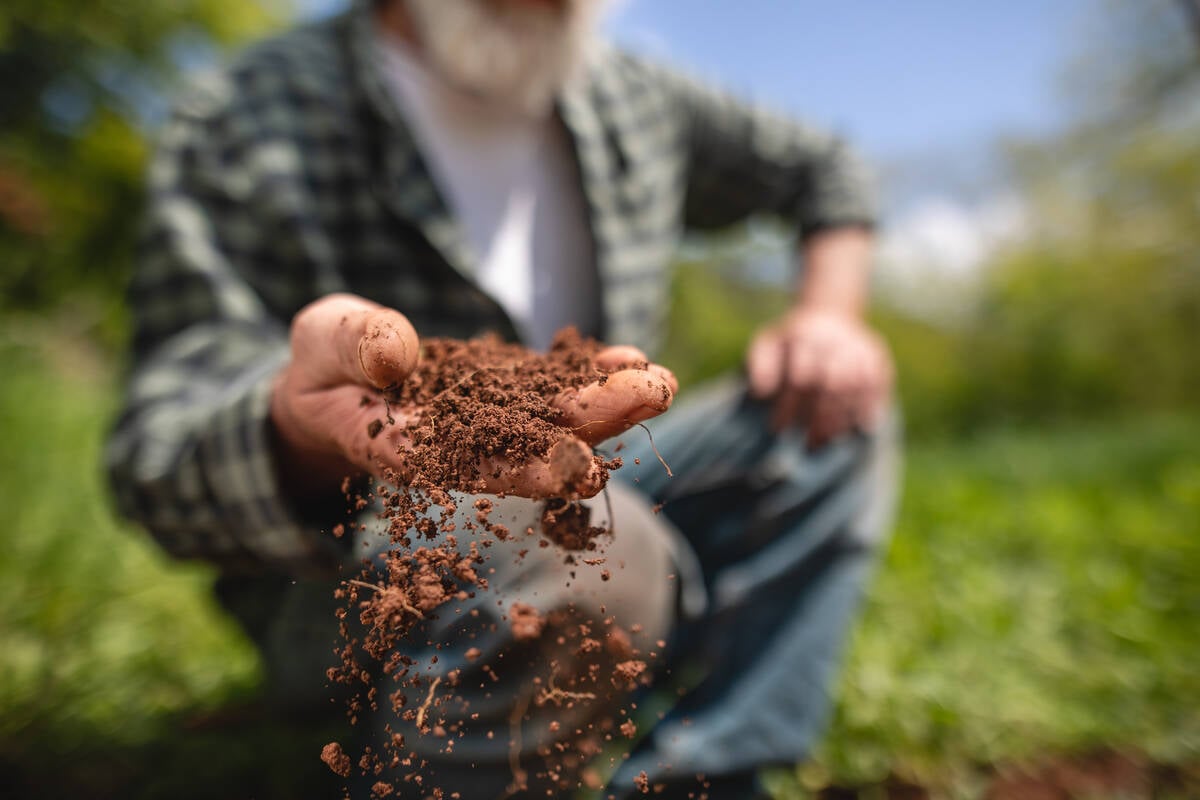
“As soil gets healthier, the bulk density drops,” Cornish said.
That’s a problem if the goal was to reward producers doing the right thing for their soils. That fluffy, sponge-like structure is great for water infiltration and increased resilience on the landscape — both big soil health wins touted by farmers adopting regenerative agriculture.
A new kind of ecological credit
Eventually, Cornish came to the conclusion that carbon density of the topsoil wasn’t enough to properly weigh overall soil health.
That’s where deeper indicators came in, including more stable aggregates, higher fungal diversity and carbon movement far below 60 centimetres, especially in adaptive multi-paddock grazing systems.
Cornish’s group used those findings to help redesign an entirely new ecological credit, meant to avoid the weaknesses of current carbon markets.
Like many regenerative certification programs emerging, the Alberta system revolves around outcomes, not prescribed practices. It locks data securely using blockchain, Cornish said, reduces verification costs with geo-referenced photos and soil maps and pays producers annually through an investment fund instead of one-time easements.
“You basically don’t have an easement. You can leave at any point, but you surrender that annual payment,” she said.
Preparing to expand into Manitoba
The project will now look at bringing in international buyers, tapping green bonds and stacking new credit types such as biodiversity and flood mitigation.
Cornish said Manitoba is high on the list, especially with tools like MFGA’s Aquanty water model ready to plug in. A Prairie-wide, grassland-conversion monitoring system is already in development to address leakage concerns.
Through all of it, her goal remains simple: reward good stewardship in a way that reflects what producers already know from the ground up.
“This was not about a scheme to just make money,” Cornish said. “It was a desire to see more people have more living land.”
Harrison, however, said the uncertainty inherent to offsets is amplified by the price incentives buyers and sellers have and is being amplified by climate change. She personally believes that offsets should not be allowed for regulatory compliance unless they involve permanent solutions like carbon capture.
“I would rather we find other ways to incentivize changes in agricultural practices, other than looking to big polluters and heavy emitters to pay for those,” she said.