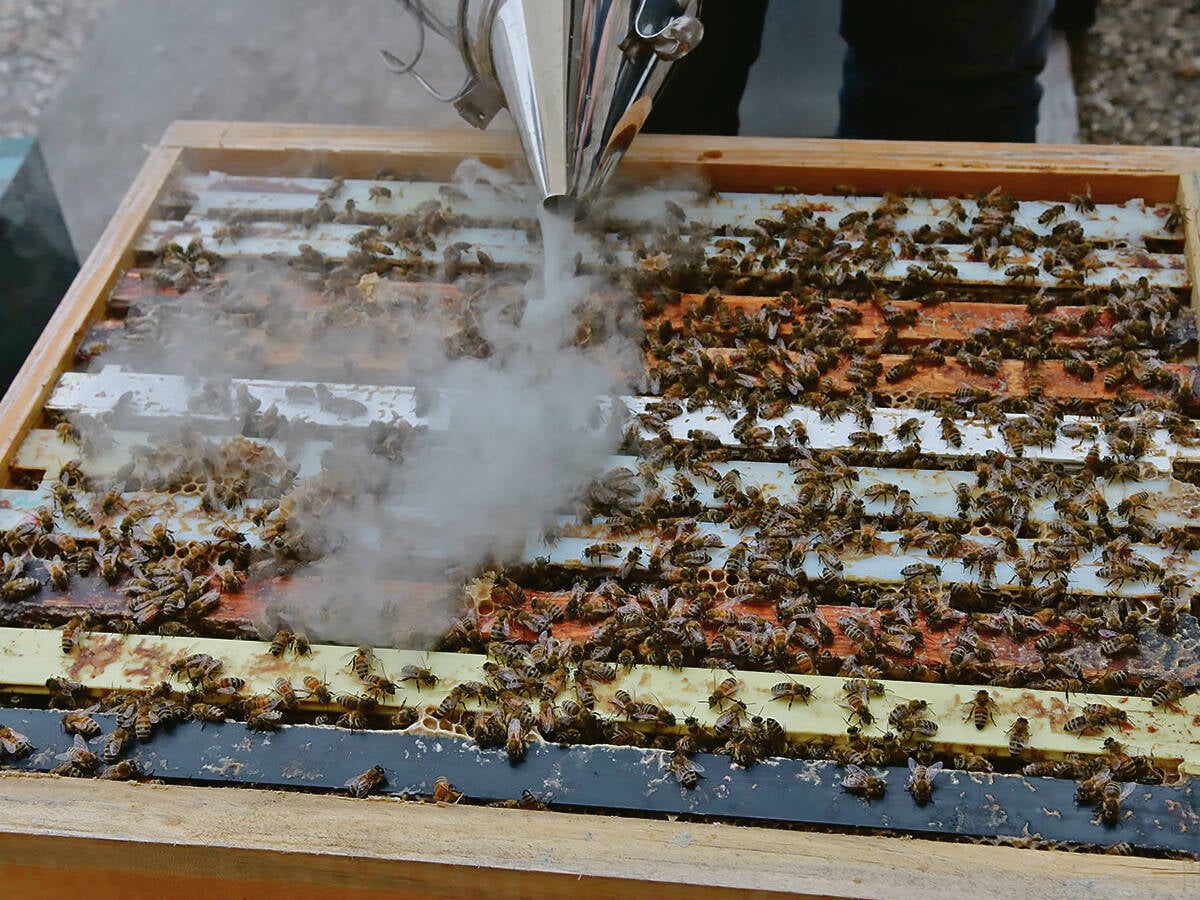
The Canadian Food Inspection Agency (CFIA) has responded to beekeeper concerns over the agency’s handling of the packaged bee trade, its rejection of trade-related beekeeper requests and its response plans to the potential arrival of the tropilaelaps mite — another parasite risk that might pile on top of Canada’s existing varroa mite problems.
WHY IT MATTERS: A string of hard years for the beekeeping sector has helped push tensions over packaged bee imports, currently not allowed from the U.S., into the limelight.
On Nov. 25, Alberta MP Arnold Viersen and select beekeeping groups took the industry’s struggles to Parliament, along with a motion that would push the CFIA to revisit its policies banning packaged bee trade from the U.S. — including ideas that echo those submitted by industry in 2024, following years of asking for a new risk assessment. Those proposals were roundly rejected by the agency earlier this year.
Read Also
Farm sustainability means farmer wellness too
University of Manitoba LEAP program wants to talk farm succession, self-efficacy and community supports as part of agriculture wellness and sustainability study.
Those same beekeeping groups have cast doubt over the CFIA’s list of countries currently allowed to source bulk replacement stock for Canadian farmers. Peter Awram, director of the Canadian Beekeeping Federation, argued that Australia, for example, is perilously close to Papua New Guinea, where tropilaelaps mite has been confirmed. By volume, Australia currently sends 16.4 per cent of Canada’s imported packaged bees.
Time to rethink Canada’s list?
When asked about criticisms of its current list, the CFIA said via email that it takes any importation risks “seriously” and follows a “structured process” around potential risks and acceptable mitigation measures.
That process is based on approaches recommended by the World Organisation for Animal Health (WOAH) and decisions are based on “scientific evidence and science-based risk assessments,” it said.
“Canada currently allows for the import of handpicked, healthy honeybee queens from the United States (mostly California and Hawaii), Chile, Australia, New Zealand, Denmark, Italy and Malta,” the agency noted.
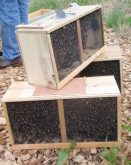
“Honeybee packages (a few pounds of worker bees with a mated queen) present a higher disease and pest risk, and are only permitted for import from Chile, Australia, New Zealand and Italy.”
That “handpicked” distinction is important when considering the risk of pests and disease, the CFIA argues.
Packaged bee shipments from the U.S. were curbed in the 1980s due to risk of spreading issues like varroa mites, Africanized genetics, small hive beetle and treatment-resistant American foulbrood. A recent risk analysis also noted those risks.
Handpicking means each queen is inspected for pests and overall health, read the email. That’s not possible for packaged bees.
“They consist of approximately 10,000 bees sourced from multiple colonies,” the CFIA said. “As a result, individual inspection of these bees is not feasible. This significantly increases the risk of them harbouring mites, parasites and harmful bacteria that would otherwise go undetected compared to importing a single caged queen.”
Its Nov. 7, 2024, to Jan. 31, 2025, public consultation on the subject ultimately concluded that “no feasible, scientifically supported mitigation measures are currently available to bring all identified risks within acceptable levels.”
Keeping out tropilaelaps
The agency is “closely monitoring” the global progression of tropilaelaps mite, it said. This includes making sure exporting countries are free of the pest.
“The CFIA is in continuous communication with counterpart authorities in trading countries,” it said. “If, after CFIA assessment and official communication with an exporting country, it is confirmed that there is a change in its (tropilaelaps) status, the CFIA will take appropriate actions accordingly.”
The agency cited its 2024 suspension of honeybee queens and packages imported from Ukraine because it could not conclude the mite was completely absent from the country.