A simmering point of contention between the Canadian Food Inspection Agency (CFIA) and parts of the beekeeping sector moved to a rolling boil on Parliament Hill Nov. 25.
On that day, backbench Conservative MP Arnold Vierson — who represents the Peace River-Westlock riding in Alberta — stood next to members of the Canadian Beekeepers Federation and Alberta Beekeepers Commission to highlight obstacles facing the honey sector.
Those included some now well-known problems that have seriously cut at honeybee stocks and hurt producers’ bottom lines in recent years, as well as a brand new parasite threat looming — tropilaelaps mites, or t-mites.
Read Also

In defence of eating oats
Forget any social media fear mongering about oats — Oats are a healthy, nutritious, Prairie-grown option to add more whole grains to your diet.
WHY IT MATTERS: Packaged bee trade, and whether or not the U.S. should be allowed as a source, has been a hot topic among a beekeeping sector where persistent production problems have pushed some farms to the edge of viability. Beekeepers in favour of the idea aren’t backing down.
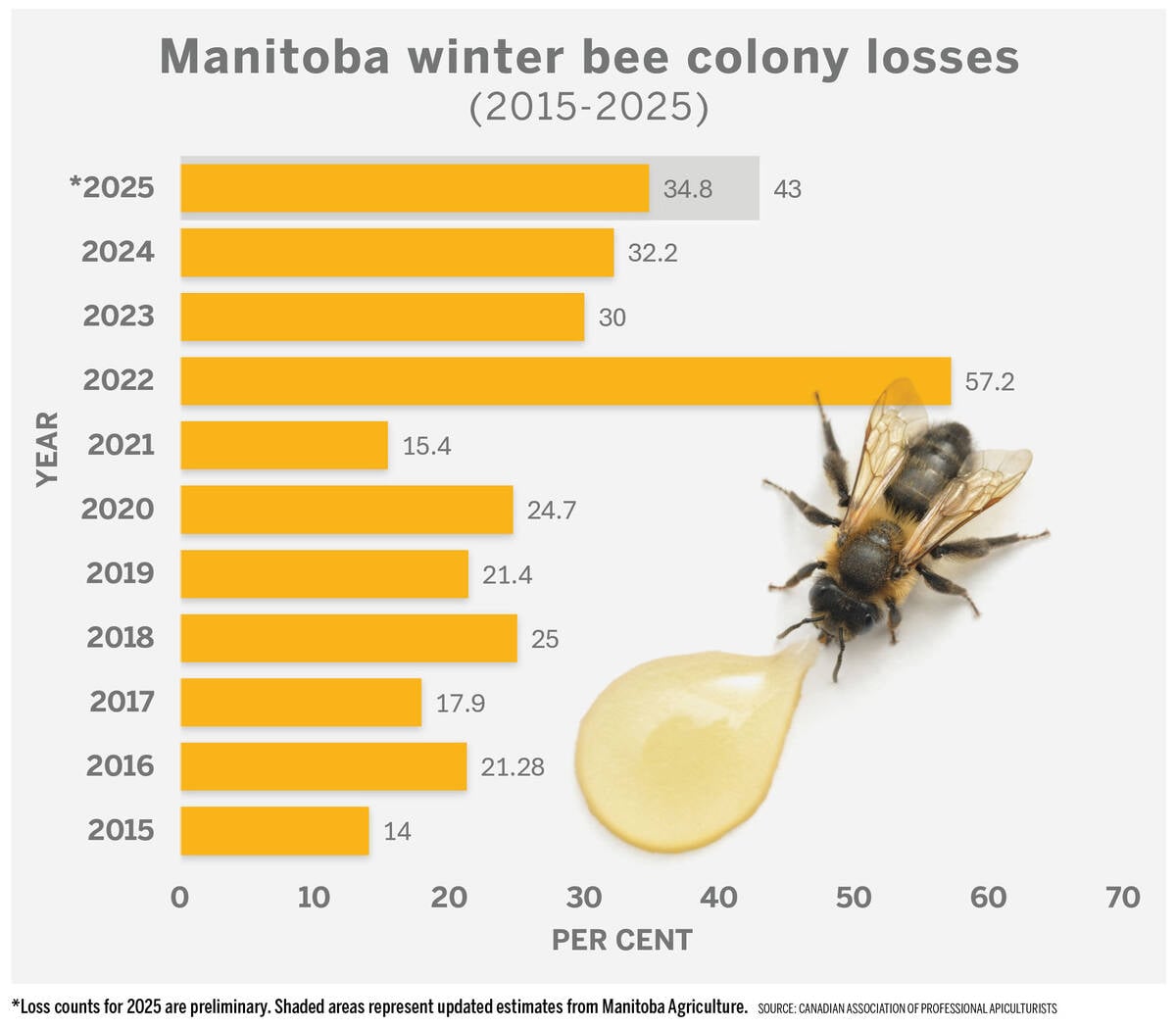
Parts of Canada, including Manitoba, have suffered a string of hard winters where many colonies failed to survive. The industry is embroiled in an increasingly difficult battle with varroa mites, with products previously used to control the parasites no longer delivering the same results.
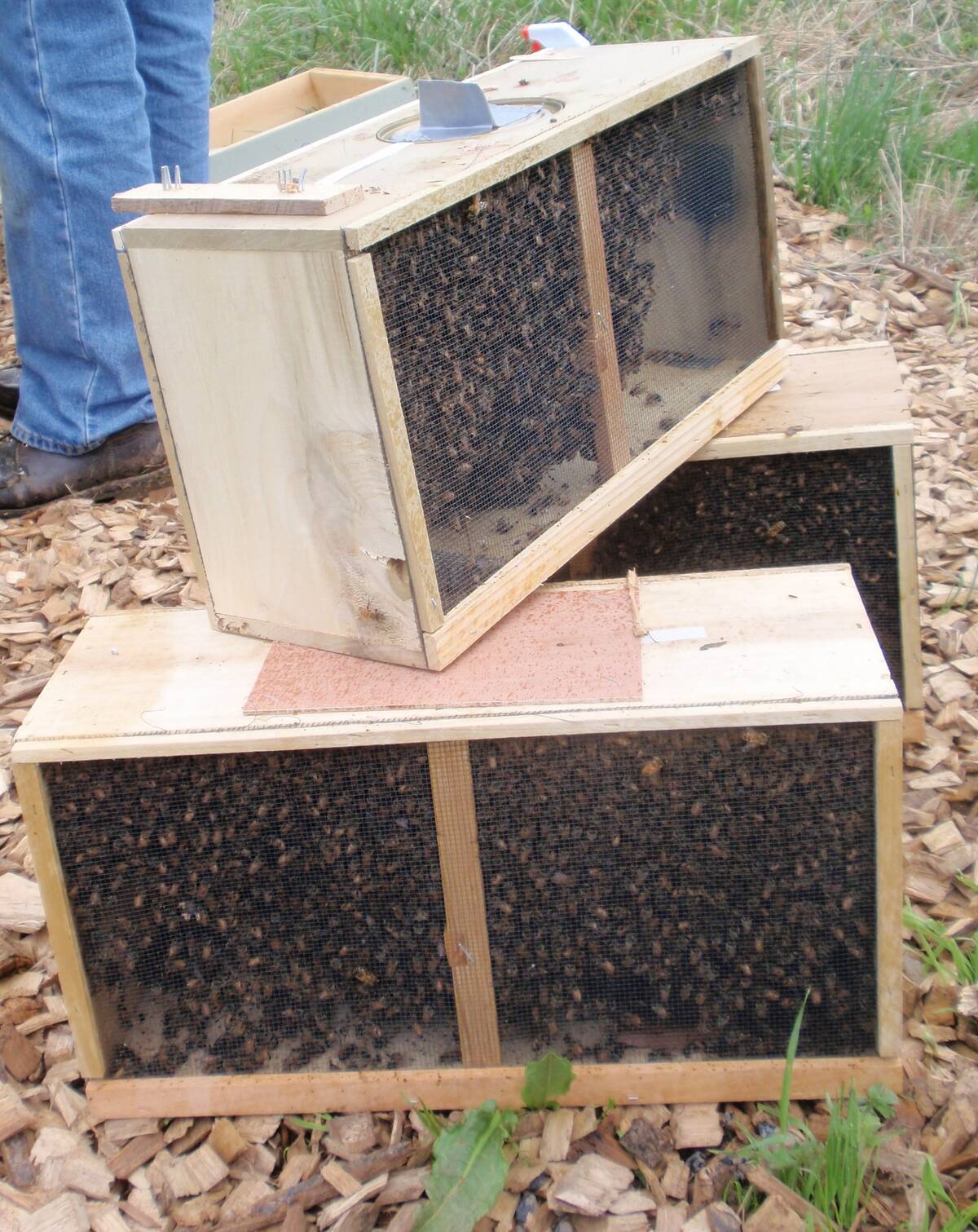
Linked to those, the debate over bulk packaged bees from the U.S. has roared to the forefront in recent years. Without replacement stock, beekeepers with poor bee survival often split hives, something that limits their honey harvest that year.
Some beekeepers want the U.S. border thrown back open, after decades of restriction due to pest and disease risk. Earlier this year, the CFIA shut down a list of industry proposals that had been submitted in the hopes of convincing the agency that those pest risks could be mitigated. That, in turn, frustrated beekeepers, who felt the agency had dismissed them out of hand.
That same day, Vierson brought a new motion forward in the House of Commons, the M-22 Honeybee Importation and Regulation motion.
Vierson’s motion would put five recommendations on the table for the CFIA:
- restore free trade of honeybee packages from safe zones in the United States (something that industry had argued for in its rejected list of proposals),
- develop a clear, consistent methodology for assessments,
- work with beekeepers to review and update the national farm-level biosecurity standard,
- partner with Animal Health Canada to create a tropilaelaps mite emergency plan, and
- improve and speed up the approval process of management tools for bee pests, such as varroa mites.
Drama on honeybee trade
The blanket ban on U.S. packaged bees doesn’t make sense, argued Peter Awram, director of the Canadian Beekeeping Federation. Awram said the CFIA has held the line on the packaged bee ban since 1987, despite mounting evidence that there are significant risks from bees brought in from the list countries that the CFIA does allow.
“They want to say the U.S.A. is dangerous, yet they are allowing from places that are easily 10 times, if not 100 times, more dangerous,” he said.
The cross-section of the beekeeping sector that stood with Vierson Nov. 25 suggests that perhaps Canada should halt packaged bee shipments from these designated safe countries. That’s partly from concern over emerging pest threats, and partly to underline what they see as CFIA’s inconsistency.

They note beekeepers are free to import queen bees from approved zones in the U.S., which suggests risk can be appropriately managed.
The CFIA, meanwhile, argues that the risk of queen bees is a much different thing than bringing in packages that contain hive material. The industry’s rejected submission, which would have set up trade from select areas of the U.S., also needed zoning approval from U.S. officials, the CFIA said in a summary report earlier this year.
Danger from abroad
The current list of approved countries doesn’t take proper account of t-mite risk, the motion’s advocates say, nor do they seem to acknowledge that countries on the approved list aren’t varroa-free. Australia, one of the last bastions against varroa, had its defences breached in 2022. In 2023, authorities decided that eradication of the mite was no longer achievable.
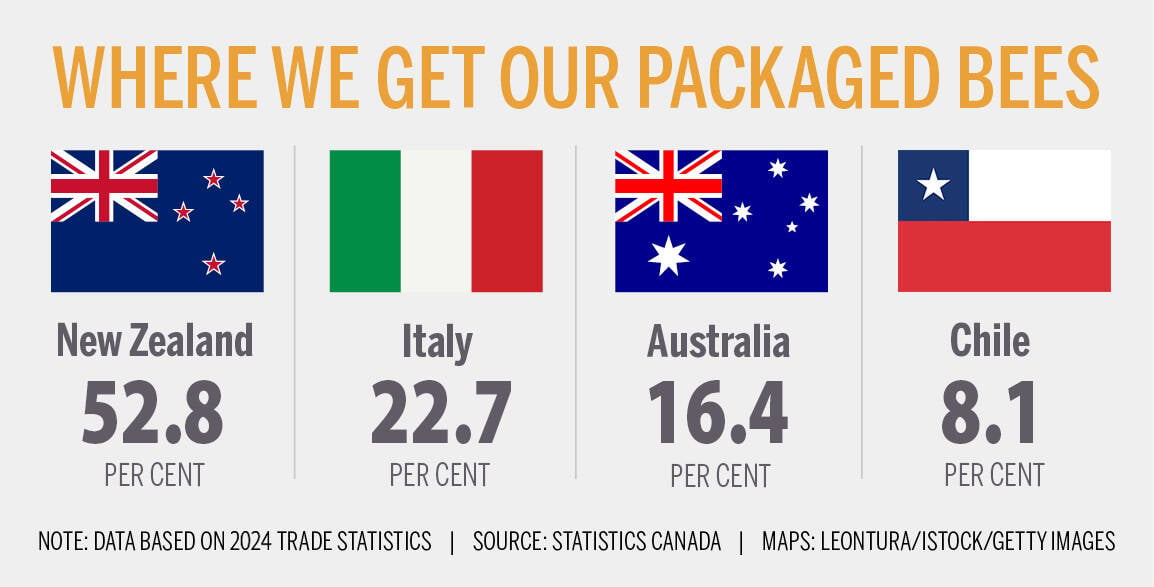
The current list includes:
- Australia
- New Zealand
- Chile
- Italy, and
- formerly included Ukraine
Australia is only 93 kilometres from tropilaelaps-infected Papua New Guinea at the closest point between the two countries’ nearest borders, those in favour of M-22 worry.
The packages from the approved regions are also simply not very good for Canadian production, Awram said. Mismatched seasons and 16-hour flights take their toll on the bees, killing many of them before reaching Canadian shores.
“The danger from outside of North America is far greater than any benefit we get,” he said.
“We import a very tiny amount of stock from Australia, New Zealand, Chile (and) Italy. The stuff we get from those areas; it’s poor for a number of reasons. Some of it is the genetics. The genetics from those regions just are not well-adapted for what we have.”
Awram has verified at least one example of high varroa mite content in packages from New Zealand.
“The lowest was at four per cent varroa in there, which means four mites per 100 bees in a package — up to 20 per cent. According to the regulations from CFIA, it shouldn’t be more than one per cent, but this is the way it is.
“It’s just a bad idea from a biological point of view to be pulling (packages) out of the southern hemisphere.”
The promise of U.S. bees
The situation would change if beekeepers were allowed to bring their packages north from the U.S., he said. They would arrive much faster, and in trucks, which allow greater control over shipping conditions.
“You can have somebody who actually knows how to take care of them watching the temperature and things like that,” Awram said. “This is what was done for decades and decades before 1987. They were brought up by truck, and we never had (these) sort of transport problems.”
CFIA report creates bad blood
Some beekeepers — Awram included — saw the CFIA’s denial of their proposals earlier this year as the final straw.
Along with set safe zones for trade, industry associations across Canada had pitched measures like transport inspections upon entering Canada, current import conditions of queens being expanded for packaged bees, using of best management practices to limit risk and evaluating the impact on inter-provincial movement.
The CFIA, however, responded that “after careful evaluation of all input received, the CFIA concluded that no feasible, scientifically-supported (sic) mitigation measures are currently available to bring all identified risks within acceptable levels,” an Aug. 6 agency statement read.
“As a result, Canada will maintain its current import restrictions and will not permit the importation of honeybee packages from the United States at this time.”
Awram — who maintains the recommendations were based on sound science — sees the feedback as evidence that the CFIA cannot be engaged on a scientific level.
“We’ve been fighting this non-scientific nonsense forever. They did this new risk assessment and despite the fact that there’s plenty of scientific evidence to the contrary, they still made the same claims.
“We’re not talking about an issue that is going to be solved by showing the scientific data or being logical. There is a block somewhere in the CFIA,” he said.
Industry ban not a done deal yet
Those who appeared in Ottawa in November, however, don’t represent the whole honey sector in Canada.
Ian Steppler of the Manitoba Beekeepers Association, who serves on the Canadian Honey Council’s (CHC) tropilaelaps mite committee, said the CFIA has been actively working to minimize beekeepers’ woes. He has been among those representing beekeeper interests with the CFIA on several fronts.
Manitoba’s official beekeeping organization was among those pushing the CFIA to reassess risks posed by U.S. bee shipments in the face of high winter losses.
Steppler says not every beekeeper will want to cease importing packages under the current protocols.
“There’s also a lot of beekeepers who will say, ‘Well, we utilize these packages from overseas to make up replacement losses, which is important to our industry, and if (the countries are) following all the surveillance protocols and preventative measures to ensure the pest doesn’t get in their country, then that should be enough to mitigate the risk.’”
Although the Canadian Beekeepers Federation and Alberta Beekeepers Commission have made their stance on these packages known, any industry-wide decision to push for reducing or stopping the import of bee packages from CFIA-approved countries will depend on what the various industry organizations say at their annual general meetings, Steppler noted.
“Our (MBA) meeting is in March and we’re going to be presenting that question to our membership to see where they would like to land on that position,” he said.
Awareness efforts pay off
Connie Phillips, Alberta Beekeepers Commission executive director, believes the press conference, in addition to the delegation’s well-attended Honey on the Hill reception, broadened awareness of the plight of beekeepers in Canada.
“In addition to what Arnold put forward, we had brought materials and information to that event that we could hand out or people could take away. That just reiterated what Arnold was presenting in his motion.”
The delegation, which Philips was a part of, also met with the Conservative Party of Canada caucus, officials at the Mexican embassy and representatives of the United States Department of Agriculture . She believes these meetings were fruitful.
Phillips is optimistic about the future of the Canadian beekeeping industry but urges mindfulness when planning the future.
“I think they’re just really on the cusp of a big paradigm shift in the industry and a needed one. So that’s good. But I also think we have to be careful how we go about it so that you have time to grow into that change, rather than just ripping the Band-Aid off all at once.”