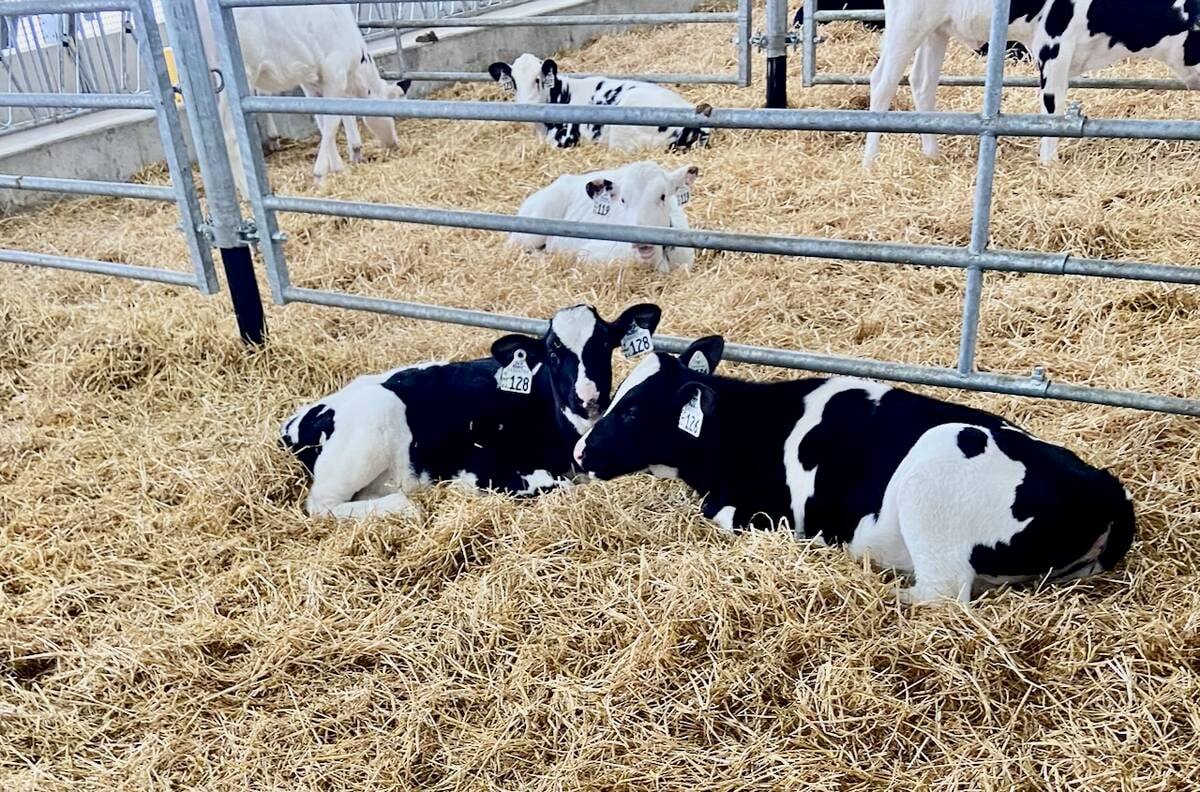
Researchers are recommending another jump in how much colostrum a dairy calf receives per day in its first meal.
WHY IT MATTERS: Calves are born with naïve immune systems, and colostrum is rich in antibodies to protect the calf until its immune system develops.
Michael Steele of the University of Guelph’s Department of Animal Biosciences said discussions are now looking at 300 grams of immunoglobulin G (IgG) for calves in their first 12 hours. The comments were made during the recent Dairy at Guelph research day.
Read Also
Manitoba cattle prices, March 11
Your weekly table of price ranges for beef cattle from seven Manitoba auction markets during the week ending March 10, 2026.
“On farms, we’re just not feeding enough colostrum,” Steele says.
Twenty years ago the goal was 100 grams of IgG, 10 years ago, he says it was 200 grams.
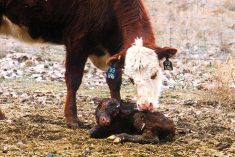
Beef calves that stay with their dams ingest from 250 to 500 grams of IgG.

The quality of colostrum is also important and researchers are looking at how to boost the quality of colostrum to make sure it hits the needed level of IgG.
Steele also suggests that the Brix levels – a measure of sugars – be at 22 to 25 Brix in colostrum.
Push the levels of IgG per litre above 50 grams if possible, even to as high as 70, he says.
“I think we have cows that can do this.”
Steele also recommends increasing the volume of colostrum in the first 12 hours of life from 10 per cent of body weight to 12 per cent in two meals – eight per cent in the first meal and four per cent in the second.
What makes successful colostrum management?
- Calves fed within an hour of birth
- Colostrum with more than 22 Brix measurement and 50 grams per litre of IgG
- Clean colostrum
- At least 10 per cent of body weight in colostrum is consumed in the first 12 hours of life
How is colostrum made in a cow?
There’s much that’s not yet known about how colostrum is formed and what influences its quality.
It can be modified by parity, season, sex of calf, dry per length and how much milk was produced in the cow’s previous lactation.
“We don’t understand enough about colostrogenesis,” says Steele.
Some of his students have tried to fill in some of those gaps.
Amanda Fischer-Tlustos along with other masters and PhD students at the University of Guelph have looked extensively at the physiological factors that affect colostrum production. They did biopsies and ultrasounds to look at mammary systems and blood flow.
“We have studies showing how dietary interventions or different management strategies can impact it, but we’re really just guessing about the mechanisms,” says Steele.
They found that IgG production increases up to a week before a cow gives birth. However, other bioactive compounds increase in the week before the cow has her calf, which means there are multiple areas to be influenced to change colostrum quality.
The researchers are also looking at molecular pathways and how they affect colostrum.