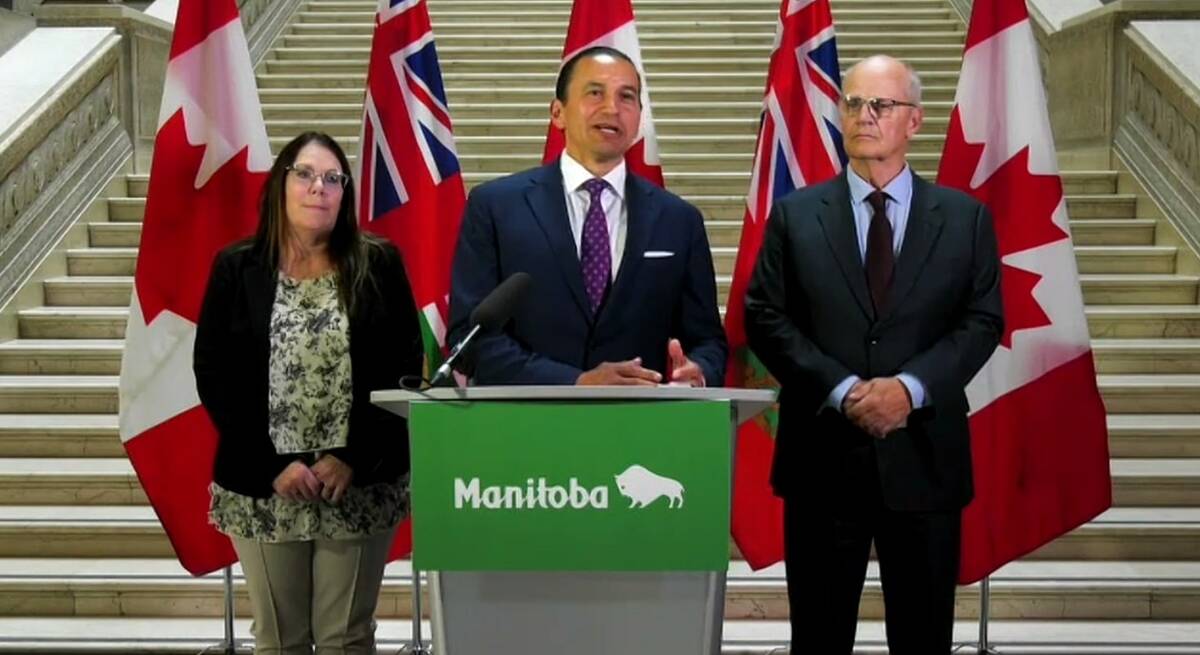
Premier Wab Kinew is calling on the federal government to provide immediate support to canola producers and develop a coherent strategy to negotiate with China in the face of 75.8 per cent tariffs launched against Canadian canola.
“Yesterday, a billion dollars. That’s what the Chinese tariffs cost Western Canada,” he said at a press conference in Winnipeg on the afternoon of Aug. 13. “Today, you’re talking about a further impact—hundreds of millions of dollars—and this is primarily going to be born by the farmer in the field.”
On Wednesday, a day after news of the duties hit, Reuters reported that grain buyers had shied away from bids and that futures prices had dropped as low as 6.5 per cent and hit a four-month low.
Read Also
Canada regains Colombia as malting barley buyer
Colombia bought 56,000 tonnes of Canadian malting barley in 2025 — its first major purchase in about a decade — and more Latin American demand may follow.
The duty, to be applied on all shipments of canola seed, is scheduled to come into affect Aug. 14. It joins other tariffs against canola oil and meal that China imposed against Canada in March, part of the volley of tariffs that have been flying between China, the U.S. and Canada in recent months.
The newest trade block ramps up an existing dispute dating back to September of last year, when China announced an anti-dumping investigation of Canadian canola. At that time, many Canadian farmers and policy analyst linked the announcement to Canadian tariffs against Chinese electric vehicles.
“When we look at what has brought us to this situation, it is the EV tariffs that the federal government chose to apply to the Chinese producers that got this retaliation put in place, and so that’s why we’re asking the federal government to use those revenues that they’ve been collecting,” Kinew said.
Manitoba tariff hit
The tariffs will have “spillover” effects to the rest of the province and country’s economy, as well, Kinew said.
“We as a provincial government have been there through initiatives with business risk management and other endeavours to support our producers this year, and now we’re calling on the federal government to take immediate action to help canola growers during this unprecedented situation,” he said.
The Chinese tariffs adds another layer of uncertainty to the market as Manitoba enters harvest season, said Manitoba Canola Growers chair Warren Ellis, who joined Kinew, along with Keystone Agricultural Producers (KAP) president Jill Verwey at the podium Aug. 13.
“We don’t know how long it’s going to last. There’s just so many things we don’t know,” Ellis said. “Farmers are going to harvest their crop and they’re going to have to make a decision. Are they going to store it and wait for calmer times, or are they going to dump it on the market and take their loss, or are they going to end up doing a combination of that?”
Verwey agreed that the federal government must come up with a solid plan in light of the world’s shifting trading dynamics, such as tariffs, that will help producers and industry navigate shocks.
“I think there needs to be real strategic direction on how, federally, we handle these negotiations in the future so that this doesn’t happen, because the volatility and the prices of our crops places undue strain on our producers, specifically and directly at this point of time when farmers are out taking the crops off right now,” she said.
Watch for more on this developing story from the Manitoba Co-operator website and future print editions.