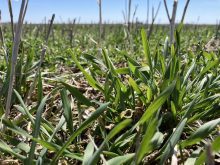
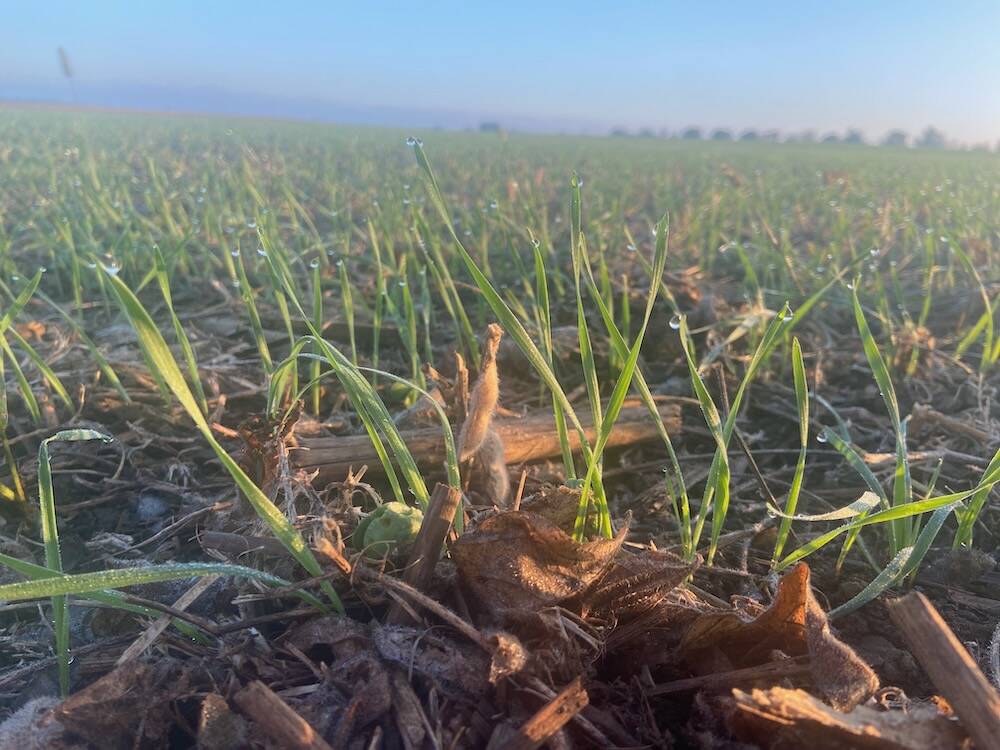
Winter cereals have been greening fields in Manitoba, but farmers should hold off judging crop survival for at least another week, according to Manitoba Agriculture.
In a Manitoba Agriculture Crop Talk webinar April 23, provincial cereals specialist Anne Kirk warned farmers away from being too hasty when weighing spring stands. Temperatures in the first half of the month were not consistantly warm enough for new growth, attendees heard.
Why it matters: Manitoba saw about 37,000 acres of winter wheat and approximately 85,000 acres of fall rye seeded last fall, by provincial staff estimates.
Read Also
White mould control requires flexible timing under Prairie conditions
Fungicide timing for white mould depends on canopy development, disease risk and number of planned applications, North Dakota pathologist Michael Wunsch told growers at CropConnect 2026.
“It is fairly early to just visually assess a field from above and … to assess the winterkill, or if there’s any winter injury issues with winter wheat or fall rye crop,” Kirk said.
But sometimes the crop can look green without thriving. Other stands might be slow to get going, but still be alive and well.
“We definitely see fall rye crops looking a lot better than winter wheat at this time of year,” Kirk noted.
Growers should wait for the crop to break dormancy and develop new roots before assessing survival. That requires temperatures consistently above freezing. Ten days of temperatures above zero are needed for active growth, Kirk said.
“At this time of year, you should be able to see some new white roots coming from the crown of the winter wheat or fall rye,” Kirk said.
Curious producers can dig up some plants, put them in pots or into a pail, water them and bring them inside into the warmth. With this method, new growth can be assessed within a week, Kirk said.
“If there is no new growth and the roots aren’t growing, then the plant hasn’t survived.”
Producers can also dig up plants, rinse them off and then clip them to about an inch above the crown. After that, they should be placed in a plastic bag in a warm place indoors. New growth should appear fairly quickly, confirming that the crown is alive, Kirk said.
Recipe to survive winter
Stubble height, seeding date, seeding depth and adequate fertilization all play into overwinter survival rates. Splitting nitrogen between seeding at fall and spring regrowth helps increase the plant’s odds, Kirk noted.
“In the fall, we can have excessive top growth, which could reduce winter hardiness,” she said.
At the same time, if all the nitrogen is applied in spring, the farmer ends up at the mercy of the weather. “If we do have a dry spring, it’s difficult … for nitrogen to actually reach the plants. Or if it’s quite wet, it could be applied later than ideal.”
Conventional wisdom has a good winter cereal stand at 20 to 25 plants per square foot come spring, but previous research has also shown that density as low as seven to eight plants per square foot can still yield 80 per cent of a normal stand, Kirk said.
If the farmer does opt for replanting, they should avoid another cereal crop, “especially wheat, if you do have a risk of wheat streak mosaic,” she said. “You typically want to have two weeks with no living green material to try to mitigate the risk.”
Current cooler overnight temperatures aren’t cause for undue concern, Kirk said. Standing water, however, can be risky.