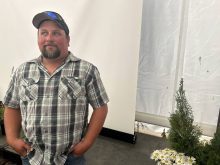
Minneapolis — A decade ago, Josh Betcher’s fifth-generation Minnesota family farm came to a crossroads when it became clear his father was no longer able to help with field work.
“We had to make a choice, to either hire someone, get bigger equipment, or make a process change,” he told the room of corporate executives, academics and farm leaders attending a conference focused on food system sustainability hosted by Reuters.
Read Also
Making way for Port of Churchill expansion
Rail car limits, climate research and marine planning will determine if the Port of Churchill actually can grow beyond its four-month shipping season into year-round trade.
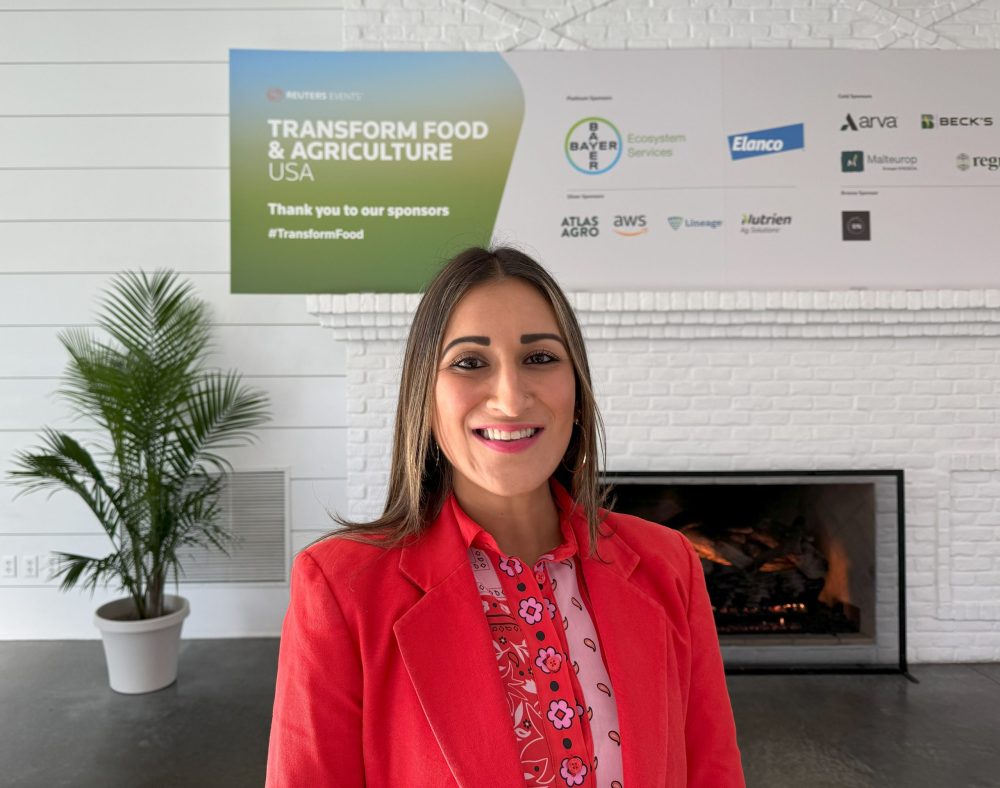
The Transform Food and Agriculture USA conference brought food industry leaders together for two days to explore how alignment along common goals can work to reshape the food system in the face of climate change.
Why it matters: There’s growing consensus that making the food system more resilient will require unprecedented collaboration among the stakeholders.
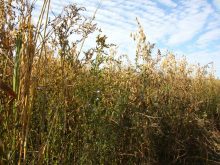
Betcher had been dabbling with soil-building practices such as cover crops and no-till since 2013 when a spring weather event made it impossible to seed part of the farm — a situation he took as an opportunity to experiment with alternative practices with minimal risk.
Transitioning to a different labour dynamic brought some of those possibilities into sharper focus.
“So, we chose to implement regenerative practices through no till, strip till, and cover crops and utilize that process to eliminate some of that activity that my father had fulfilled in the past,” he said.
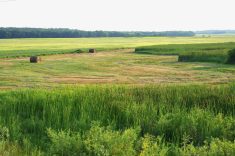
The gamble paid off, despite some twists and turns along the way as he struggled to find the guidance he needed to make it work on his farm. The 500-acre mixed crop and livestock farm had its best production year ever 2022. But perhaps more importantly, production came within two per cent of that peak in 2023 — a year in which they received 50 per cent of their average rainfall.
“The resilience that I had developed in my production system was shown and delivered in that drought year,” he said, noting this year started out dry and turned wet. “But I’m still seeing a pretty valuable crop out there.”
Betcher is keenly aware there’s a lot riding on his ability to make choices that are sustainable, both economically and environmentally. “Being a century farm — 140 years our families ran that farm … it’s really important to me to be able to provide that opportunity to the next generation.”

Growing demand
It’s farmers like Betcher who are top of mind for Sanah Baig, the USDA’s deputy undersecretary for research, education and economics, as she oversees a portfolio of programs designed to help farmers meet the world’s growing demand for nutrition, adapt to a changing environment and stay in business.
‘We have about 25 years to figure out how to feed the estimated 10 billion population with affordable, nutrient dense foods, while also reducing food loss and waste, while conserving our natural resources, while safeguarding against new pests and diseases and while protecting biodiversity,” she said in her opening address.
Meeting those challenges will require producing 70 per cent more food, using 30 per cent more water and 50 per cent more energy, she said.
It’s an even more daunting task considering the latest USDA agricultural census data that shows the U.S. lost 20 million acres of farmland, an area equivalent to the state of Maine, between 2017 and 2022. The number of farmers continues to shrink and the ones that remain are consolidating, as small to mid-sized farms continue to exit the business.
Less than one per cent of farms in the U.S. now account for 42 per cent of the sales. Meanwhile, the average age of producers continues to rise, with one-third of all U.S. farmers now over the age of 65.
“These trends are not really new,” she said. “Unfortunately, they are becoming much more pronounced.”
Baig said the die was cast in the 1970s when the then undersecretary of agriculture Earl Butz told farmers they needed to farm “fence row to fence row” and to “get big or get out.”
“So yes, we became hyper efficient, but that came at the expense of our robust market competition, of supply chain resiliency and food and worker safety,” she said. “The resultingly high degree of concentration across the sector makes our food systems and ultimately our families, especially in rural communities, more vulnerable.”
The latest census data underscores the urgent need to “revolutionize the way we grow, the way we process and the way we deliver” to create a more resilient food system for coming generations, she said.
“We have this once-in-a-generation opportunity to do things better. I hope that we can learn from our past mistakes, how focusing on one thing like hyper-productivity or maybe just climate change can lead to unintended consequences down the road,” she said. “We’re all here striving to build an entirely new system, one that has multiple complementary systems of production.”
Investment gaps

However, speakers emphasized throughout the conference that gaps in technology, policy and investment are making it difficult for farmers and corporations to meet sustainability goals.
Farmers are unwilling or unable to shoulder the risk of changing their practices without assurances that these changes will either pay off, or alternatively, they are paid to implement them.
Corporations investing in innovative solutions find it difficult to attract investment to bring new ideas to a commercial scale and they can be penalized by their shareholders if they don’t hit traditional profit targets. They also risk being sanctioned by the public for greenwashing if they fall short of their environmental goals.
Gregory Yep, chief technology officer, for processed food company CJ CheilJedang, said there is no shortage of new concepts for more environmentally friendly packaging or food products such as alternative proteins. But a lack of investor confidence often sees them fall short of reaching commercial scale.
“When we produce it at that scale, is the consumer willing to pay for that package and that product?” he said, noting the dramatic drop in market demand for alternative proteins.
No single stakeholder in the food chain can carry the burden alone, said Ryan Locke, director of sustainability and partnerships for Nutrien Ag Solutions.
“Ultimately, everyone, if we’re truly bought into this, is going to have to realize that there’s an investment that everyone is going to have to make,” he said. “That may mean less return to the investors, and they have to give us permission to do that and still consider us investable businesses.”
It was encouraging for Nancy Kavazanjian, a Wisconsin corn, soybean and winter wheat farmer and director of the United Soybean Board to hear that sustainable agriculture proponents are recognizing the need for farmers to be part of the solution. “So often as farmers, we are left out of the conversation,” she said.
“All these companies seem genuinely interested in meeting their sustainability goals, but they’re also very nervous about it,” she said. “They really do want to figure out how to get the farmer involved.”
Kavazanjian said there is also a growing realization that farmers can’t meet sustainability criteria for free. “There is going to be a cost. I mean, if we’re doing something that adds value to their product and takes away from our time and effort on the farm, we should be renumerated for that.”