

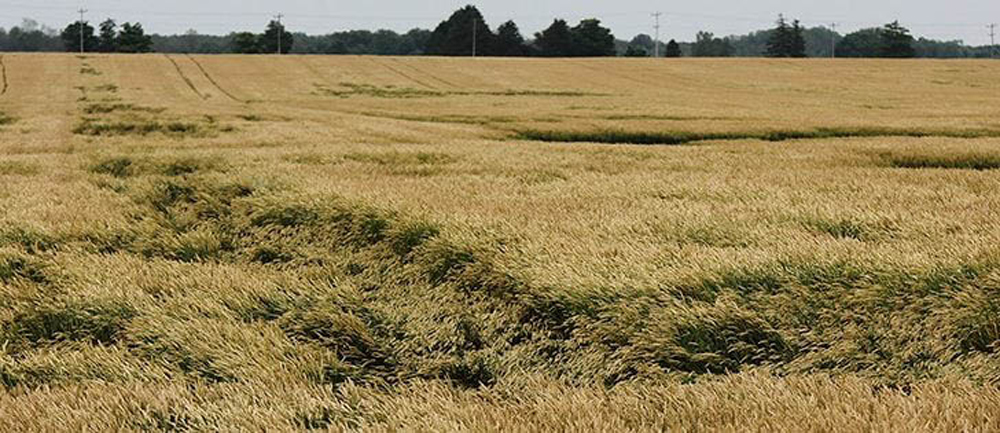
Plant growth regulators can limit potential headaches from lodging later in the season, but there are a few things to keep in mind, says Manitoba Agriculture cereals specialist Anne Kirk.
“The key is just to think about if you have a variety that’s prone to lodging and if your fields are intensively managed,” she said during Manitoba Agriculture’s weekly Crop Talk webinar May 29. “Are you using high fertility and high seeding rates? Do you have good yield potential? Then you may want to consider using a plant growth regulator.”
Why it matters: Mishandling PGRs can worsen crop stress and has implications for grain buyers, depending on the crop.
Read Also
Manitoba crop insurance expands wildlife coverage, offers pilot programs
New crop insurance coverage is available to Manitoba farmers.
Growers should avoid applying PGRs to any crop that is stressed from disease, insects or the environment, because that can worsen some of the products’ potential negative side effects, she said.
Plants can become more vulnerable to disease and their stress tolerance can be lowered by PGR interference with natural responses. Applying PGRs when plants are trying to recover from stress can hinder their ability to overcome it and prolong recovery time.
In stressed plants, PGRs can also alter hormone balances, which can affect various aspects of plant growth and development and reduce quality and yield.
Timing is everything
Once growers decide to use PGRs, the products must be applied at the right time to achieve the intended effect. That might include stimulating growth or controlling growth patterns such as stem elongation and lateral branching.
The most common PGRs are Manipulator and Moddus, which are widely available across Manitoba. Their ideal application time is at growth stage (GS) 31-32, said Kirk.
“The wheat will be going into stem elongation after that point. So, depending on how warm it is and how fast your wheat is growing, this can happen pretty quickly. As soon as the stem starts elongating, you’d want to be keeping an eye on your cereal crop you’d be considering a PGR application to.”
Crop stage can be examined by cutting open the main stem and looking at node positions. In winter wheat, for example, the stem is just beginning to elongate at GS 30. At GS 31, the first node should be at least one centimetre above the tillering node, found at the base of each stem between the stem and the beginning of the root system.
This node will not move during the elongation process, while the nodes above it will continue to grow away from it.
At GS 32, the second node should be at least two cm above the first node. At this stage, plants typically display four to six leaves and one to three tillers.
Both Moddus and Manipulator are registered for GS 30-39. Since GS 39 is the flagleaf stage, applying PGRs after that would be less than ideal, Kirk said.
“When you think about how the wheat is growing, at the flagleaf stage or getting close to the flagleaf stage, the stem has already elongated quite a bit and you’re not going to be having that same shortening effect, because those internodes have already elongated.”
Marketing
Before considering PGR application, malt barley growers should check with their buyers to confirm contract obligations and acceptance.
Keep it Clean, a cross-commodity industry group that monitors potential market roadblocks from pesticide use, has flagged chlormequat as a potential risk. That is the active ingredient in Manipulator.
This February, oat growers also received a caution from Saskatchewan company Grain Millers, which warned that Manipulator might impact Canadian oat demand for what it said was little proven agronomic benefit.