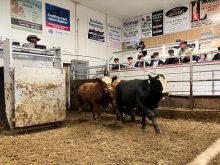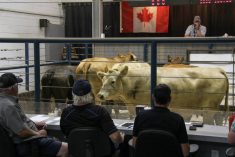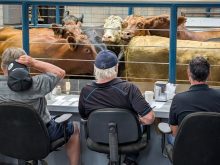

Temperatures were still cold across Manitoba during the third week of February, but sunny skies and daytime highs in the -20s C, or even the minus teens, were much more welcome at the cattle auctions than the -40s with the wind chill that limited activity the previous week.
“We’re getting out of this cold snap and a few more cattle were trading than we’ve seen in recent weeks,” said Tyler Slawinski of Gladstone Auction Mart. Cattle prices, he said, were on the rise in sympathy with U.S. futures, bringing some more optimism to the cattle sector despite high feed costs.
Read Also

Mideast war driving grain markets, but fundamentals remain
The war in the Middle East has become the primary driver for nearly all major global financial and commodity markets, though its long-term effects on grain and oilseed markets remain to be seen.
Live cattle futures in the U.S. hit their highest levels of the past year during the week, as arctic weather that dipped all the way down to Texas rattled the market.
“Rumours of more demand for fat cattle further down the line has also perked some interest,” Slawinski said.
Values for slaughter cows in Manitoba have risen by about 10 to 15 cents/lb. over the past few weeks, as demand remains solid but numbers have been slow to come to market.
Feeder cattle have also firmed over the past month, with feeder steers in the 400- to 500-lb. area topping out in the $270-$280/cwt area during the week. Feeder heifers in the same weight class were generally about $50/cwt lower at the high end.
Demand for feeder cattle came from both eastern and western feedlots during the week, Slawinski said. He noted a backlog of fat cattle was being worked through, leaving more room for the feedlots to pick up feeders again.
While feed grain prices are high, forage availability is much better than it has been in recent years and many backgrounders had been holding on to their cattle longer and putting on cheap pounds, according to Slawinski.
“The backgrounded cattle are starting to come now… the heavier feeder cattle,” he said.
He had noticed more heifers especially being held back later than normal, and some producers may decide to retain those animals to grow their herd.
Those decisions on retaining cattle or sending them to auction will be made over the next few weeks, as calving season has already started.
Looking ahead, Slawinski expected to see steady numbers over the next few weeks, although activity may start to taper off. “I don’t think we’ll see a huge flood of cattle being marketed into spring,” he said.