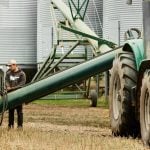
Calvin Vaags, principal owner of True North Foods, says he’s hopeful CFIA officials will soon give the processing plant near Carman its federal stamp of approval.

Processing plant close to getting federal stamp, says owner

When CFIA gives green light, processing will jump to around 1,000 a week. The plant has capacity to expand

True North Foods, a beef-processing plant near Carman, expects it will have its federal licence very soon, says the plant’s principal owner Calvin Vaags. “I’ve been saying ‘two weeks’ for a long time,” he said during a recent tour by the Manitoba Beef Background and Feedlot School at October’s end, joking he’s considered wearing a

Entries wait to be judged in the Sasktoba Sheep 4-H achievement that was held for the first time in a decade at this year’s Manitoba Sheep Association Show and Sale in Carberry.

Domestic demand for lamb is on the rise

But domestic production is static and processing capacity is declining

Prices generally for commercial and purebred lambs were up a little bit from last year, say organizers of this year’s Manitoba Sheep Association Show and Sale held at Carberry on August 28 and 29. For commercial lambs, pens of five averaged $197.50 per head, and for pens of two the average price was $214 per


Vince McConnell, beef sector business development specialist with Alberta Agriculture and Rural Development, spoke at last month’s Direct Farm Marketing conference.

Bar-code system can link every package of meat to the farm

Ontario-based co-operative offers new tracking options for small and medium-size operations

Telling customers about their farm and how their animals are raised is part of the marketing strategy for grass-fed beef producers, and two tools to help them were demonstrated at the Direct Farm Marketing Conference here last month. “We have some neat systems developing that are great tools to use in the endeavour of producing

cows with RFID tags

Is beef traceability being used to its full potential?

Other countries extend traceability right to the packaging of meat so customers can 
find out what individual animal and farm it came from

As I’ve been travelling this past year, I’ve been astonished by the level of traceability in processing plants abroad. I was welcomed into two plants, on two different continents, with open arms and fantastic hospitality with the only request being I leave my camera outside. Geographically these two businesses couldn’t be further apart but their


Jeff Clark is urging producers to look into traceability requirements sooner rather than later. Photo: Shannon VanRaes

And this little piggy goes to…? New traceability program on the way

Few producers are currently using PigTrace, but officials are urging them to become familiar with the system

It’s coming, so you might as well prepare. PigTrace — a nationwide traceability initiative — is expected to come into force on July 1, 2014, following changes to the federal Health of Animals Regulation. But so far, pork producers aren’t jumping on board. “The compliance rate across Canada is pretty low — no one is


photo: istock

CFIA beefs up food safety rules and sets minimum traceability standards

Food companies and farms selling products in other provinces or internationally will need detailed preventive control plans

Traceability will gain a more prominent place on the menu, and food companies will be required to develop preventive control plans under a new regulatory plan proposed by the Canadian Food Inspection Agency. The proposals, which follow the passage of the Safe Food for Canadians Act last fall, still have to be put into the


WSGA wants investigation into XL beef recall

The Western Stock Growers’ Association (WSGA) has respectfully asked the Government of Canada to launch an independent investigation into the crisis surrounding the closing and long process to reopen the XL beef plant in Brooks. Recently, producers at the Alberta Beef Producers (ABP) zone meeting in Fort MacLeod supported a motion to call for an

Goat producers urged to provide input into a new national traceability program

Some dairy goat producers want leg bands instead of ear tags and there are 
different methods for reporting and recording of animal movement, and retiring tags

Atraceability program for goats is coming, and now is the time for producers to give their input on how the system should operate, says the general manager of the Canadian National Goat Federation. “Traceability and animal identification are almost non-negotiable right now,” Jennifer MacTavish said at the recent Alberta Goat Breeders Association conference. “Our role