
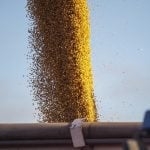
Ken Heaman of Agassiz Seed Farm was seeding wheat April 24 north of Roland.

Seeding started – and put on pause by snow

Although moisture is rated as adequate in most areas, a little extra won’t hurt

Bob Bartley started seeding hard red spring wheat April 23, and finished the following day after completing two quarters. Now, following a late-spring storm through much of agro-Manitoba, he’s awaiting Mother Nature and the calendar. “Now I’m going to take a holiday,” he said with a laugh April 25 during an interview. “Now that we
Kochia or tumbleweeds can spread across fields by the tumbling action and get caught in fencelines. This is an example of landscape-scale weed spread issues.

It takes a village to stop weeds

Researchers say the community nature of the problem of invasive weeds hasn’t been adequately incorporated into control efforts

Invasive weeds are a problem that defies solution, and only seems to get worse. That’s because they’re a community problem that cross property boundaries, according to weed scientist Muthu Bagavathiannan, of Texas A&M. Finding a real solution will involve recognizing the nature of weeds as a community problem, and managing them accordingly, he and other


Manitoba Agriculture’s 2018 in-season survey now documents 12 municipalities with glyphosate-resistant kochia.

Glyphosate-resistant kochia confirmed in 12 municipalities in 2018

Testing is the only way to confirm how widespread glyphosate-resistant kochia is in Manitoba

When Tammy Jones’ phone rang last year as often as not it was farmers fed up with kochia spreading in their fields. The Manitoba Agriculture weeds specialist dubbed the tumbleweed ‘weed of 2018,’ in a talk at St. Jean Farm Days last week. “We saw a lot of it,” she said. “It felt like anyone

Even less competitive crops can benefit from an integrated weed management strategy.

Crop establishment important for weed management

Combining many tools into an overall integrated weed management strategy is a winner

There are many components to integrated weed management (IWM) including crop rotation, seeding rates, chemical, cultural and mechanical controls, but one of the most vital aspects of any successful IWM is crop establishment, says Dr. Rob Gulden of the University of Manitoba. At this year’s Crops-A-Palooza event in Portage la Prairie, researchers including Gulden manned


Increasing resistance to chemicals including glyphosate complicates the problem of controlling kochia.

Kochia and salinity: a battle on two fronts

One strategy might be to treat saline patches like a lawn, and mow them before the kochia sets seed


Producers may be looking for a way to beat back kochia, but what does that mean for the salinity problems lurking in the soil? Saline patches were common this year after a second season of below-average moisture. Read more: The year of the tumbleweed “The fluctuations in soil moisture are very linked to the soil

Kochia had good growing conditions this summer and, in some fields, glyphosate is no longer doing the job.

The year of the tumbleweed

Kochia has enjoyed an upswing given Manitoba’s weather this year

It’s a good year to be a kochia plant. That should come as no surprise to growers. The tumbleweed-like plant has become a common sight this year, popping up over crop in what seems like larger and more frequent patches, some of which now show less response to glyphosate. Weather conditions were a large part


Palmer amaranth. (United Soybean Board photo)

North Dakota still on lookout for Palmer amaranth

CNS Canada –– Officials in North Dakota continue to hunt down suspicious plants in a bid to keep the aggressive weed Palmer amaranth from establishing there. Palmer amaranth, a pigweed species, made its first confirmed appearance in North Dakota last month, in a soybean field in McIntosh County, in the south-central area of the state.

Palmer amaranth can grow to be six to eight feet tall and produce a million seeds 
a year.  

On the lookout for Public Enemy No. 1

North Dakota asks farmers to watch for Palmer amaranth in their fields

North Dakota State University is asking farmers to be on the lookout for Palmer amaranth. The No. 1 weed problem in the U.S., hasn’t been spotted in North Dakota yet, but it has been identified in neighbouring Minnesota and South Dakota as well as in Iowa. In a release, NDSU extension agronomist Tom Peters said


Farmers and industry try their luck identifying seedlings in the weed garden during the western weed seedling identification day in Brandon May 25.

Early weed identification key for early management

Do you know which weeds are lurking in your fields? When they’re young, provincial extension staff warn it might be hard to tell

Manitoba farmers are well acquainted with redroot pigweed, with its common reddish tinge, and most would not balk at putting a name to the seedling, even with only a few cotyledons breaking ground. If you’re in one of the unlucky Manitoba municipalities to be ‘blessed’ with waterhemp however, it might not be redroot pigweed at

VIDEO: Weed ID day comes to Brandon

VIDEO: Weed ID day comes to Brandon

Manitoba Co-operator reporter Alexis Stockford recently met with provincial weed experts at one of two recent weed identification days to hear about some of the key points to watch for when identifying weeds as seedlings. The events were held in Carman and Brandon in the second-last week of May.